
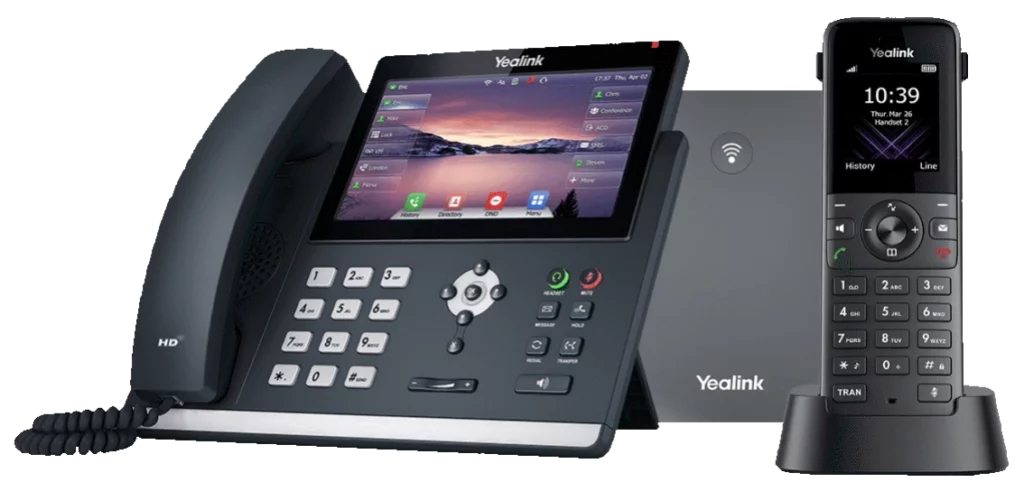
Dect Phones vs Desk Phones – When selecting a business phone system, understanding the differences between a DECT phone and a desk phone is crucial. Whether you are looking for flexibility, reliability, or enhanced VoIP features, this guide will help you navigate the DECT vs desk phone debate to find the best solution for your needs.
A DECT (Digital Enhanced Cordless Telecommunications) phone is a wireless handset that connects to a base station, providing mobility and convenience. Often used in office, retail, and industrial environments, DECT phones allow users to move freely while staying connected to the communication network.
DECT technology offers interference-free calls with excellent sound quality and extended range, making it a preferred choice for businesses that require seamless communication across larger areas. Unlike mobile phones, DECT handsets are dedicated to internal communication, ensuring reliability even in high-traffic call environments.
Popular DECT brands include Yealink, Gigaset, Snom, and Grandstream, each offering a variety of business-friendly models with VoIP integration.
A desk phone is a traditional office telephone, typically connected via a physical network cable or through VoIP (Voice over Internet Protocol). These phones provide stability, high-quality audio, and advanced business communication features such as call forwarding, voicemail integration, and multi-line support.
Desk phones are commonly found in professional settings where employees remain stationed at their desks for most of the day. Their wired connections ensure consistent call quality, and they can often integrate with business applications like CRM software, making them an essential tool for productivity.
Leading desk phone manufacturers include Yealink, Grandstream, and Snom, all of which provide high-end VoIP desk phones tailored to various business needs.
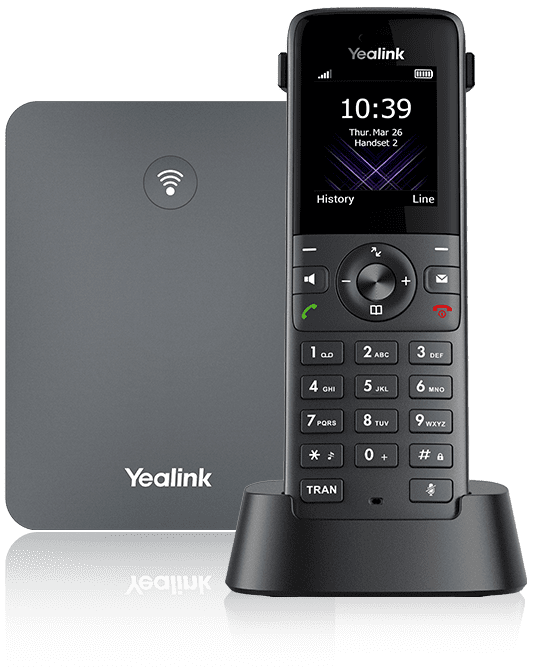
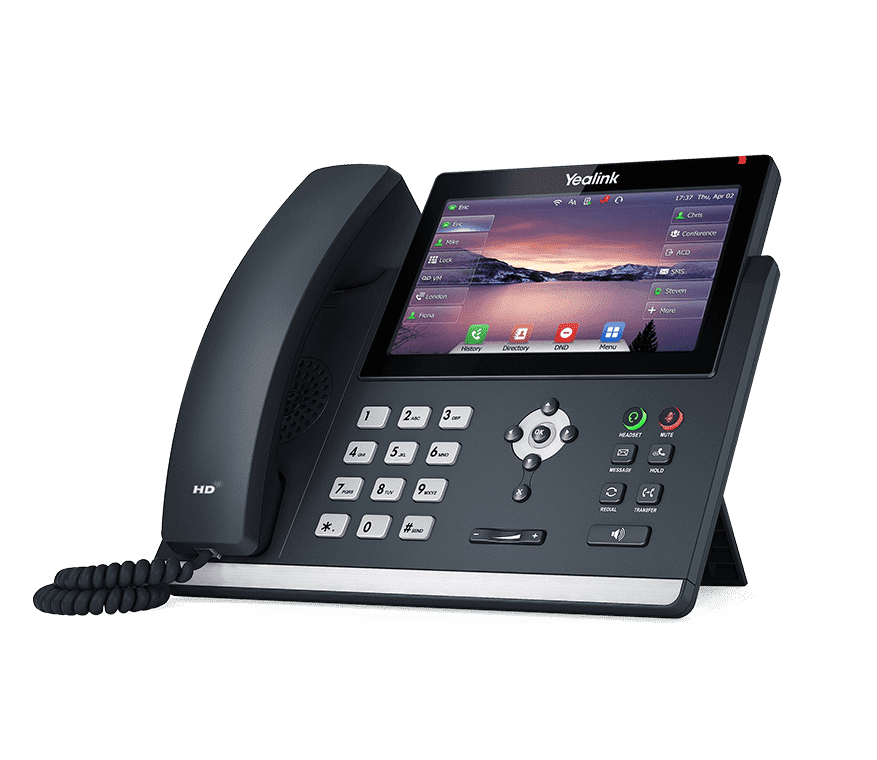
Both DECT and desk phones can work seamlessly with VoIP technology, allowing businesses to enjoy cost-effective internet calling. However, there are some key distinctions:
You certainly can use both and for many businesses that’s the best option where having both types of phones make sense. Such as where you have staff at desks and staff who are in warehouse or workshop.
Choosing between a DECT phone and a desk phone depends on your business’s mobility needs, reliability requirements, and VoIP integration preferences. If you’re unsure about the best phone system for your business, get in touch with Plexatalk today at 0330 057 6699 or email support@plexatalk.co.uk.
We work with a wide variety of businesses and offer free, no-obligation consultations to help you select the right communication solution for your needs. Whether you need a feature-rich desk phone or a flexible DECT system, we can guide you towards the most reliable and cost-effective setup for your business.
VoIP DECT phones are wireless and connect via Ethernet to a base station, which then transmits calls over Wi-Fi or wired networks. VoIP desk phones are typically wired and connect directly via Ethernet or PoE to the network. Some DECT base stations also support FXO/FXS ports, allowing them to integrate with analog phone lines.
VoIP desk phones usually provide better sound quality due to a wired connection and advanced codecs. However, premium VoIP DECT phones also offer HD voice and can perform well within their coverage area.
Yes! Most VoIP systems support both DECT and desk phones, allowing businesses to mix and match devices based on their needs.
Some DECT base stations support PoE, allowing them to receive both power and network connectivity via a single Ethernet cable. However, the handsets themselves run on batteries and must be charged in their cradle.
Yes, most VoIP desk phones support PoE, eliminating the need for separate power adapters.
Standard VoIP DECT phones require a base station that connects via Ethernet, but some modern models support direct Wi-Fi connectivity without needing a base station.
Yes, if both devices are registered to the same VoIP system or PBX, calls can be transferred seamlessly.
Yes, if your VoIP provider supports server-side call recording, both DECT and desk phones will be recorded as long as they are on the same system.
Yes, many VoIP systems allow multiple devices to register to the same SIP account, enabling calls to ring on both DECT and desk phones.
Indoor range is typically up to 30-50 meters (100-165 feet), depending on walls and interference. Outdoor range is typically up to 300 meters (985 feet) in open areas. Some systems support repeaters to extend coverage.
Yes! Most VoIP DECT systems support multiple handsets per base station. Some enterprise DECT systems allow seamless handover between multiple base stations.
Yes, but compatibility depends on the phone model. VoIP desk phones often support RJ9, USB, or Bluetooth headsets while VoIP DECT phones typically support 3.5mm, Bluetooth, or proprietary headset ports.
Many VoIP desk phones support Bluetooth natively or via a USB dongle. As for VoIP DECT handsets, many have built-in Bluetooth, but not all models support it.

No matter if you’re running as a one man band or have a big team on your hands, the presence of a landline number, custom voicemail and all the features you get with a modern phone system are practically a necessity when it comes to running an Estate and Letting company.
The best phone system for estate agents should be a reliable phone system that supports forwarding calls, out of hours forwarding, call recording, call waiting, IVR menu options and call logging are all features we believe make a great phone system for Estate Agents.
The telecoms landscape in the UK is changing rapidly. With the planned switch-off of traditional ISDN and PSTN phone lines by 2027, many estate agents still using these digital phone systems will need to upgrade. These older systems, while reliable in their day, are now outdated and unable to keep up with the modern demands of a fast-paced industry like estate agency.
Estate agents relying on traditional digital phone lines could face disruption if they don’t prepare for the transition. The retirement of these systems is part of a nationwide move towards internet-based communication, which offers far greater flexibility, cost savings, and scalability.
VoIP (Voice over Internet Protocol) is quickly becoming the go-to choice for estate agents as the telecoms industry transitions away from traditional phone lines. Unlike ISDN or PSTN systems, VoIP operates over the internet, offering a range of features and benefits that align perfectly with the needs of estate agents.
VoIP systems come loaded with features designed to improve efficiency and client communication, such as:
A great phone system for estate agents should be able to grow with your business. Whether you’re expanding your team or opening a new branch, the system should make adding new users or locations seamless. Cloud-based systems are particularly useful in this regard, as they allow estate agents to stay connected across multiple offices and even while working remotely
In today’s fast-paced property market, estate agents are often on the go. Mobile integration is crucial, enabling agents to make and receive calls on their smartphones using the business number. This not only ensures professionalism but also means no call is ever missed, whether your team is at a property viewing or a client meeting.
Estate agents need a phone system that fits their budget while still offering all the necessary features. VoIP (Voice over Internet Protocol) systems are a popular choice as they typically have lower running costs compared to traditional phone lines, and they often come with inclusive call packages and minimal set-up fees.
First impressions matter, especially in the estate agency world. Features such as professional IVR (Interactive Voice Response) menus, on-hold music or announcements, and the ability to route calls to the right agent quickly help ensure your clients receive a top-notch experience every time they call.
A quality phone system can also help estate agents track performance. Call analytics, such as the number of incoming and outgoing calls, average call duration, and missed calls, can provide valuable insights. This data can be used to optimise workflows, improve customer service, and ensure your team is operating efficiently.
Lastly, ease of use is key. Estate agents shouldn’t need an IT degree to set up or maintain their phone system. Look for providers that offer user-friendly interfaces and robust customer support to ensure a smooth experience from day one.
The best phone system for Estate Agents is one built bespoke around your business but without breaking the bank. Take SDM Propertly Ltd for example. They got in touch with us last year to upgrade their phone system. We supplied a bespoke system built around their business and their unique needs. Some features above they did not want and others they did.
Mark (Company Director) – ”Recently setup my office with VoIP phones, brilliant service. Came and installed everything for me and it was done perfectly. Phones have been running great.”
As the ISDN switch-off approaches, estate agents must act to avoid disruption and embrace the benefits of modern communication systems. Upgrading to a VoIP or hybrid system not only future-proofs your business but also ensures you’re delivering the best possible experience for clients.
Take the first step toward improving your agency’s communication by exploring our tailored phone system solutions.
Contact us today to find the best phone system for your estate agency and take your communication to the next level.
With years of experience supporting estate agents, we specialize in providing bespoke phone systems that fit your budget and business needs. Don’t wait for 2027—upgrade now and join hundreds of satisfied clients who trust us for their communication needs. Call today on 0330 057 6699 or see our contact page for more ways to get in touch.
A professional estate agent phone system enhances your agency’s credibility, ensures calls are never missed, and helps you manage communications efficiently. Key features such as call forwarding, IVR menus, and voicemail enable you to deliver a seamless and professional experience to clients, regardless of whether you’re managing a small team or a large estate agency.
Traditional landlines rely on physical telephone lines, whereas an Estate Agent VoIP (Voice over Internet Protocol) system operates over the internet. VoIP systems are often more cost-effective, offering advanced features such as call recording, analytics, and the flexibility to work remotely. For estate agents, VoIP ensures consistent communication, whether in the office, on the move, or working from home.
Yes! Many modern estate agent phone systems, especially those powered by VoIP, offer mobile integration. This allows you to make and receive calls using your business number on your smartphone. This can be done either through VoIP apps or call forwarding. We offer both.
Costs can vary depending on the provider and the features you need. VoIP systems are generally more affordable than traditional landlines, see our pricing page for more details.
Yes, most estate agent phone system providers (inlcuding us) offer number porting, allowing you to retain your existing business number. This ensures continuity for clients and avoids any disruption to your agency’s operations.
VoIP systems for estate agents usually include failover options to handle internet outages. Calls can be automatically redirected to mobile phones or alternative devices, ensuring uninterrupted communication with clients, even during unexpected technical issues. There is a lot of ways to protect from power and internet outages.
Yes, call recording is a standard feature in most modern estate agent VoIP phone systems. It’s a valuable tool for ensuring compliance, training staff, and resolving client disputes, making it an essential feature for estate agents.
Yes, cloud-based property agent phone systems are ideal for managing multiple office locations. They centralise communication across branches, providing a consistent client experience no matter which location they contact.
Yes, many estate agent VoIP systems allow you to set up out-of-hours call forwarding to voicemail, mobile phones, or other devices. Some systems also offer customisable automated messages to inform clients of your office hours or alternative contact options.
Reputable property agent phone system providers offer robust customer support. Many also provide extensive resources such as user manuals and FAQs. If you use us for your phone system, you can expect most things to be resolved same day.

The shift from traditional landlines to Voice over Internet Protocol (VoIP) systems has brought significant advantages, including cost savings, flexibility, and integration with IT systems. However, it has also introduced a critical vulnerability: the reliance on mains power.
Unlike traditional copper-wire landlines, which could operate during power outages by drawing power directly from the telephone exchange, modern VoIP systems and DECT (Digital Enhanced Cordless Telecommunications) phones require local power to function. This dependency has led to concerns about communication resilience during power cuts.
Traditional landline phones worked seamlessly during outages because they relied on the electrical current supplied through copper phone lines. This feature made them a lifeline in emergencies. In contrast, VoIP phones, particularly DECT systems with powered base stations, are wholly reliant on mains electricity to operate. If the power goes out, so does your ability to make or receive calls unless a contingency plan is in place.
This dependency extends beyond the phones themselves. Routers, which are critical for VoIP connectivity, also require power. Without a working router, even a VoIP phone with a charged battery becomes useless. These vulnerabilities highlight the need for robust backup power solutions.
Research suggests that the provider with the highest average downtime in the UK reported just under one hour of service interruption annually. However, these figures can be skewed by areas that experience minimal outages, masking the challenges faced by rural regions. In parts of the UK prone to adverse weather, such as Scotland, the South West, and Wales, outages can last significantly longer during storms or heavy snowfall.
For vulnerable and elderly populations, who may rely heavily on their phone lines for emergency communication, the loss of telephony during a power cut can be life-threatening. As the UK transitions away from traditional landlines to VoIP as part of the Digital Voice initiative, addressing these risks has become even more critical.
To address this challenge, businesses and individuals can adopt several proactive measures to ensure their VoIP systems remain operational during power cuts. These include implementing a combination of backup power solutions, alternative communication methods, and training.
A comprehensive strategy ensures that users know exactly what to do when a power outage occurs. This should include steps like enabling automatic call forwarding to alternative devices, configuring backup power systems, and maintaining updated contact information for key team members. For businesses, partnering with third-party call centres can provide an added layer of reliability.
Backup power solutions like uninterruptible power supply (UPS) systems can keep critical devices like routers and DECT base stations operational. Here are some details to consider:
Many VoIP providers offer mobile apps that allow users to make and receive calls using their business numbers. As long as a mobile device is charged and connected to cellular data, communication can continue uninterrupted. Apps from providers like Zoiper, Gamma Horizon, and Yealink are widely available and simple to set up. Optionally and for people with a poor data connection but could 3g/gsm connection call forwarding to mobile might be a good alternative.
Providing training on power outage management ensures that all users understand their roles during disruptions. Training should cover using backup systems, handling call forwarding, and utilising mobile apps. Regular drills can help reinforce these practices and ensure readiness.
For businesses or households in regions with frequent outages, more robust solutions may be required:
For the elderly and vulnerable, losing phone connectivity during a power cut can be critical. Proactive measures include:
The transition from traditional landlines to VoIP systems represents a step forward in communication technology. However, as with any innovation, it brings new challenges. Addressing the issue of power dependency is critical to ensuring that VoIP systems can provide the same level of reliability as their predecessors.
By adopting efficient backup solutions and understanding the limitations of battery technology, businesses and individuals can mitigate the risks associated with power outages. The ultimate goal is to achieve a balance between innovation and practicality, ensuring that modern communication systems remain resilient in the face of adversity.
If you’re considering switching to VoIP or need advice on backup solutions tailored to your needs, get in touch with our team today for a personalised quote and expert guidance. Let us help you build a resilient communication strategy that keeps you connected, no matter what.
Without power, VoIP phones and routers will stop functioning unless connected to a backup power solution like a UPS or a mobile app is used as an alternative.
You can connect your router and VoIP devices to a UPS, use PoE-enabled phones with a powered switch, or rely on your VoIP provider’s mobile app with a cellular data connection.
A UPS tailored to your setup is ideal. For example, the APC Back-UPS ES700 can provide up to 2 hours of power for a router and phone. PoE systems or solar-powered solutions are also excellent for long-term resilience.
Power cuts in the UK are generally infrequent, with the average downtime being less than one hour annually. However, rural and weather-prone areas may experience longer and more frequent outages.
Yes, PoE phones powered through a UPS-connected switch or injector can remain functional during a power outage, eliminating the need for separate power adaptors.
Implement a backup power plan, configure call forwarding to alternative devices, and train users to handle power cuts effectively.
Businesses should invest in higher-capacity UPS systems, consider call forwarding to remote staff or call centres, and use mobile apps provided by their VoIP service.
Vulnerable individuals should ensure they have access to UPS systems, charged mobile phones, and clear guidance on how to maintain communication during outages.
UPS batteries typically last 3-5 years. Regular testing and replacement as needed are essential to ensure reliability during a power outage.
Voice over Internet Protocol (VoIP) has transformed the telecommunications landscape, offering organisations the promise of cost savings and seamless integration with IT systems. However, as highlighted by consultant Wil Allsopp in research conducted by Secure Test, this revolutionary technology comes with significant security risks.
This article is inspired by a 2004 piece published on Continuity Central, which explored the vulnerabilities of VoIP systems during their early adoption. While the original page now redirects to a GoDaddy placeholder, the insights shared then remain as relevant as ever. Over the years, VoIP technology has improved in many ways, but critical vulnerabilities have also evolved, creating new challenges for businesses.
Since the 1990s, VoIP has been touted as the “next big thing” in enterprise communications. Its appeal lay in cost savings—both on call charges and infrastructure—and its ability to integrate with IT networks. Wil Allsopp observed:
“As companies have double-locked the doors by spending on security for the data network, they may have left the windows open by pursuing savings in areas such as VoIP.”
Secure Test’s research focused on Cisco’s 7900 series phones, a leading enterprise solution at the time. The vulnerabilities uncovered highlighted the risks of transitioning traditional telephony systems to IP networks.
Secure Test identified key vulnerabilities in early VoIP systems that presented significant security concerns:
Since 2004, significant improvements have been made in VoIP security, including:
Despite these advancements, some vulnerabilities remain:
To address these risks, organisations must adopt a proactive approach to VoIP security:
Wil Allsopp’s observations in 2004 remain a vital reminder of the trade-offs organisations face when adopting new technologies:
“There is a trade-off between risk and cost. As organisations adopt VoIP, they must ensure the balance doesn’t tip too far towards cost savings at the expense of security.”
By learning from the past and adopting modern security practices, businesses can enjoy the benefits of VoIP without exposing themselves to unnecessary risks. As technology continues to evolve, vigilance and adaptation will be key to securing the future of communications.
This article is inspired by a 2004 piece originally published on Continuity Central. The content has been updated with modern insights and recommendations to reflect the current state of VoIP security.
In the UK, 0330 numbers have become a common choice for businesses and organisations looking for a professional and flexible phone number. However, one question that often comes up is: “How much does it cost to call an 0330 number?” Let’s break it down clearly so you know what to expect.
0330 numbers are part of the non-geographic 03 number range in the UK. Unlike traditional landline numbers (which begin with 01 or 02), 0330 numbers are not tied to any specific location. They’re particularly popular with businesses because they allow for a nationwide presence without being limited to a regional area.
Importantly, the cost of calling 0330 numbers is designed to align with standard UK landline rates. This predictability is one reason they’ve become so widespread.

If you’re calling an 0330 number from your mobile, the costs are straightforward:
For landline users, the pricing structure is similarly simple:
0330 numbers are often chosen by businesses for their flexibility and professionalism. Key benefits include:
0330 numbers are part of the broader 03 number range introduced in the UK by Ofcom in 2007. This range was designed to address several challenges associated with older non-geographic numbers, such as those starting with 08, which often incurred higher call costs and caused confusion for callers.
Before 03 numbers, businesses frequently used 084 and 087 numbers. While these were effective for providing a nationwide presence, they often came with premium-rate charges, leaving many customers dissatisfied and reluctant to call. Recognising the need for a fairer and more transparent alternative, Ofcom introduced the 03 range, which includes 0330 numbers.
Since their introduction, 0330 numbers have grown in popularity, becoming a go-to choice for businesses and organisations seeking professional, flexible, and cost-effective communication solutions. Their adoption has significantly improved the experience for customers and callers, aligning with modern expectations for transparency and fairness in telephony.
For businesses, the launch of 0330 numbers marked a pivotal shift towards a more customer-centric approach to communication, one that prioritises affordability and ease of access. Today, they remain a staple for organisations looking to maintain a professional presence without imposing additional costs on their audience.
If you’re exploring 0330 numbers for your organisation, choosing the right provider is essential. At Plexatalk, we specialise in helping businesses set up and manage professional phone numbers that meet their needs. Whether you want to purchase a new 0330 number or migrate an existing one, we’ve got you covered.
Get in touch with our friendly team today to find out how an 0330 number can enhance your business communications. Call us at 0330 057 6699 or email info@plexatalk.co.uk.
No, 0330 numbers are not free to call. However, they are charged at the same rate as standard landline numbers (01 or 02). If your phone plan includes free minutes to landlines, calls to 0330 numbers are typically included.
Calls to 0330 numbers are treated the same as 01 or 02 numbers. If your mobile plan includes free landline minutes, you won’t incur extra charges unless you exceed your allowance.
The cost to call an 0330 number from a landline can range up to 16p per minute. Some providers may also apply a call set-up fee, often around 23p. For Plexatalk pricing see our pricing page.
Businesses choose 0330 numbers for their nationwide appeal, transparent pricing, and flexibility. They provide a professional image and can be redirected to various devices, ensuring seamless communication.
Yes, 0330 numbers are included in most UK phone plans’ free minutes, just like standard landline numbers. Always check with your provider to confirm your plan’s specifics.
Absolutely! If you’re interested in getting an 0330 number for your business, please get in touch today.
No, 0330 numbers are non-geographic, meaning they are not linked to any specific region. This makes them ideal for businesses with a nationwide presence.
Yes, 0330 numbers are much cheaper than premium-rate numbers (such as those starting with 09). They are charged at standard landline rates, making them more affordable and predictable for callers.
You can also find out more about 03 numbers including 0330 on the ofcom website.
At Plexatalk, we’re committed to delivering tailored telecommunications solutions for businesses of all sizes. From feature-rich VoIP systems to advanced call management tools, we’ve built our reputation on flexibility, reliability, and innovation. Now, we’re delighted to introduce Landline Cloud – our latest self-service platform designed for small businesses and entrepreneurs who need a simple, streamlined way to manage their virtual numbers.
Landline Cloud is the self-setup solution for businesses that need professional, local landline numbers without the hassle of hardware or IT support. With Landline Cloud, you can instantly purchase a virtual number and direct incoming calls to your mobile or other devices. The platform is designed for simplicity, allowing you to set up and manage your virtual numbers through an intuitive dashboard in just minutes.
While both Landline Cloud and Plexatalk are part of DMV Telecom Ltd, they serve different needs. Here’s when Landline Cloud might be the better choice:
Plexatalk, on the other hand, is our feature-rich VoIP platform, designed for growing businesses with more complex communication needs. Plexatalk offers all the benefits of Landline Cloud, plus additional features such as:
If you’re looking for a system that supports team collaboration, call centre functionality, or enterprise-level scalability, Plexatalk is the best choice.
Both Landline Cloud and Plexatalk share the same foundation of quality, reliability, and outstanding customer support that DMV Telecom Ltd is known for. If you start with Landline Cloud and find that your needs grow, you can seamlessly transition to Plexatalk without changing your number or disrupting your service.
At DMV Telecom Ltd, we understand that one size doesn’t fit all when it comes to communication solutions. That’s why we’ve developed platforms like Landline Cloud to meet the diverse needs of businesses. Whether you need a comprehensive VoIP solution or a self-service virtual landline, we’ve got you covered.
Discover the simplicity of managing your business calls with Landline Cloud, or explore the advanced features of Plexatalk for a more robust communication system. Whatever your needs, DMV Telecom Ltd is here to help you stay connected.
Happy New Year from Plexatalk! As we welcome 2025, we’re excited to share some vital updates designed to protect you from scam calls. Ofcom’s updated Calling Line Identification (CLI) Guidance is set to take effect this year, marking a significant step in the fight against fraud.
Scam calls remain a significant problem in the UK, with millions of people targeted each year. According to Ofcom, 82% of UK adults received a suspicious call or message in 2022, with scammers often impersonating trusted organisations or individuals.
The financial impact is severe. Data from UK Finance reveals that total fraud losses across the UK reached £1.2 billion in 2022, with a substantial portion attributed to phone scams. Beyond financial loss, victims suffer emotional distress and a loss of trust in their communication systems.
Scammers often exploit overseas systems to mimic UK numbers, making their calls appear trustworthy. Ofcom’s updated CLI Guidance introduces measures to block these fraudulent calls, reducing risks to consumers.
From 29 January 2025, stricter rules will govern how phone numbers are displayed on incoming calls. Here’s what it means for you:
Scammers often use overseas systems to mimic UK numbers. Under the new rules:
Some legitimate scenarios will be exempt, ensuring genuine calls get through. For example:
Providers will manage these exemptions through enhanced exception tools, ensuring legitimate calls are identified and processed appropriately.
While these changes will reduce scam calls, vigilance remains important:
At Plexatalk, we are committed to implementing these changes seamlessly to protect our customers. From 15 January 2025, enhanced CLI checks will go live across our network, blocking fraudulent calls while ensuring legitimate communications are unaffected.
We’re here to answer any questions and support you through these changes. Together, let’s make 2025 the year we take back control from scammers.
UK Finance Annual Fraud Report 2023
ONS: Nature of Fraud and Computer Misuse in England and Wales, Year Ending March 2022

Can You Use VoIP Over Starlink? Today we’ll find out more about using VoIP over Starlink in the following article and how Plexatalk can help your business get VoIP running over Starlink.
Voice over Internet Protocol (VoIP) has revolutionised the way we communicate by enabling voice calls over the internet. With the advent of Starlink, SpaceX’s satellite-based internet service, the question arises: can you effectively use VoIP over Starlink? Let’s explore this topic in depth.
Starlink is a satellite internet service developed by SpaceX, designed to provide high-speed internet access to remote and underserved areas around the globe. By using a constellation of low Earth orbit (LEO) satellites, Starlink offers reduced latency and improved speeds compared to traditional satellite internet providers.
Starlink is especially beneficial for individuals and businesses in rural or isolated areas where conventional broadband options like fibre or cable are unavailable. It is also a promising solution for mobile setups like RVs, boats, or disaster recovery operations.
You can also read more on Starlink and their pricing structure on their official website.
While 4G and 5G networks are increasingly prevalent, they often come with limitations that Starlink can address:
However, 4G/5G networks might still be more suitable for users who require portability without the need for satellite equipment or for areas with strong cellular infrastructure.
Starlink promises internet speeds ranging from 50 Mbps to 250 Mbps, with some users reporting speeds exceeding 300 Mbps in optimal conditions. Latency, a critical factor for VoIP, typically ranges between 20 ms to 40 ms. However, in congested areas where network demand is high, speeds can drop to as low as 30 Mbps, and latency may increase.
For VoIP, the general requirement is a stable internet connection with at least 100 Kbps per VoIP line. Starlink’s typical speeds far exceed this baseline, making it technically feasible for VoIP. However, fluctuations in speed and latency can impact call quality, especially during peak usage periods.
As more users connect to Starlink’s satellite network, bandwidth is shared among them, leading to potential congestion. During these periods, you might experience slower speeds and higher latency. These factors can cause issues like:
To mitigate these issues, it’s crucial to optimise your network for VoIP traffic.
One effective way to ensure reliable VoIP performance is by using a router that supports Quality of Service (QoS). For instance, a DrayTek router allows you to prioritise VoIP traffic over other types of internet traffic. By configuring QoS settings, you can allocate sufficient bandwidth to VoIP calls, ensuring clear and uninterrupted communication even during peak internet usage.
With QoS configured on a reliable router, you can significantly enhance the quality of your VoIP calls over Starlink.
At Plexatalk, we understand the challenges of using VoIP over variable internet connections like Starlink. That’s why our system is designed to be resilient and adaptive:
Plexatalk is a reliable UK VoIP provider that works seamlessly with Starlink. Our system is designed to adapt to varying internet conditions, ensuring stable and high-quality calls.
To set up QoS for VoIP, log into your router’s configuration page. Look for the QoS settings, enable QoS, and prioritise VoIP traffic by adding your VoIP device’s IP address or assigning higher priority to the ports used by VoIP services.
Yes, VoIP works over Starlink. With its fast speeds and relatively low latency, Starlink can support VoIP calls effectively. However, proper configuration, including QoS, is essential for optimal performance.
Using VoIP over Starlink is not only possible but can be highly effective with proper setup and optimisation. While Starlink’s speeds and latency generally support VoIP, fluctuations during peak times highlight the importance of QoS and reliable VoIP systems like PlexaTalk. By prioritising VoIP traffic and leveraging robust tools, you can enjoy crystal-clear calls over Starlink’s satellite internet.
If you’re considering Starlink for your VoIP needs or want to learn more about PlexaTalk’s solutions, feel free to reach out. We’re here to ensure your communications are seamless and efficient, no matter where you are

VoIP Apps vs Call Forwarding? Find out the pros and cons of both solutions in our post below:
In today’s fast-paced world of business communication, staying connected is essential. The rise of VoIP (Voice over Internet Protocol) technology has given professionals and businesses flexible options for handling calls, with many turning to VoIP apps for their convenience and cost-effectiveness. But there’s another tool that often flies under the radar: call forwarding.
When it comes to reliability, simplicity, and efficiency, call forwarding offers a host of advantages that can make it a better option than relying solely on a VoIP app. While VoIP apps have their place, especially for outbound calling and advanced features, call forwarding ensures a seamless and professional experience that’s hard to match.
If you’re searching for a VoIP provider that supports forwarding to mobile, Plexatalk is here to help. In this article, we’ll explore the benefits of call forwarding, the situations where VoIP apps shine, and how Plexatalk is bridging the gap with innovative solutions like our upcoming click-to-call dialler.
Call forwarding is a straightforward and reliable way to ensure you never miss an important call, no matter where you are. Here are the key reasons why professionals should consider it:
VoIP apps require a constant internet connection and often run in the background, draining your phone’s battery. By contrast, call forwarding operates through the traditional phone network, meaning it doesn’t require a data connection or an app running on your mobile device.
This is particularly useful for professionals who rely on their phones throughout the day. With call forwarding, you can handle your calls without worrying about your phone running out of power prematurely.
VoIP apps use mobile data or Wi-Fi to handle calls, which can quickly add up if you’re in a limited data plan or have inconsistent access to Wi-Fi. Call forwarding bypasses these issues entirely, routing calls through the standard phone network without consuming any mobile data.
For professionals who are often on the move or working in areas with unreliable internet, this can translate to significant cost savings and better overall call quality.
VoIP apps depend on a strong and stable internet connection to deliver high-quality audio. In areas with patchy Wi-Fi or mobile internet, calls can become garbled or even drop altogether.
Call forwarding, on the other hand, ensures that your calls go through traditional phone lines, which are often more reliable than internet-based systems. This means you can stay connected, even in challenging environments.
One of the challenges with VoIP apps is ensuring that voicemails go to the right place. If a call doesn’t connect, the caller might leave a message on your personal mobile voicemail instead of your professional VoIP voicemail, creating confusion.
With Plexatalk’s call forwarding solution, callers are prompted to leave messages directly on your professional VoIP voicemail. This keeps your work and personal communications separate, ensuring a seamless experience for your clients and colleagues.
VoIP apps often require installation, updates, and troubleshooting. Call forwarding, by contrast, is simple and straightforward. Once set up, it works seamlessly in the background, letting you focus on what matters most: your business.
While call forwarding has many advantages, there are situations where using a VoIP app is necessary. Here are some examples where apps can complement call forwarding:
If you frequently make outbound calls from your mobile and want them to display your business number rather than your personal number, a VoIP app can be indispensable. These apps allow you to mask your personal number and maintain a professional image.
VoIP apps often come with features like call recording, call transfers, and conference calling. These capabilities are valuable for professionals who need to manage complex communications while away from their desks – although if using our hosted call recording, that will still work over call forwarding.
For users who rely on tools such as call analytics or integrations with customer relationship management (CRM) systems, a VoIP app is essential. It allows you to leverage the full range of capabilities that a VoIP provider offers.
At Plexatalk, we understand the need for flexibility in professional communication. That’s why we’re developing an innovative click-to-call dialler, which brings the best of both worlds.
The click-to-call dialler allows you to initiate calls from your mobile using your VoIP number, ensuring a professional appearance. Here’s how it works:
This solution makes outbound calling easy, professional, and efficient, complementing our call forwarding services for a complete communication experience.
VoIP apps handle calls entirely over the internet, requiring data or Wi-Fi. Call forwarding routes calls through traditional phone lines, ensuring better reliability, battery life, and data savings.
Yes, combining both gives you the flexibility to manage inbound and outbound calls effectively. Forward incoming calls to your mobile for convenience and use the app for outbound or advanced features.
Call forwarding is usually affordable and cost-effective. At Plexatalk, we offer tailored solutions to ensure you get the most value for your investment.
Yes, our call forwarding service works seamlessly across borders, allowing you to receive calls anywhere in the world.
The click-to-call dialler simplifies outbound calling from mobile while maintaining your professional image. It’s perfect for professionals who need to make frequent business calls on the go.
When it comes to VoIP apps vs call forwarding, the best solution often involves a combination of the two. Call forwarding provides unmatched reliability and simplicity, while VoIP apps offer advanced features and outbound calling capabilities.
At Plexatalk, we specialise in creating tailored communication solutions for professionals and businesses. Whether you’re looking for a VoIP provider that supports forwarding to mobile, mobile apps, or both, we’ve got you covered.
Get in touch with us today to learn more about how our call forwarding and VoIP solutions can transform your business communication. Visit our contact page at https://www.plexatalk.co.uk/contact-us/.
Don’t let communication challenges hold you back. With Plexatalk, you’ll never miss an important call again.

The way we communicate is changing, and the choice between Voice over Internet Protocol (VoIP) and traditional landlines has never been more critical. As businesses and households prepare for the UK’s ongoing digital transformation, understanding your options is vital. This blog explores the key differences between VoIP and landlines, practical broadband solutions for rural areas, and why now is the perfect time to make the switch.
VoIP allows you to make phone calls using an internet connection rather than traditional copper wires. Calls are transmitted as digital data packets, allowing for cost-effective and feature-rich communication. Unlike traditional phone systems, VoIP enables businesses to customise their communication setup with advanced features.
Traditional landlines rely on analogue signals transmitted through a copper wire network. While they have been the backbone of communication for over a century, they are increasingly outdated. The UK’s Public Switched Telephone Network (PSTN) is set to be retired by 31 January 2027, making the move to digital systems like VoIP a necessity.
VoIP offers a range of advantages that make it a compelling choice for businesses and homes:
VoIP services generally cost less than traditional landlines, especially for long-distance and international calls. There’s also no need for expensive hardware, as VoIP works over your existing internet connection.
VoIP systems like Plexatalk go beyond basic voice communication, offering tools that boost efficiency and improve customer service. These include:
VoIP allows you to work from anywhere with an internet connection, making it perfect for remote and hybrid working environments.
With the PSTN switch-off approaching, VoIP ensures your communication systems are ready for the future, avoiding the risks of outdated technology.
One of the biggest concerns about VoIP is reliability during internet or power outages. However, these challenges can be mitigated with modern solutions:
With these measures in place, VoIP can match or even exceed the reliability of traditional landlines.
A reliable internet connection is crucial for VoIP. For rural areas where traditional broadband may be limited, there are excellent alternatives:
These options make VoIP viable even in locations where traditional broadband services fall short.
Although the PSTN switch-off has been extended to 2027, delaying your transition to VoIP could leave you vulnerable to disruptions. Moving to VoIP now lets you enjoy lower costs, advanced features, and greater flexibility, giving you a competitive edge in a rapidly evolving digital landscape.
At Plexatalk, we specialise in VoIP solutions that are tailored to meet the needs of UK businesses and homes. With a focus on reliability and functionality, our services include:
Our VoIP systems are designed to be easy to use, scalable, and cost-effective, ensuring you’re ready for the future of communication.
Explore our competitive pricing and packages at /pricing/.
For most UK businesses and homes, VoIP is the smarter choice. With its cost savings, advanced features, and adaptability, it offers a clear path forward in an increasingly digital world. Coupled with backup options like 5G, satellite internet, and UPS systems, VoIP can provide reliable, uninterrupted communication that matches or surpasses traditional landlines.
The future of communication is digital—don’t wait until 2027. Contact Plexatalk today to discuss how our VoIP solutions can transform the way you communicate and future-proof your business.