
If you’re switching to Rise Fibre, you may be wondering what happens to your existing landline number. The good news is that changing your broadband doesn’t necessarily mean giving up a phone number you may have had for 20, 30 or even 40 years.
The usual solution is to move, or port, your existing number to a VoIP home phone service. VoIP simply means your calls are carried over your internet connection rather than the old telephone network. Importantly, this also means your phone number doesn’t have to stay tied to your old broadband provider.
In this guide, we’ll explain whether Rise Fibre offers a home phone service, how to keep your existing landline number, when to arrange the transfer, and the mistakes that can cause a number to be lost. We’ll also explain how Plexatalk can provide your home phone service alongside a Rise Fibre broadband connection.
Moving to Rise Fibre? Explore Plexatalk VoIP for Home and keep your existing landline number.
Rise Fibre is primarily a full-fibre broadband provider. Unlike older broadband services, full fibre doesn’t rely on the traditional copper telephone line coming into your home. Instead, the connection is delivered using fibre-optic cable, so a traditional landline isn’t needed for the broadband itself.
That doesn’t mean you have to give up having a home phone.
If you’re one of the TalkTalk customers being transferred directly to Rise Fibre and you already have a landline service, TalkTalk currently says that you’ll keep your existing phone number as part of the move.
For customers choosing Rise Fibre separately, however, it’s important to check exactly what services are included with the package available at your address. Rise Fibre’s main broadband offering is centred on full fibre, and the services available can vary depending on your home and network.
The important thing to remember is that your broadband and home phone no longer have to come from the same company. You can use Rise Fibre for your internet connection while an independent VoIP provider supplies your home phone service.
That’s where services such as Plexatalk come in: your existing landline number can be moved to a VoIP service and used over your new fibre broadband connection.
Yes. In most cases, an eligible existing landline number can be transferred to a VoIP provider, so you can move to Rise Fibre without having to give up the home phone number you’ve used for years.
This is known as number porting. Your existing telephone number is transferred from your current phone provider to a VoIP provider such as Plexatalk. Once everything is set up, your home phone calls work over your new internet connection rather than the old telephone line.
The important part is getting the timing right.
We recommend arranging your move to Rise Fibre first. Once Rise Fibre has given you a confirmed installation or go-live date, you can sign up for Plexatalk and give us that date. We can then arrange the transfer of your existing phone number around your move.
That means you can keep the same number your friends, family and other contacts already know, rather than having to tell everyone you’ve changed it.
Important: Don’t cancel your existing landline yourself before your number has been successfully transferred.
Cancelling too early can cause the number to be ceased, which may make it difficult or sometimes impossible to recover. Arrange your Rise Fibre installation first, then let Plexatalk handle the number porting process.
If you’ve been told that your TalkTalk account is moving to Rise Fibre, you may be wondering what happens to your landline and the phone number you’ve had for years.
For customers being transferred from TalkTalk to Rise Fibre, the current advice is reassuring: if you have a landline service, TalkTalk says you’ll keep your existing phone number. You shouldn’t need to cancel anything or make changes simply because your account is being transferred.
However, if you’re making a separate change to your broadband or want to move your TalkTalk landline number to an independent VoIP service, it’s worth getting the timing right.
Before cancelling or changing your existing telephone service, find out exactly what is happening with your Rise Fibre connection and your current phone service. If you’re arranging a new Rise Fibre installation, we recommend waiting until you have a confirmed installation or go-live date.
Once you have that date, you can sign up with Plexatalk and tell us when your Rise Fibre service is due to go live. We can then arrange to move your existing TalkTalk number to Plexatalk, where your home phone will work over your internet connection.
Don’t cancel your TalkTalk landline yourself before the number has been successfully transferred. Doing so could cause the number to be ceased and make it much harder to recover.
With the move handled in the right order, you can have Rise Fibre for your broadband and Plexatalk for your home phone, while keeping the landline number people already know.
If keeping your existing landline number is important to you, the order in which you move your services matters.
The biggest mistake is cancelling your existing broadband or telephone service too early. Don’t assume that simply ordering Rise Fibre will automatically protect your old phone number. If the existing phone service is cancelled and the number is ceased before a transfer has been arranged, it can become much more difficult to get that number back.
We recommend arranging your move to Rise Fibre first and waiting until you have a confirmed installation or go-live date.
Once you know when your Rise Fibre connection will be activated, sign up with Plexatalk and give us the date. We can then arrange the number port at the appropriate time and guide you through what happens next.
Until then, keep your existing landline service active and don’t cancel it yourself. This is particularly important if your current broadband and home phone are supplied together as part of the same package.
A simple way to remember the order is:
Arrange Rise Fibre → Get your go-live date → Sign up with Plexatalk → Give us the date → We arrange the number transfer.
Following those steps gives you the best chance of moving smoothly to full-fibre broadband while keeping the home phone number you already know.
Moving to Rise Fibre can be a good opportunity to separate your home phone from your broadband provider.
The simplest way to think about it is:
Rise Fibre provides your broadband. Plexatalk provides your home phone service.
For TalkTalk customers in particular, this can make sense if you’ve had the same landline number for many years and would rather not have it tied to whichever company happens to provide your broadband.
By moving an eligible number to Plexatalk, your number stays with your VoIP service. If you decide to change broadband provider again in the future, you won’t necessarily need to move your phone number at the same time. As long as you have a suitable internet connection, your Plexatalk service can continue separately.
You can keep the familiar number that friends and family already use, while gaining more flexibility over how you receive calls. Depending on your setup, VoIP can also let you use your home number on different compatible devices and provide useful calling features that weren’t always available with a traditional landline.
For customers moving away from TalkTalk, it’s a chance to make this broadband change the last time your home phone number needs to move with your internet provider.
Your broadband can change in the future. Your home phone number doesn’t have to change with it.
In many cases, yes. Moving to Rise Fibre and a VoIP home phone service doesn’t necessarily mean replacing the telephones you already have.
If you have a traditional corded phone or a cordless DECT phone with a base station, you can usually connect it to VoIP using a small device called an ATA (Analogue Telephone Adapter).
The adapter simply sits between your existing telephone and your broadband router. It allows an ordinary home phone to make and receive calls using your Plexatalk VoIP service instead of the old telephone line.
Plexatalk can supply a pre-configured Grandstream HT802 adapter for £50. We set it up for you, so when it arrives you don’t need to understand SIP accounts or complicated VoIP settings. Connect the adapter to your router, plug your existing phone or DECT base station into it, and you’re ready to use your Plexatalk home phone service.
You can also use a dedicated VoIP phone, or we can provide details for using a compatible VoIP app on a smartphone if that suits you better.
For many customers moving from TalkTalk to Rise Fibre, though, the simplest option is also the most familiar: keep your existing phone, keep your existing number, and let the adapter take care of the technical bit.
There is one important difference between a traditional landline and a VoIP home phone that you should be aware of.
VoIP uses your internet connection to make and receive calls. Your Rise Fibre broadband therefore needs to be working, and your router and VoIP equipment need electricity.
If there is a power cut, your router and Plexatalk adapter may switch off, so calls through your home phone won’t work until power is restored. Similarly, if your Rise Fibre broadband connection goes down, your home VoIP service may be temporarily unavailable through that connection.
There are, however, ways to make your home phone setup more resilient.
Plexatalk can forward calls to a mobile, so you can still receive calls away from your home phone. A compatible VoIP app can also be used on a smartphone and, where configured correctly, can work over mobile data if your home broadband is unavailable.
Another option is a small UPS (Uninterruptible Power Supply). This provides temporary battery power to equipment such as your broadband router and Plexatalk adapter during a power cut.
If reliable access to a phone is particularly important in your household, speak to us about the best setup for your needs.
If you want to move to Rise Fibre but keep your existing home phone number, getting things in the right order is important. Here’s the process we recommend.
Start by arranging your move to Rise Fibre. Wait until you have confirmation of your installation or broadband go-live date, as Plexatalk will need to know when your new connection is expected to be working.
Don’t cancel your existing landline yourself. Your number needs to remain active while the transfer is being arranged. Cancelling too early could result in the number being ceased.
Choose the Plexatalk home VoIP package that suits you and tell us that you want to keep your existing landline number.
Tell us when your Rise Fibre service is due to go live. We can use this information when arranging your number port and advise you on the timing of the transfer.
If you want to keep your existing telephone or DECT cordless phones, Plexatalk can supply a pre-configured Grandstream HT802 VoIP adapter for £50. Alternatively, you can use compatible VoIP equipment or a smartphone app.
On installation day, make sure your new Rise Fibre connection and router are up and running. Your Plexatalk home phone service needs an internet connection to work.
Plexatalk will arrange the agreed number port from your existing telephone provider. Keep your old service active until the port has completed and follow any instructions we give you during the switch.
Once the port is complete and your equipment is connected, you can make and receive calls through Plexatalk over your Rise Fibre broadband.
Your broadband has changed, but to the people calling you, your home phone number can stay exactly the same.
Rise Fibre is focused on full-fibre broadband, which doesn’t require a traditional copper telephone line. The exact services available can depend on your package and how you’re moving to Rise Fibre. If you need a home phone, you can also use an independent VoIP service such as Plexatalk alongside your Rise Fibre broadband.
Yes, in most cases an eligible landline number can be transferred to a VoIP provider through a process called number porting. With Plexatalk, you can keep your existing number and use it for calls over your Rise Fibre internet connection.
If TalkTalk has told you that your service is being transferred to Rise Fibre, don’t cancel or change anything without first checking what is happening to your phone service. TalkTalk currently says customers being transferred who have a landline service will keep their existing phone number.
In most cases, an eligible TalkTalk landline number can be ported to Plexatalk. If you’re also moving to Rise Fibre, arrange your broadband first. Once you have your Rise Fibre installation or go-live date, sign up with Plexatalk and give us the details so we can arrange the number transfer.
Usually, yes. A traditional corded phone or DECT cordless base station can normally be connected to Plexatalk using an Analogue Telephone Adapter (ATA). Plexatalk offers a pre-configured Grandstream HT802 adapter for £50, allowing you to continue using your familiar home phone over VoIP.
We recommend arranging Rise Fibre first and waiting until you have a confirmed installation or go-live date. Then sign up with Plexatalk and give us that date so the number port can be arranged appropriately. Don’t cancel your existing landline yourself before the transfer is complete.
It can affect existing services where your broadband and telephone are linked, so this needs to be handled carefully. Don’t assume you can port or cancel one service without affecting another. Tell Plexatalk about your broadband move and existing provider so the number transfer can be planned correctly.
Yes. One advantage of keeping your home phone with an independent VoIP provider such as Plexatalk is that it isn’t tied to Rise Fibre. If you change broadband provider again, your Plexatalk phone service can usually continue over the new internet connection without needing to move your number again.
The way home phone services work in the UK is changing. Traditional telephone services delivered over the old copper network are being replaced by newer digital services, with more calls now being carried over an internet connection using VoIP.
That’s particularly relevant when moving to a full-fibre provider such as Rise Fibre. Full fibre brings the internet connection directly into your home using fibre-optic cable, rather than relying on the old copper telephone line. As a result, broadband and home phone services no longer need to be supplied together in the way many of us have been used to.
For customers who still want a home phone, VoIP provides a practical replacement. Your familiar telephone number can be transferred to an internet-based phone service and used over your broadband connection.
Using an independent provider such as Plexatalk also means your phone number can be kept separate from your broadband provider. If you decide to move away from Rise Fibre in the future, you can change your broadband without necessarily having to move your home phone number again.
Switching to Rise Fibre doesn’t mean you have to lose a landline number you’ve had for years.
The key is to get the timing right: arrange your Rise Fibre broadband first, keep your existing phone service and number active, and then arrange the number port with Plexatalk once you have your Rise Fibre installation or go-live date.
With Plexatalk, your home phone service can be kept separate from your broadband provider. You can keep your familiar number, continue using your existing phone with an adapter if needed, and take your number with you even if you change broadband providers again in the future.
Moving to Rise Fibre? Explore Plexatalk VoIP for Home and keep your existing landline number.
Yes, it is still possible to have a landline without broadband in the UK, but the options are becoming more limited as the old telephone network is phased out.
The traditional Public Switched Telephone Network (PSTN), including services provided through Wholesale Line Rental (WLR), is being retired. BT plans to switch off its PSTN by 31 January 2027, and new analogue WLR services have already been subject to a nationwide stop-sell.
BT does have an interim solution for some existing landline-only customers. Its consumer service is called Home Phone Standard and allows customers without BT broadband to keep using their existing telephone and number without installing a router or taking broadband. The underlying Pre-Digital Phone Line (PDPL) technology is intended as a transitional solution rather than the long-term replacement for traditional landlines.
For most households, the long-term alternative is VoIP (Voice over Internet Protocol), where calls travel over an internet connection instead of the old telephone network. VoIP therefore requires internet access, but your broadband and VoIP services do not have to come from the same provider. For many households, switching to VoIP now is the more future-proof option rather than relying on a transitional landline service.
Yes, but it depends on what you mean by a landline.
If you genuinely don’t have broadband, your options are now limited. BT is moving existing landline-only customers onto Home Phone Standard, which lets them continue using a home phone without taking broadband. However, this is a transitional service designed to keep certain existing customers connected while the old network is retired, rather than a straightforward replacement for the traditional landline that new customers can necessarily order. (bt.com)
The reason is that the UK’s traditional PSTN/WLR telephone system is being withdrawn. Openreach stopped selling new analogue phone lines nationally in September 2023, and BT Group plans to retire the PSTN by 31 January 2027. (openreach.com)
The situation is different if you already have broadband but simply don’t want your broadband provider’s phone service. You can use an independent VoIP provider instead. Your internet connection might come from BT, EE, Virgin Media or another ISP, while your home phone service comes from a separate VoIP provider such as Plexatalk.
| Option | Broadband required? | Availability | Long-term option? |
|---|---|---|---|
| Traditional PSTN/WLR landline | No | No new analogue lines; existing services being retired | No |
| BT Home Phone Standard | No | For eligible/existing BT customers being migrated | Transitional |
| Independent VoIP | Yes | Widely available with a suitable internet connection | Yes |
So, if you already have broadband, moving to VoIP is generally the more future-proof choice rather than trying to obtain or retain a traditional analogue landline.
The UK’s traditional landline system is based on the Public Switched Telephone Network (PSTN). It has carried home and business phone calls for decades, with much of the equipment used by the current network dating back to the 1980s.
That technology is now reaching the end of its useful life. The PSTN is becoming harder and more expensive to maintain, with ageing equipment and replacement parts increasingly difficult to source. Ofcom says the network also needs replacing to ensure reliable home phone services can continue in the future.
At the same time, the UK’s wider telecommunications infrastructure has changed significantly. Providers are investing in Full Fibre and other modern networks, which are designed primarily to carry data using Internet Protocol (IP). Full Fibre connections don’t support traditional PSTN telephone services in the same way as the old copper network.
Rather than maintaining two separate systems indefinitely, telephone services are therefore moving onto the same type of IP-based infrastructure used for internet data.
For home phone users, this means traditional analogue calls are being replaced by VoIP (Voice over Internet Protocol), sometimes marketed as a “digital phone” or “digital voice” service. Instead of your voice call travelling through the old PSTN, it is converted into digital data and carried over an internet connection.
BT plans to retire its PSTN by 31 January 2027, and providers using the Openreach network are moving customers to digital alternatives ahead of that deadline.
Importantly, landline phone numbers aren’t being abolished. It’s the underlying technology used to provide the service that’s changing. You can still have a home telephone number and make and receive calls much as before — they’ll simply be carried over a digital network instead.
PSTN stands for Public Switched Telephone Network. It is the traditional telephone network that has been used to provide landline calls in the UK for decades.
With a traditional PSTN landline, your telephone connects to the telephone network through a physical line, historically using copper wiring between your property and the local telephone exchange. The network was built specifically to carry telephone calls, rather than relying on an internet connection.
One useful feature of the traditional PSTN is that the telephone line can receive power from the exchange. This means a basic corded telephone can usually continue working during a power cut at your home — something that isn’t automatically true of a VoIP phone service.
The PSTN shouldn’t be confused with WLR (Wholesale Line Rental). PSTN refers to the underlying traditional telephone network, while WLR is a wholesale service that has allowed communications providers to offer phone services using Openreach’s network.
As the PSTN is retired, traditional analogue calling is being replaced by IP-based telephone services such as VoIP, where calls are carried digitally over an internet connection instead.
WLR stands for Wholesale Line Rental. It is a wholesale product that allowed telephone providers to offer traditional landline services to their own customers using Openreach’s infrastructure.
Under WLR, Openreach provided, maintained and repaired the physical telephone line, while another communications provider could sell the phone service under its own brand. WLR3 is the current generation of this Wholesale Line Rental product and includes traditional analogue telephone lines. (btwholesale.com)
It’s important not to use PSTN, WLR and copper as though they all mean the same thing.
The PSTN is the traditional telephone network used to carry analogue calls. WLR is a wholesale product that providers used to supply services over that network. Copper, meanwhile, refers to the physical cabling that has traditionally connected many homes and businesses to the Openreach network.
That distinction matters because the move to digital doesn’t necessarily mean every copper cable will disappear at the same time. Some newer broadband services can continue to use copper for part of the connection without providing a traditional PSTN phone service.
Openreach stopped the national sale of new WLR services in September 2023, and BT Wholesale says products including WLR3 analogue are being withdrawn as part of the move to an all-IP network. The current WLR withdrawal is scheduled for January 2027. (btwholesale.com)
For customers, the practical result is that providers can no longer treat a traditional WLR landline as the default way to supply home phone service. Instead, voice services are moving to IP-based alternatives such as VoIP.
Traditional landlines are being replaced by digital phone services that use VoIP (Voice over Internet Protocol). Instead of sending your calls through the old PSTN telephone network, VoIP converts your voice into digital data and carries it over an internet connection.
For most people, using the phone can still feel much like using a traditional landline. You can have a UK landline number, make and receive calls and, depending on the service, continue using an existing home telephone. The main difference is what happens behind the scenes: the call is travelling over an IP-based connection rather than the traditional PSTN.
You will often hear this replacement described as Digital Voice or a digital landline. These terms can be confusing because Digital Voice isn’t a completely different technology from VoIP. For example, BT’s Digital Voice service uses VoIP to deliver home phone calls through a BT broadband connection. With BT, customers typically connect their telephone to a compatible BT Smart Hub or Digital Voice Adapter rather than the traditional wall telephone socket.
However, you don’t necessarily have to get your phone service from your broadband provider.
An independent VoIP provider can supply your telephone service separately from your internet connection. For example, you could have broadband from one company while using another provider for your home phone service. Depending on the VoIP service and equipment, you may be able to connect a conventional telephone using an adapter, use a dedicated VoIP phone or make calls through an app.
The important requirement is that VoIP needs a suitable internet connection to carry calls. It doesn’t necessarily matter which company provides that connection. This gives households the option to choose their broadband and home phone services separately rather than being tied to their ISP’s own digital phone product.
Yes. You need an internet connection to use VoIP. Unlike a traditional PSTN landline, which carries calls over the old telephone network, VoIP sends your calls as digital data over an internet connection.
This means that to use a residential VoIP service such as Plexatalk, you need a suitable internet connection at your home. This could be Full Fibre (FTTP), standard fixed broadband, 4G or 5G home broadband, or another reliable internet service such as satellite broadband.
However, your broadband and phone service do not have to come from the same company.
For example, you could have your broadband connection with BT, Sky, Vodafone, Virgin Media or another internet provider, while using Plexatalk separately for your home phone service. Plexatalk works over a reliable internet connection rather than requiring you to take a particular provider’s broadband package.
This is one of the key differences between choosing an independent VoIP provider and simply taking the digital phone service offered by your broadband provider. Your broadband supplies the internet connection, while your VoIP provider supplies your telephone number and calling service.
So, while you cannot use Plexatalk VoIP without an internet connection, you don’t need to change broadband provider simply because you want to move your home phone to Plexatalk.
If you don’t have broadband and only want a home telephone, there are still options for some customers, so you won’t necessarily have to give up your landline.
BT, for example, has an interim solution for eligible existing landline-only customers that allows them to continue making calls without installing broadband. However, services of this type are intended to help with the transition away from the PSTN rather than preserve traditional analogue landlines indefinitely.
Ofcom says the number of landline-only customers is shrinking over time and expects landline services eventually to be provided over broadband-based connections.
That doesn’t necessarily mean you’ll have to pay for a full broadband package you don’t want. Ofcom says that if you don’t already have broadband when moving to a digital landline, your provider can supply a connection specifically to support the VoIP phone service.
The important distinction is between having the connection required for digital calling and subscribing to a conventional broadband package for internet use.
If you currently have a landline but no broadband, it’s therefore worth speaking to your existing provider before making any changes. The options available will depend on your provider and circumstances, particularly as the UK moves towards fully digital telephone services.
BT’s Pre-Digital Phone Line (PDPL) is a temporary service designed to help certain customers move away from the PSTN when switching directly to an all-IP service isn’t yet suitable.
Rather than keeping customers connected to the old PSTN, PDPL uses equipment in the telephone exchange to emulate many of the characteristics of a traditional analogue phone line. The service is presented as an analogue connection over the existing copper line to the property, allowing many existing telephones and other compatible analogue devices to continue working without broadband.
BT Wholesale describes PDPL as a bridge between analogue and digital. It is particularly relevant to single-line, voice-only PSTN services and situations involving legacy equipment such as telecare devices, alarms, lift lines, payment terminals and other equipment that may not yet have a suitable IP replacement.
However, PDPL is not a new version of the traditional PSTN and isn’t intended as a permanent alternative to broadband and VoIP. BT explicitly describes it as an interim or temporary solution and says customers should move to an all-IP service wherever possible. Its published customer information currently describes PDPL as a temporary solution running to 2030.
There are also important restrictions. PDPL is designed for migrating existing standalone WLR3/PSTN lines; it isn’t a general replacement for every type of analogue line, and broadband cannot be provided over a PDPL service. BT also warns that it doesn’t perfectly replicate every PSTN feature, so some legacy equipment may need compatibility testing.
In other words, PDPL buys time for customers who can’t yet move fully to IP. The long-term direction remains digital, IP-based telephone services such as VoIP.
No. You cannot have broadband on a Pre-Digital Phone Line (PDPL).
BT’s documentation states that PDPL is a standalone service and cannot be provided alongside broadband on the same line. That means services such as ADSL and FTTC broadband that use an underlying traditional phone line aren’t eligible to migrate to PDPL.
There is also an important restriction on who can move to PDPL. It isn’t a service that can simply be ordered on any new line. BT Wholesale says that only existing, working standalone WLR3 services have a migration route to PDPL. Stopped lines and WLR3 lines associated with broadband don’t qualify.
This reflects the purpose of PDPL. It is a temporary transitional service for certain customers who need to retain an analogue-style phone line while moving away from the PSTN, rather than a replacement for a combined phone-and-broadband package.
If you need both broadband and a home phone service, the longer-term solution is therefore an IP-based phone service such as VoIP, used over your internet connection. Your broadband and VoIP don’t necessarily have to come from the same provider.
BT Home Phone Standard is BT’s consumer-facing home phone service for certain customers being moved away from the traditional landline network without switching to BT Digital Voice.
For existing BT customers who have a landline but no broadband, BT says it is upgrading their service to Home Phone Standard. Customers can keep their existing phone number and continue using their existing telephone, without installing broadband or connecting their phone to a router. The main noticeable change is that the full area code must be dialled for all outgoing calls, including local numbers.
Home Phone Standard shouldn’t, however, be confused with keeping an old-fashioned PSTN service indefinitely. It is part of BT’s arrangements for moving customers away from its retiring traditional telephone network.
BT also describes a less common arrangement for customers who need both home phone and broadband but can’t yet move to its usual fibre broadband and Digital Voice setup. In this situation, BT Home Phone Standard can remain on one line while broadband is supplied separately by EE over another line. The phone stays connected to its original wall socket rather than the new broadband socket.
This is quite different from BT Digital Voice, where the telephone service runs through the customer’s BT broadband connection and hub.
For customers considering their longer-term options, Home Phone Standard is therefore best understood as part of BT’s transition away from traditional landlines, rather than evidence that conventional PSTN landlines will continue indefinitely.
Yes. Your broadband and home phone service don’t have to come from the same company.
With an independent VoIP provider, your broadband connection simply provides the internet access needed to carry your calls. Your VoIP provider supplies the telephone service separately.
For example, you could have:
Plexatalk works with any reliable internet connection, including fibre broadband, 4G/5G and satellite connections such as Starlink.
This can be particularly useful if you’re happy with your current broadband provider but it doesn’t offer the home phone service you want. Plusnet, for example, says its newer broadband-only packages don’t provide a phone line service. Rather than changing broadband provider simply to get a home phone, you can potentially keep your broadband and use an independent VoIP provider for calls instead.
Separating the two services can also make it easier to switch broadband providers in the future. Your phone service and number aren’t tied to your ISP’s broadband package, so you can shop around for a different internet provider without necessarily having to move your VoIP service at the same time.
With Plexatalk, you can also port an existing UK landline number to the VoIP service, subject to successful number porting, or choose a new number. If you want to continue using a traditional home telephone handset, this can usually be connected using a compatible VoIP adapter.
One important precaution: don’t cancel an existing phone or broadband service before checking how transferring your number will affect it. Porting a number away from some bundled or legacy services can trigger other changes, so it’s best to arrange the transfer before cancelling anything.
Yes, in most cases you can keep your existing landline number when moving to VoIP. The process is known as number porting: your existing telephone number is transferred from your current provider to your new VoIP provider, so friends, family and other contacts can continue calling the same number.
Plexatalk can port existing UK landline numbers to its residential VoIP service, subject to the number being eligible and the port completing successfully. Once transferred, calls to your old landline number are delivered through Plexatalk over your internet connection rather than through your previous phone service.
If keeping your number is important, don’t cancel your existing phone service before arranging the port. The safest approach is to request the transfer while the existing service is still active and wait for confirmation of how the switch will be handled. Ofcom also recommends checking with your existing provider if your phone and broadband are linked, as transferring the landline number can sometimes affect the associated broadband service.
Already cancelled? You may still be able to recover and port the number: Ofcom says you can normally request to keep it for up to one month after the old service ends.
Want to keep your current number? Check with Plexatalk whether your landline number can be moved to our Home VoIP service before cancelling your existing service.
Yes, in most cases you can continue using your existing home phone when you switch to VoIP. You don’t necessarily need to replace familiar corded phones or a DECT cordless phone system.
The usual solution is an Analogue Telephone Adapter (ATA), sometimes simply called a VoIP adapter. This is a small powered device that converts the analogue signals used by a traditional telephone into the digital data required for VoIP.
The setup is straightforward:
Existing analogue or DECT phone → VoIP adapter → broadband router → internet → Plexatalk
If you have a DECT cordless system with several handsets, you would normally connect the DECT base station to the adapter. Your cordless handsets can then remain paired with the base and continue to be used around your home as before.
It’s worth noting that an ATA is an electronic device, not simply a plug converter. It needs power and connects to your router, usually by Ethernet. Plexatalk can supply a preconfigured adapter, so you don’t need to enter SIP usernames, passwords or other technical settings yourself.
Some specialist or older telephone equipment may require compatibility checking, but most households can continue using their existing phones.
For more information, see our guide to VoIP adapters and whether you need one
Unlike a traditional PSTN landline, a standard VoIP setup will not normally work during a power cut. Your broadband router, VoIP adapter (ATA) and, depending on your setup, telephone equipment all require electricity. If they lose power, your VoIP phone service cannot make or receive calls through that connection.
Traditional corded PSTN phones were different because the telephone line could receive power from the local exchange, allowing a basic corded phone to continue working during many household power cuts. (ofcom.org.uk)
There are ways to add resilience to VoIP. A UPS (Uninterruptible Power Supply) or suitable battery backup can keep equipment such as your router and VoIP adapter powered for a period of time. Other options can include using a mobile phone or arranging call forwarding to another number if your home connection becomes unavailable.
If you rely on your home phone for emergencies, make sure you have an appropriate backup arrangement in place.
For more detail, see our guide to using VoIP during a power cut.
Strictly speaking, no — you don’t always need broadband to have a landline in the UK today. Some existing landline-only customers can continue using transitional services, including arrangements such as BT Home Phone Standard and the underlying solutions designed to support the move away from the PSTN.
However, these shouldn’t be mistaken for the future of home phone services. The UK’s traditional telephone network is being retired, and digital, IP-based calling is replacing it. Ofcom expects landline services eventually to be provided over broadband-based connections.
If you choose VoIP or Digital Voice, you need a suitable internet connection because your calls are carried digitally rather than over the traditional PSTN.
The good news is that your broadband and home phone don’t have to be supplied by the same company. If you already have a reliable internet connection, you can potentially keep your existing broadband provider and choose an independent VoIP provider such as Plexatalk for your home phone.
That gives you greater flexibility, particularly if your broadband provider doesn’t offer a phone service or its own Digital Voice product isn’t suitable for you.
Yes, in some circumstances. Some existing landline-only customers can use transitional services that don’t require a conventional broadband service. However, traditional PSTN landlines are being retired, and the long-term replacement is IP-based calling.
BT’s current Home Phone Standard information is primarily aimed at existing landline-only customers being migrated away from the traditional network. It shouldn’t be assumed that a new customer can order a conventional analogue BT landline without broadband in the way they could previously.
No. BT says customers moved to Home Phone Standard can continue using their home phone without installing broadband. This is different from BT Digital Voice, which operates over a broadband connection.
VoIP is the technology used to carry telephone calls over an IP connection. Digital Voice is a term used for digital home phone services that use this technology. BT, for example, uses Digital Voice as the name of its broadband-based home phone service.
No. VoIP requires an internet connection to make and receive calls. This could be provided through technologies such as Full Fibre, other fixed broadband, 4G/5G home internet or a suitable satellite internet connection.
Yes. Plexatalk is an independent VoIP service, so your internet connection can be supplied by another company. You don’t have to move your broadband to Plexatalk to use Plexatalk for your home phone.
Yes, provided the connection is suitable and reliable enough for VoIP. This means you can potentially have a home phone even if your internet isn’t delivered through a conventional fixed broadband line.
Usually, yes. Existing UK landline numbers can often be ported to a VoIP provider such as Plexatalk. Eligibility depends on the number and circumstances, so check that your number can be transferred before cancelling your existing telephone service.
In many cases, yes. A conventional analogue or DECT telephone can usually be connected to a VoIP service using an Analogue Telephone Adapter (ATA). The adapter connects your existing phone to your broadband router.
Not normally without backup power. Your router, VoIP adapter and other equipment require electricity. A suitable UPS or battery backup can provide temporary power, while a mobile phone can provide an alternative way to make calls during an outage.

Keeping Your Home Phone in Rural Britain has become an important concern for many households as the UK’s traditional landline network is phased out. For people living in villages, on farms and in remote communities, the home phone is far more than just another way to make a call. It’s the number that’s been printed in the local directory for decades, the one neighbours know by heart, and the one family members, doctors, tradespeople and local businesses still rely on. Where mobile coverage can be unreliable or disappear altogether, a dependable home phone remains an essential part of everyday life rather than a piece of outdated technology.
That is why the UK’s nationwide landline switch-off has created understandable concern. Across the country, the old copper telephone network that has connected homes for generations is being retired and replaced with digital technology. For many rural households, this raises difficult questions. Will the phone still work during power cuts? What happens if broadband is poor? Can you keep your existing telephone number? And if mobile reception is patchy, what options are actually available?
The good news is that the end of the traditional landline does not mean the end of having a home phone. Today there are several practical alternatives, including a digital landline for rural UK homes, services that provide a home phone over 4G or home phone over 5G, and even solutions using satellite broadband, making a Starlink home phone a realistic option for some of the country’s most remote properties.
Choosing the right rural landline replacement depends on where you live, the quality of your internet or mobile signal, and how you use your phone. Whether you’re looking for a reliable home phone for rural areas, want to keep your long-standing number, or simply want reassurance that you’ll still be able to stay in touch after the landline switch-off in rural communities, there are solutions available. This guide explains what is changing, why it matters, and how to choose the best option for your home.
If you’ve heard that landlines are being switched off, the reality is much less alarming than many headlines suggest. Your home phone isn’t disappearing—it’s the old copper telephone network that’s being retired. Instead of carrying calls over copper cables, home phone services are moving to digital technology that uses your internet connection.
For most households, the change is straightforward. You can usually keep your existing phone number, continue using your current handset, and make and receive calls just as you always have. In many cases, the only noticeable difference is that your phone connects through your broadband service rather than a traditional telephone socket.
A modern rural landline replacement works across a wide range of internet connections. Whether your home has FTTP (Full Fibre), FTTC (Fibre to the Cabinet), SoGEA broadband, Starlink, 4G Home Broadband, or 5G Home Broadband, there’s likely to be a reliable rural home phone solution available.
The best home phone for rural areas depends on the type of broadband or mobile connectivity you already have. The important thing to remember is that the landline switch-off in rural Britain doesn’t mean giving up your trusted home phone. It simply means your calls are carried using modern digital technology, allowing you to keep the convenience of a home phone while benefiting from a more future-proof network.
For many people, the move from traditional landlines to digital phone services is simply another technology upgrade. In rural Britain, however, it’s often much more significant. A rural home phone isn’t just a convenience—it’s a vital connection to family, neighbours, emergency services, customers and healthcare. That’s why the landline switch-off in rural areas has generated far more concern than it has in towns and cities.
One of the biggest reasons is mobile coverage. While 4G and 5G networks continue to improve, there are still thousands of villages, valleys and remote properties where mobile signal is weak, inconsistent or non-existent. It’s not uncommon for people to have to stand in a particular room, walk into the garden or even drive up the road just to make a reliable call. In these situations, a dependable home phone for rural areas remains the most practical way to stay connected.
Many rural communities also have an older population. Elderly residents often prefer the familiarity of a traditional home telephone, particularly if they’ve used the same handset and phone number for many years. The thought of losing a trusted number or learning a completely new system can understandably feel daunting. The good news is that most digital phone services allow you to keep your existing number and, in many cases, continue using your current telephone handset, making the transition much less disruptive than many people expect.
Farms, smallholdings and remote businesses also rely heavily on their home phone. Farmers are frequently outside, operating machinery or working across large areas where mobile reception can be unreliable. Orders, deliveries, veterinary appointments and customer enquiries may all come through a long-established landline number that’s been shared for years. For many, protecting that number is just as important as keeping the service itself.
The same applies to remote cottages, holiday lets and home-based businesses. Whether it’s guests making bookings, customers calling for appointments or neighbours checking in, a reliable phone remains an essential part of everyday life. Losing access to that familiar number could mean missed opportunities as well as unnecessary inconvenience.
There are also important safety considerations. Many people use personal alarm systems, telecare devices or emergency call equipment that have historically relied on the traditional telephone network. While most modern systems can be adapted or replaced to work with digital services, it’s important to check compatibility well before the switch takes place. Households should also understand that digital phone services depend on power, meaning backup solutions may be needed for vulnerable residents during prolonged power cuts.
Ultimately, the concern isn’t simply about technology—it’s about reliability, safety and continuity. Rural households want reassurance that they’ll still be able to call for help, speak to loved ones, run their businesses and keep the phone number they’ve trusted for decades. The right rural landline replacement can provide exactly that, allowing people to embrace modern technology without losing the dependable home phone service they rely on every day.
Despite the name, it’s not actually landlines that are being switched off. What’s being retired is the Public Switched Telephone Network (PSTN) – the ageing analogue telephone system that has carried voice calls across the UK’s copper network for decades.
For over a century, a traditional home phone worked because your property was connected to the local telephone exchange using a pair of copper wires. When you picked up the handset, your voice travelled as an analogue signal along those copper cables to the exchange, where it was routed to the person you were calling.
That system has served the UK incredibly well, but it’s now becoming expensive to maintain, increasingly unreliable and difficult to repair. Many of the components used in telephone exchanges are no longer manufactured, and specialist replacement parts are becoming harder to source every year.
This is why Openreach, which operates much of the UK’s telephone network, is replacing old copper infrastructure with modern fibre wherever possible. At the same time, phone providers are moving customers away from analogue telephone lines and onto Digital Voice services, also known as Voice over Internet Protocol (VoIP). Rather than sending your call over dedicated telephone wires, VoIP converts your voice into digital data and carries it over an internet connection instead.
Understanding why the switch is happening becomes much easier when you look at the physical infrastructure.
A traditional landline depends on copper cables running all the way to your property. Without those copper wires, an analogue telephone simply has nothing to connect to.
Modern broadband technologies work differently:
In short, once your broadband no longer relies on a traditional telephone line, your phone service has to change too. Instead of being tied to copper wiring, your home phone simply uses whichever internet connection you have available.
The move isn’t the decision of a single phone company. It’s an industry-wide programme supported by Openreach, communications providers and overseen by Ofcom, the UK’s communications regulator.
Rather than continuing to invest in a network that is reaching the end of its practical life, providers are moving everyone to more reliable digital technology that’s better suited to modern broadband services.
2017–2020 – Telecom providers begin introducing Digital Voice and VoIP home phone services.
2021–2024 – Millions of homes start migrating away from traditional analogue phone lines as fibre broadband expands.
2025–2026 – Most new broadband services are supplied without a traditional analogue phone line, with customers moving to digital alternatives instead.
By January 2027 – The UK’s analogue PSTN and traditional copper-based telephone network is scheduled to be retired, with virtually all home phone services operating digitally.
For rural households, this doesn’t mean giving up a trusted rural home phone. It simply means choosing a rural landline replacement that delivers calls over your broadband connection instead of the old copper telephone network. Whether that’s full fibre, Starlink, 4G Home Broadband, 5G Home Broadband, or another internet service, the phone itself can continue to work—just in a more modern way.
One of the biggest misconceptions about the UK’s landline switch-off is that people believe they’re going to lose their home phone altogether. Fortunately, that’s simply not true.
The confusion comes from the fact that people often use the word landline to describe several different things. In reality, your telephone number, telephone handset, telephone line, and phone service are all separate. Understanding the difference makes the whole switch much easier to understand.
For most households, your phone number is the most important part. It’s the number you’ve given to family and friends, printed on business cards, shared with your GP, bank, vet or customers, and perhaps used for decades.
In almost every case, you can keep your existing number when moving to a digital phone service. Your provider simply ports the number from the old network to the new one, meaning people continue calling the same number as before.
Many people also worry they’ll need to throw away their trusted home telephone.
The good news is that most existing handsets can still be used. Depending on your broadband equipment, your phone may plug into the back of your broadband router or into a small telephone adapter supplied by your provider. From your perspective, the handset still rings, you answer it in exactly the same way, and making calls feels familiar.
This is the part that is changing.
For decades, your home phone relied on a dedicated copper telephone line running back to the local exchange. That physical network is what’s being retired.
Whether your property now has FTTP, SoGEA, Starlink, 4G Home Broadband or 5G Home Broadband, there often isn’t a traditional telephone line carrying calls anymore. Instead, your internet connection becomes the pathway for voice calls.
This is what replaces the old analogue system.
Instead of travelling over the copper telephone network, your calls become digital and travel securely over your broadband connection using technologies such as Digital Voice or VoIP. To you, it still feels like having a normal home phone—you pick up the handset, hear a dial tone and make a call—but behind the scenes, the technology has changed completely.
For anyone looking for a rural landline replacement, this distinction is reassuring. You’re not giving up your rural home phone or learning an entirely new way of communicating. You’re simply replacing the ageing infrastructure that carried your calls with a modern digital service that’s compatible with today’s broadband technologies.
Once you understand that it’s the telephone line changing—not your number, your handset or your ability to have a home phone for rural areas—the move to digital becomes much less intimidating.
For most people, the answer is yes. One of the biggest concerns surrounding the landline switch-off in rural Britain is losing a phone number that’s been part of daily life for years or even decades. Thankfully, modern digital phone services are designed to let you keep your existing number in the vast majority of cases.
This process is known as number porting. Rather than issuing you with a new telephone number, your new provider transfers your existing one from your current provider onto their digital phone platform. Once the transfer is complete, friends, family, customers and organisations can continue calling exactly the same number as before.
Most rural households have what’s known as a geographic number—one that begins with an area code such as 01234, 01588 or 0191. These numbers are linked to a geographic area rather than a particular telephone line, which is why they can usually be moved between providers without changing the number itself.
Another common misconception is that your phone number has to stay with your broadband provider. In reality, your phone service and broadband don’t always have to come from the same company. Many digital phone providers specialise in supplying home phone services independently of your internet connection. This gives you the flexibility to choose the broadband that works best for your property—whether that’s FTTP, Starlink, 4G Home Broadband or 5G Home Broadband—while keeping the same trusted home phone number.
If you’re choosing a rural landline replacement, it’s always worth confirming that your provider supports number porting before you switch. As long as the transfer is handled correctly, most people can continue using the number they’ve relied on for years without interruption, making the move to a modern rural home phone far less disruptive than many expect.
In most cases, yes. One of the biggest myths surrounding the landline switch-off in rural Britain is that everyone will need to buy a brand-new telephone. Fortunately, that’s rarely the case. Most people can continue using the equipment they already own, although the way it connects may change.
If you have a standard corded home phone plugged into a wall socket today, it can often continue to be used with a VoIP adapter. This small device connects your existing telephone to your broadband router, converting the analogue signal from your handset into a digital one that travels over the internet.
For many households, it’s as simple as unplugging the phone from the old telephone socket and plugging it into the adapter instead.
Cordless phones, including popular DECT systems with multiple handsets around the home, usually work just as well after the switch. Instead of connecting the base station to the old telephone socket, it connects to your broadband router or a VoIP adapter.
Everything else stays the same. Your handsets continue to ring, you can make and receive calls as normal, and any additional handsets around the house continue working exactly as before.
A VoIP adapter is often the simplest solution for anyone who wants to keep using their existing home telephone. It’s particularly popular with rural households because there’s no need to learn a new phone or replace equipment that’s worked perfectly well for years.
Many providers, including Plexatalk, can supply pre-configured VoIP adapters that are ready to plug in, allowing you to continue using your existing landline handset with minimal setup.
Some customers choose to upgrade to an IP phone instead. Unlike a traditional telephone, an IP phone connects directly to your broadband router using an Ethernet cable or Wi-Fi and doesn’t require a separate adapter.
These phones often include larger displays, better audio quality, contact directories and additional calling features, making them a popular choice for home workers or people who make frequent calls.
Whether you keep your existing handset with a VoIP adapter or move to a dedicated IP phone, the experience is much the same—you still have a reliable rural home phone, you can usually keep your existing number, and you benefit from modern digital features. Providers such as Plexatalk also include features that weren’t available on many traditional landlines, including voicemail to email, call forwarding, caller ID and plug-and-play hardware, while still allowing customers to keep their existing telephone number.
One of the biggest advantages of modern digital phone services is their flexibility. Unlike traditional landlines, which depended on a copper telephone line running to your home, a rural home phone can work over almost any internet connection. Whether your property has full fibre, wireless broadband or even satellite internet, there’s usually a suitable rural landline replacement available.
The key requirement is simply a stable internet connection. Once that’s in place, your phone calls travel digitally using Voice over IP (VoIP) or Digital Voice technology instead of the old analogue telephone network.
Here’s how each type of broadband supports a digital home phone.
If your property has FTTP (Fibre to the Premises), you’re in an excellent position for a digital home phone.
FTTP delivers broadband directly to your home using fibre optic cables, providing fast speeds, low latency and exceptional reliability. Because the connection is entirely digital, it works perfectly with VoIP services.
In fact, Full Fibre is one of the main reasons the landline network is changing. Fibre cables carry digital data using pulses of light rather than the analogue electrical signals needed by traditional telephones. As a result, analogue landlines simply cannot operate over FTTP without converting calls into digital data.
For most households, setup is straightforward. Your phone either plugs directly into your broadband router (if it has a phone port) or into a VoIP adapter supplied by your provider.
If you’re looking for a future-proof home phone for rural areas, FTTP is one of the best broadband technologies available.
FTTC (Fibre to the Cabinet) remains one of the UK’s most common broadband technologies, particularly in rural towns and villages.
With FTTC, fibre runs to the local street cabinet, while the final section to your home still uses existing copper cables. Although traditional landlines have continued to operate alongside FTTC, voice services are still moving away from the old analogue telephone network.
The good news is that digital home phones work perfectly over FTTC broadband. As long as your internet connection is stable enough for everyday browsing and streaming, it’s almost certainly capable of supporting high-quality voice calls as well.
For many rural households, upgrading to a digital phone service can happen without changing broadband at all.
SoGEA (Single Order Generic Ethernet Access) is becoming increasingly common as providers stop selling traditional phone lines.
Although SoGEA still uses the copper cable between your home and the cabinet, it delivers broadband only. There is no analogue telephone service included.
That’s why SoGEA is often paired with a digital VoIP provider. Instead of paying for a telephone line you no longer need, your broadband and home phone become separate services.
For many homeowners, this actually provides greater flexibility. You can choose whichever broadband provider offers the best speeds while selecting a dedicated phone provider that allows you to keep your existing number and provides the features you need.
For some of Britain’s most remote homes, Starlink has transformed what’s possible.
Many farms, isolated cottages, converted barns and remote villages have historically struggled with slow broadband speeds or unreliable telephone infrastructure. Running new fibre to these locations can be expensive or simply impractical, leaving residents with limited options.
Starlink changes that by delivering broadband directly via satellite. Instead of relying on underground telephone cables or nearby exchanges, it communicates with satellites in low Earth orbit, providing broadband almost anywhere with a clear view of the sky.
This makes a Starlink home phone an increasingly popular solution for rural households.
Once Starlink is installed, your digital phone works in exactly the same way as it would on fibre broadband. Your VoIP adapter or IP phone simply connects to the Starlink router, allowing calls to travel over the satellite internet connection.
For farms, this can provide reliable communications across properties where mobile coverage is poor. Remote cottages that have never had fast broadband can finally enjoy a dependable home phone service. Holiday lets and outbuildings with Starlink internet can also support digital voice services without needing a traditional telephone line.
Like any internet service, call quality depends on the stability of the connection, but modern satellite broadband has improved dramatically in recent years. For many rural properties, it’s now a practical and dependable rural landline replacement, particularly where fibre isn’t available.
Where fibre isn’t available, 4G Home Broadband can also support a digital home phone.
Instead of using cables, a 4G router connects to the nearest mobile mast and creates a broadband connection inside your home. Your VoIP phone or adapter then uses that internet connection to make and receive calls.
The main consideration is coverage.
Unlike making a call directly from a mobile phone, a home broadband router often uses larger antennas and can sometimes be positioned in the best location within the property for improved reception. External antennas may also be installed where necessary, making broadband considerably more reliable than handheld mobile devices in some rural locations.
If your 4G broadband delivers stable internet speeds, it will usually support excellent voice quality.
Where available, 5G Home Broadband is one of the best wireless options for a home phone over 5G.
Compared with 4G, 5G generally offers faster speeds, greater network capacity and lower latency, all of which contribute to clear, reliable voice calls.
For rural communities fortunate enough to have good 5G coverage, it provides a modern alternative to traditional broadband while supporting exactly the same digital phone services.
As 5G networks continue expanding across the UK, they’re expected to become an increasingly popular choice for both broadband and home phone services.
Some rural communities are served by Fixed Wireless Access (FWA) providers instead of Openreach infrastructure.
Rather than using fibre or mobile broadband, these services transmit internet wirelessly between a local mast and a small receiver installed on your property.
From the perspective of your digital phone, there’s virtually no difference. Once broadband reaches your router, your VoIP service works exactly as it would over fibre, Starlink or 4G.
This makes fixed wireless broadband another excellent option for rural villages where traditional fibre deployment has been slow.
The reassuring news is that almost every modern broadband technology can support a digital home phone. Whether your property uses FTTP, FTTC, SoGEA, Starlink, 4G Home Broadband, 5G Home Broadband or Fixed Wireless Broadband, the principle is exactly the same: your calls travel over your internet connection instead of the ageing copper telephone network.
That means choosing a rural landline replacement is no longer about which type of telephone line you have—it’s about selecting the phone service that best suits your home while keeping the number and reliability you depend on.
One of the most important questions surrounding the landline switch-off in rural Britain is: “What happens if there’s a power cut?” It’s a sensible concern, particularly for people living in remote areas where electricity outages can last longer than they do in towns and cities.
The answer is straightforward, but it’s important to understand the difference between the old telephone network and the new digital one.
For decades, traditional landline phones received their power directly through the copper telephone network. If you had a simple corded telephone plugged into the wall, it didn’t need mains electricity to make or receive calls. The local telephone exchange supplied enough electrical power through the copper cables for the phone to operate, even if your home’s electricity had failed.
This made traditional landlines incredibly resilient and one of the reasons they became such an important lifeline in rural communities.
A modern rural home phone works differently.
Instead of connecting directly to the telephone exchange, your phone now connects to your broadband router or a VoIP adapter. Both of these devices require mains electricity to operate.
If your home loses power, your router, broadband equipment and digital phone service will normally stop working unless they have an alternative power source.
This isn’t a fault with digital phones—it’s simply because they’re now part of your home’s internet network rather than an independently powered telephone network.
For households that rely heavily on their home phone, a battery backup or Uninterruptible Power Supply (UPS) can provide valuable reassurance.
A UPS is a small battery unit that automatically keeps your broadband router and VoIP adapter running if the mains electricity fails. Depending on the size of the battery and the equipment connected, this can provide anywhere from around 30 minutes to several hours of phone service.
For vulnerable residents, people with health conditions or those living in particularly isolated locations, a UPS can be a worthwhile investment as part of an overall emergency plan.
Many digital phone providers also offer call forwarding, allowing incoming calls to be automatically diverted to a mobile phone if your home phone becomes unavailable.
Some providers also support smartphone apps that let you make and receive calls using your home phone number over mobile data or another internet connection. If your broadband is unavailable but mobile coverage remains usable, you can often continue receiving calls without anyone knowing you’ve switched devices.
These options provide an additional layer of resilience that wasn’t available with many traditional landlines.
The move to digital doesn’t mean your phone becomes unreliable—it simply means emergency planning becomes a little different.
If you live in an area that’s prone to prolonged power cuts, have limited mobile coverage, or rely on your home phone for rural areas because of age, health or personal circumstances, it’s worth discussing your needs with your provider before switching. They can advise on battery backup options, compatible equipment and features such as call forwarding.
Ultimately, the best rural landline replacement isn’t just one that lets you keep your number—it’s one that keeps you connected when it matters most. By understanding how digital phones work and putting sensible backup measures in place, rural households can continue to enjoy reliable communications long after the old copper network has been retired.
As the UK’s traditional telephone network is retired, there’s no shortage of misinformation about what the change means. Many rural households have heard conflicting advice from neighbours, online forums or even well-meaning friends, leaving people worried they’ll lose their home phone altogether.
Let’s separate fact from fiction.
False.
While Full Fibre (FTTP) is an excellent broadband technology, it isn’t a requirement for a digital phone service.
A rural home phone can work over almost any stable internet connection, including FTTC, SoGEA, Starlink, 4G Home Broadband, 5G Home Broadband and many fixed wireless broadband services.
If you already have broadband that reliably connects to the internet, there’s a good chance it can support a digital home phone too.
Usually false.
Your broadband and your phone service don’t have to come from the same company.
Many people assume they’re tied together because that’s how traditional landlines were sold. Today, they’re often completely separate.
That means you can keep the broadband that works best for your property while choosing a dedicated VoIP provider for your home phone.
This is particularly useful in rural areas where specialist broadband providers may offer better connectivity than the large national providers.
Not necessarily.
In many cases, your existing corded phone or cordless DECT system will continue working perfectly.
A small VoIP adapter can connect your existing handset to your broadband router, allowing you to continue using the phone you’ve always had.
Some people choose to upgrade to a dedicated IP phone for additional features, but it’s entirely optional.
Usually false.
For most households, your existing geographic telephone number can be transferred to your new provider through number porting.
Whether your number has been in the family for five years or fifty, there’s normally no reason to change it.
This is especially important for farms, small businesses and long-standing family homes where that number is widely known throughout the local community.
False.
This is one of the most common misconceptions.
Starlink provides an internet connection, and modern phone services simply use that connection to carry voice calls.
A Starlink home phone works in exactly the same way as one running over fibre broadband. Connect your VoIP adapter or IP phone to the Starlink router and your calls are carried digitally over the satellite internet connection.
For many remote farms and cottages, Starlink has actually made reliable home phone services possible where traditional infrastructure struggled.
Not true.
Voice calls use surprisingly little bandwidth.
As long as your 4G Home Broadband connection is stable, it can easily support excellent call quality.
In fact, many rural households already use 4G broadband as their primary internet connection, making it an ideal platform for a home phone over 4G. The key isn’t headline download speed—it’s having a consistent, reliable connection.
Definitely false.
BT’s Digital Voice service is probably the best-known because of its size, but it isn’t the only solution.
There are many independent VoIP providers across the UK that offer digital home phone services, often with more flexible packages, additional calling features, independent number porting and the ability to use the service alongside almost any broadband connection.
This gives rural households much greater choice than many people realise.
Not anymore.
Years ago, internet phone services developed a reputation for inconsistent call quality because broadband connections were slower and less reliable than they are today.
Modern broadband networks are very different.
Whether you’re using FTTP, Starlink, 4G Home Broadband, 5G Home Broadband or another reliable internet service, today’s VoIP technology delivers clear, stable voice calls that millions of people use every day for both home and business communications.
Like any internet-based service, reliability depends on the quality of your connection, but for most households it’s every bit as dependable as the traditional telephone network—while offering additional features such as voicemail to email, call forwarding, simultaneous ringing on mobile phones and easier number portability.
The landline switch-off in rural Britain isn’t about taking away people’s home phones. It’s about replacing ageing infrastructure with technology that’s better suited to the way broadband works today. Once you understand that, many of the myths disappear. Whether you need a home phone for rural areas, a Starlink home phone, or a home phone over 5G, there’s almost certainly a digital solution that lets you keep your existing number, continue using familiar equipment and stay connected for years to come.
Choosing the right rural landline replacement doesn’t have to be complicated. The best solution depends on the broadband connection available at your property and whether you’re happy with your current provider.
The good news is that a modern rural home phone can work over almost any internet connection. Whether your home is connected via Full Fibre, FTTC, SoGEA, Starlink, 4G Home Broadband, 5G Home Broadband or Fixed Wireless Broadband, there is usually a straightforward way to keep your existing phone number and continue using your home phone after the landline switch-off in rural Britain.
Some households will simply move their existing phone service to their broadband provider’s own Digital Voice offering, while others prefer to use an independent VoIP provider. Both approaches can work well. Broadband providers often offer the convenience of a single monthly bill, whereas an independent VoIP provider can offer greater flexibility, additional calling features and the ability to keep your phone service separate from your broadband if you ever decide to switch internet providers.
The examples below show which option is likely to suit different situations.
| Your situation | Recommended option | Why it’s a good fit |
|---|---|---|
| Remote farmhouse with limited broadband | Starlink + VoIP | Reliable broadband almost anywhere while keeping your home phone and existing number. |
| Village property with FTTC broadband | Keep your broadband and add Digital Voice or VoIP | No need to replace a reliable broadband connection. |
| Home with Full Fibre (FTTP) | Digital home phone | Fully compatible with fibre and designed for the future. |
| Home using SoGEA broadband | VoIP service | SoGEA doesn’t include a traditional phone line, making digital voice the natural choice. |
| Home using 4G broadband | VoIP over 4G | Ideal where mobile broadband is reliable but fibre isn’t available. |
| Home using 5G broadband | VoIP over 5G | Excellent call quality where 5G coverage is available. |
| Fixed Wireless Broadband customer | VoIP service | Fully compatible with wireless broadband providers. |
| Happy with your current broadband provider | Check whether they offer Digital Voice or choose an independent VoIP provider | You may be able to keep everything with one provider or keep your phone service separate for greater flexibility. |
Ultimately, there isn’t a single “best” home phone for rural areas—only the solution that’s right for your home. Whether you choose your broadband provider’s Digital Voice service or an independent VoIP provider, most rural households can keep their existing telephone number, continue using their current handset and enjoy a reliable digital home phone that’s ready for the future.
Every rural property is different, which means there isn’t a one-size-fits-all solution for replacing a traditional landline. The right option depends on the broadband available, the property’s location and what the household needs from its home phone. Here are four realistic examples that reflect the kinds of situations many rural homeowners face.
A family living on a working farm had struggled with slow broadband for years. Their ageing copper line was unreliable, making both internet access and phone calls frustrating. After installing Starlink, they finally had fast, dependable internet across the farmhouse.
Rather than losing their long-established farm telephone number, they simply moved it to a VoIP service. Their existing home phone continued to work via a VoIP adapter, allowing suppliers, customers and neighbours to keep using the same familiar number. It’s a setup that’s becoming increasingly common for farms and remote rural businesses where fibre isn’t yet available.
In another case, repeated faults on an ageing copper line left a rural household without a reliable broadband connection. Repairing the line would have required significant work, and the homeowner was told it wasn’t likely to be replaced in the near future.
Instead, they installed 5G Home Broadband, which provided faster internet than the old copper connection ever had. Their telephone number was ported to a digital phone service, allowing them to continue using their existing handset while avoiding further dependence on deteriorating copper infrastructure. For properties with good mobile coverage, this can be an excellent rural landline replacement.
Although FTTP isn’t yet widespread across many rural areas, some villages have benefited from recent fibre rollouts.
One homeowner upgraded to Full Fibre when it became available in their village. Rather than viewing the landline switch-off as a problem, they simply moved their phone service to Digital Voice, keeping the same number and using their existing cordless phones. Aside from plugging the base station into the router instead of the old telephone socket, very little changed in day-to-day use.
A countryside holiday lodge had no practical fibre connection but enjoyed strong 4G coverage. The owners installed 4G Home Broadband to provide internet for guests and added a digital home phone so visitors could contact them using a local geographic number.
The setup proved simple, reliable and far more flexible than relying on an ageing telephone line. It also meant the owners could take advantage of features such as call forwarding, ensuring they never missed enquiries when working elsewhere on the estate.
These examples all have one thing in common: none of the households lost their home phone. Whether they chose Starlink, 5G Home Broadband, FTTP or 4G Home Broadband, they were able to keep a reliable rural home phone by moving to a digital service. The technology may be different in each case, but the end result is the same—a familiar phone number, dependable calling and a solution that’s ready for the future after the landline switch-off in rural Britain.
If mobile coverage is unreliable, the best solution depends on how you access the internet. Many farms now use Starlink, while others rely on FTTC or fixed wireless broadband. All of these can support a digital home phone through VoIP, allowing you to keep a reliable home telephone even where mobile calls regularly fail.
Not necessarily. If your broadband can be replaced with 5G Home Broadband, Starlink or another suitable internet service, you may be able to move your phone number to a digital provider without relying on the ageing copper telephone line. For some rural households, this can provide a more reliable long-term solution than repeated repairs.
Yes. Your home phone doesn’t use mobile signal unless your broadband does. If you have fibre, Starlink or fixed wireless broadband, your calls travel over that internet connection rather than through the mobile network. Even with 4G or 5G broadband, the router is often able to achieve a much stronger and more stable connection than a handheld mobile phone.
In most cases, yes. Long-established geographic numbers can usually be ported to a digital phone provider, meaning neighbours, suppliers, customers and family can continue calling exactly the same number you’ve always used.
Not really. The right choice depends on your property and internet connection. A remote farmhouse might be best suited to Starlink, a village home may use FTTC or Full Fibre, while another property may be better served by 4G or 5G broadband. The important thing is choosing a digital phone service that’s compatible with your broadband and lets you keep the number you already know and trust.
For many rural households, the UK’s landline switch-off can sound worrying at first. If you’ve relied on the same home phone for decades, it’s natural to wonder whether you’ll lose your number, need expensive new equipment or be forced to change the way you communicate.
The reassuring news is that the landline switch-off doesn’t mean the end of home phones. It simply marks the end of the ageing copper telephone network that has served the UK for generations. Your home phone can continue to work using modern digital technology instead.
Whether your broadband is delivered through Full Fibre (FTTP), FTTC, SoGEA, Starlink, 4G Home Broadband or 5G Home Broadband, there are reliable digital home phone solutions available. In most cases, you can keep your existing telephone number, continue using the handset you’re familiar with and enjoy clearer, more flexible calling than ever before.
For rural communities, this is also an opportunity. Many homes that have struggled with ageing copper lines are now finding that alternatives such as Starlink or mobile broadband provide a more dependable foundation for both internet access and home phone services. Rather than losing a trusted means of communication, they’re gaining a solution that’s designed for the future.
The most important thing is not to leave planning until the last minute. If your provider has contacted you about moving away from the traditional landline, take the time to understand your options and choose the solution that best fits your home. Every property is different, but almost every rural household can continue enjoying a reliable home phone after the switch-off.
If you’d like to learn more about keeping your home phone after the landline switch-off, explore our Home VoIP plans to see how easy it is to keep your existing number, use your current phones and stay connected wherever you live in rural Britain.
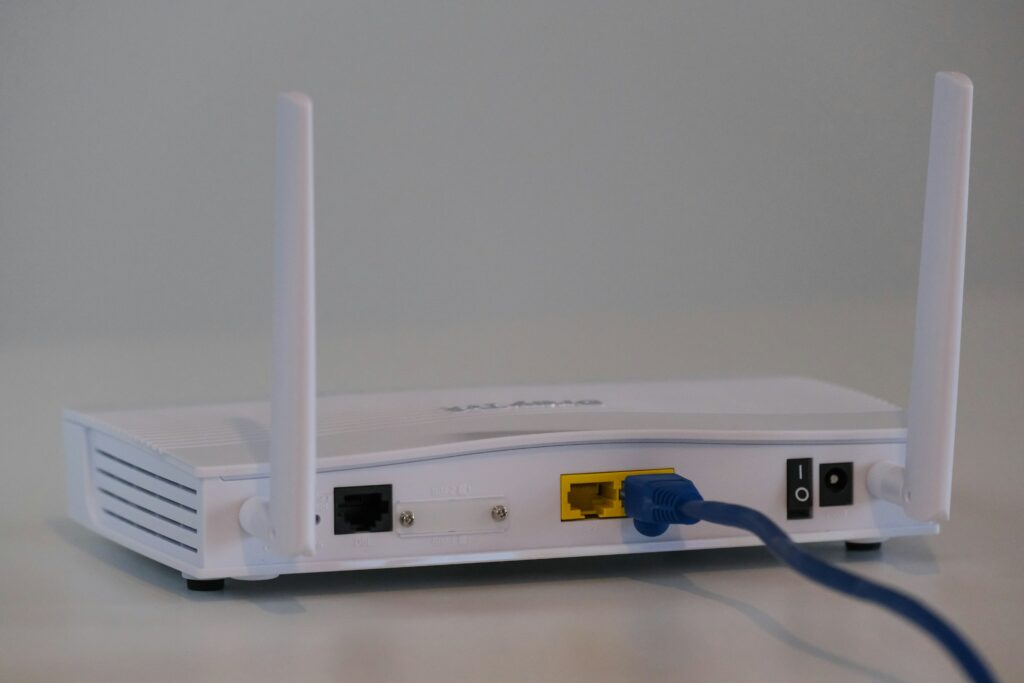
Despite the rapid growth of full fibre broadband and the widespread use of mobile phones, many UK households still rely on a home phone number. Whether it’s to stay in touch with family, run a home business, or simply because it’s the number everyone has known for years, keeping a landline remains important for millions of people.
The good news is that landlines aren’t disappearing—they’re evolving. The UK’s traditional copper telephone network, known as the Public Switched Telephone Network (PSTN), is being retired and replaced with digital phone services that use your broadband connection. This nationwide switchover is due to be completed by 31 January 2027, meaning traditional analogue landlines will no longer be available. Instead, providers now offer services such as Digital Voice or VoIP (Voice over Internet Protocol), allowing you to make and receive calls over the internet while keeping your existing phone number.
However, not every broadband provider still includes a home phone service. Some continue to offer digital landlines alongside their broadband packages, while others have moved to broadband-only services, meaning customers need to find an alternative if they want to keep a home phone number.
In this guide, we’ll look at which broadband providers still offer landline services, which providers have dropped them, and why separating your phone number from your broadband could give you greater flexibility, access to better broadband deals, and make switching providers far simpler in the future.
For many people, the word “landline” still brings to mind a phone plugged into the wall using the traditional telephone socket. While the phone number may stay the same, the technology behind it has changed significantly.
Historically, landline calls were carried over the UK’s copper telephone network, known as the Public Switched Telephone Network (PSTN). This dedicated network powered your home phone independently of your broadband connection and had been in use for decades. However, as the PSTN is being retired, providers are moving customers to Digital Voice services.
Digital Voice works using Voice over Internet Protocol (VoIP), which means your calls are transmitted over your broadband connection instead of the old copper phone network. From a user’s perspective, very little changes. You can still make and receive calls using your existing home phone number, and in many cases you can continue using your current handset with a compatible adapter or a provider-supplied hub.
One noticeable difference is how your phone connects. Rather than plugging into the traditional telephone wall socket, your phone is usually connected directly to your broadband router or a dedicated adapter supplied by your broadband provider. The router handles your internet connection and your phone service at the same time.
For most households, the transition is straightforward, and call quality is often just as good—if not better—than a traditional landline. The biggest change is happening behind the scenes, as the UK’s ageing telephone network is replaced with a modern, internet-based service designed to support the country’s future communications infrastructure.
If you still want a home phone, you’re not out of options. While traditional analogue landlines are being phased out, several major UK broadband providers continue to offer a digital home phone service alongside their broadband packages. In most cases, you’ll be able to keep your existing number and continue using your home phone, although the service now runs over your broadband connection rather than the old copper telephone network.
Here’s a look at some of the main providers that still offer digital home phone services.
| Provider | Home phone available? | Digital Voice | Keep your number? |
|---|---|---|---|
| BT | Yes | Yes | Yes |
| EE | Yes | Yes | Yes |
| Sky | Yes | Yes | Yes |
| TalkTalk | Yes | Yes | Yes |
| Vodafone | Yes | Yes | Yes |
| Zen Internet | Selected packages | Yes | Yes |
Package availability changes regularly, so it’s always worth checking the latest offers before signing up.
BT continues to offer one of the UK’s best-known home phone services through Digital Voice. Available with many of its broadband packages, Digital Voice replaces the traditional landline while allowing customers to keep their existing home phone number. Existing handsets can usually still be used, either by plugging them into the Smart Hub or by using a Digital Voice adapter where required.
BT also offers optional calling plans for customers who regularly make UK or international calls, making it a good choice for households that still rely on their home phone. As the UK’s PSTN switch-off continues, all new phone services are now delivered digitally.
Following its integration with BT’s consumer broadband services, EE also offers Digital Voice with many broadband packages. The technology is largely the same as BT’s, with calls made over your broadband connection rather than the old phone network.
Customers can usually transfer their existing landline number when joining EE, and a range of call plans are available depending on how often the phone is used. EE has become BT Group’s primary consumer broadband brand, particularly for new customers looking for full fibre broadband combined with a home phone service.
Sky continues to provide a home phone service with many of its broadband packages through Sky Talk. Like other providers, the service has moved away from the traditional landline network and now operates digitally over your broadband connection.
Customers can generally keep their existing phone number when switching to Sky, and optional call packages are available for anyone who makes regular landline or international calls. Sky remains one of the largest providers offering broadband and home phone bundles in the UK.
TalkTalk continues to offer Digital Voice alongside many of its full fibre broadband packages. Existing customers are gradually being migrated from analogue landlines to digital phone services as part of the nationwide switchover.
As with other providers, calls are made over your broadband connection, and most customers can retain their existing landline number. If you’re moving to TalkTalk from another provider, the company will usually handle the number transfer as part of the switching process.
Vodafone also offers Digital Voice with selected fibre broadband packages. Instead of using the old copper phone network, calls are delivered over Vodafone’s broadband service using VoIP technology.
Customers can usually port their existing home phone number when they switch, making the transition relatively straightforward. Vodafone’s digital phone service is designed to provide the same familiar experience as a traditional landline while taking advantage of modern broadband infrastructure.
Zen Internet offers Digital Voice alongside selected residential broadband packages, with particularly strong options for customers who want a standalone digital phone service or business-grade reliability. Like the other providers listed here, Zen’s service allows you to keep your existing landline number while making calls over your broadband connection.
Zen has been one of the earlier providers to embrace digital voice and offers a range of call plans and features that appeal to both home users and small businesses.
Until recently, Plusnet offered traditional home phone services alongside its broadband packages. However, Plusnet is not introducing its own Digital Voice service. Instead, existing customers who want to keep a home phone are being migrated to EE or encouraged to move to another digital voice provider as the PSTN network is switched off. New Plusnet broadband customers should therefore expect a broadband-only service.
While getting your home phone and broadband from the same provider can seem convenient, it can also make switching broadband providers more complicated than it needs to be.
One of the biggest frustrations is that your phone number becomes tied to your broadband account. Every time you decide to switch providers, you need to make sure your number is transferred correctly. Although number porting usually works well, delays and administrative errors can happen, particularly if services are cancelled in the wrong order or if there’s a mismatch in account details. In the worst cases, customers risk losing a phone number they’ve had for years.
Keeping your landline linked to your broadband can also reduce your flexibility. When comparing broadband deals, you may find that the cheapest or fastest package doesn’t include a home phone service at all. This can leave you choosing between paying more for a bundled package or giving up your landline altogether.
Another consideration is cost. Many broadband providers now treat home phone services as an optional extra, with monthly charges for Digital Voice and additional fees for inclusive call plans. These costs can add up over the length of a contract and are often higher than using an independent VoIP provider, which may offer the same ability to keep your number for a fraction of the price.
Because your phone service is tied to your broadband contract, switching providers also becomes something you have to plan carefully. Rather than simply choosing the best broadband deal available, you need to consider number transfers, installation dates and whether your new provider supports digital voice.
For people who value their home phone number, this can make changing broadband feel more stressful than it should be. Separating your phone number from your broadband removes much of this complexity, allowing you to choose the broadband provider that offers the best price, speed or service—without worrying about moving your number every time you switch.
If your home phone number is important to you, there’s another option that many people don’t realise exists. Instead of keeping your number tied to your broadband provider, you can port it to Plexatalk and keep it independently of your internet service.
Think of it as taking ownership of your number. Rather than moving it every time you switch broadband providers, your number stays with Plexatalk while you simply change your broadband whenever you find a better deal.
This approach offers much greater flexibility. Because your phone number is no longer linked to your internet provider, you’re free to choose broadband based on what matters most—whether that’s price, speed, customer service or availability. You won’t need to worry about whether your new provider offers a home phone service or whether they’ll be able to transfer your number correctly.
Plexatalk plans start from just £4 per month, making it an affordable alternative to many provider-branded digital phone services. Once your number has been ported, you can continue receiving calls on the same familiar number without having to repeat the porting process every time your broadband contract ends.
There are several key benefits to separating your phone number from your broadband:
As more broadband providers move towards broadband-only packages, separating your phone service makes increasing sense. Instead of letting your broadband provider control your number, Plexatalk gives you the freedom to choose the broadband that’s right for you, while your phone number remains exactly where it belongs.
It’s a simple change that can save time, reduce the hassle of switching providers and potentially lower your monthly costs. Best of all, once your number is with Plexatalk, you only need to port it once. After that, changing broadband becomes much simpler, because your phone number stays with you—not with your ISP.
If you’re planning to switch broadband, the biggest question is whether you want your phone number to move with you every time—or stay put.
With the traditional approach, your broadband and home phone are bundled together. While this can seem convenient, it means your landline number is tied to your broadband provider. Every time you switch to a better deal, your number usually needs to be transferred as well. Although the One Touch Switch process has made changing broadband easier, moving a phone number can still involve extra administration, careful timing and the potential for delays. It can also limit your choice, as not every provider offers a home phone service on all of its packages.
By contrast, separating your number from your broadband gives you much more freedom. By porting your number to Plexatalk, your landline stays in one place while your broadband becomes completely independent. You can switch internet providers whenever your contract ends, take advantage of broadband-only deals, and choose the package that offers the best combination of price, speed and service—without worrying about your phone number.
For anyone who plans to switch broadband more than once, wants to keep a long-standing home number, or simply wants greater flexibility, separating your phone service from your broadband is often the smarter long-term solution. It means your number belongs to you, not your broadband provider, making every future switch simpler, quicker and potentially more cost-effective.
Yes. In most cases, you can keep your existing landline number whether you’re moving to a digital phone service with your broadband provider or porting it to an independent VoIP provider such as Plexatalk. As long as the number is eligible for transfer and the porting process is completed correctly, you shouldn’t need to change the number you’ve had for years.
No. It’s the technology that’s changing, not the concept of a landline. The UK’s old copper telephone network is being switched off by January 2027, but home phone services will continue using digital technology (VoIP or Digital Voice). You’ll still be able to make and receive calls using your existing number.
Usually, yes. Most digital phone services allow you to continue using your current cordless or corded telephone. Instead of plugging it into the traditional wall socket, you’ll typically connect it to your broadband router or a compatible telephone adapter supplied by your provider.
Unlike traditional analogue landlines, digital phone services rely on both your broadband connection and electrical power. If there’s a power cut, your phone service may stop working unless you have a battery backup or an alternative way to make calls, such as a mobile phone. Some providers offer additional support for vulnerable customers who rely on a home phone.
In many cases, yes. If your number is held with an independent VoIP provider such as Plexatalk, moving home is much simpler because your phone number isn’t tied to a physical telephone line. As long as you have a broadband connection, you can continue using the same number from your new address.
Separating your phone number from your broadband gives you greater flexibility and control. You only need to port your number once, after which you can switch broadband providers whenever you like without having to move your number again. It also gives you access to a wider choice of broadband-only deals, can reduce your monthly costs, and makes future switches much simpler. For anyone who wants to keep their landline without being tied to a single broadband provider, it’s an increasingly popular and future-proof solution.
If having a home phone number is important to you, there’s no need to give it up. Several UK broadband providers still offer home phone services, but these are now almost always delivered as Digital Voice or VoIP over your broadband connection rather than through the old analogue telephone network.
However, as more providers move towards broadband-only packages and the UK continues its transition away from traditional landlines, it’s worth thinking about whether your phone number really needs to stay tied to your broadband provider.
If you regularly switch broadband to take advantage of better prices, faster speeds or improved customer service, keeping your number attached to your ISP can create unnecessary complications. Every switch may involve another number transfer, additional administration and the risk of delays.
By porting your number to Plexatalk from just £4 per month, you only need to move it once. After that, your phone number stays with you while you’re free to choose the broadband provider that offers the best deal, without worrying about transferring your number every time your contract ends.
It’s a simple, future-proof way to keep the number you know and trust, while enjoying the freedom to shop around for the best broadband whenever you choose.
Yes – you can have a separate provider for your broadband and landline. While many people still choose to buy both services as part of a bundle, it’s no longer a requirement.
As the UK switches from the old analogue phone network to digital phone services, more homeowners are discovering they have greater flexibility over who provides their internet connection and who handles their home phone service. Rather than being tied to a single provider, you can choose the broadband package that best suits your needs and pair it with a separate landline provider.
This change opens up more choice, whether you’re looking for better value, improved call features, or simply want to keep your home phone number while switching broadband providers.
In this guide, we’ll explain how separate broadband and landline services work, when it makes sense to use different providers, and how internet-based phone services can give you the flexibility to choose the best option for your home.
Yes. Your broadband provider and your phone provider can be completely different companies.
Your broadband provider’s job is simply to supply your internet connection. As long as you have a reliable broadband service, your home phone can be provided separately using Voice over Internet Protocol (VoIP). Instead of relying on the old copper telephone network, VoIP technology makes and receives calls over your internet connection.
This gives you far more flexibility than traditional landlines ever could. Rather than choosing a bundled package because it’s your only option, you can compare broadband providers based on speed, reliability and price, while selecting a phone service that offers the features, call plans and support you want.
This approach has become much more common as the UK moves away from analogue phone lines and towards full fibre broadband and digital phone services. With the Public Switched Telephone Network (PSTN) being retired, many providers now offer internet-based calling instead of traditional landlines. As a result, customers are no longer tied to a single provider for both services and can mix and match the options that work best for their household.
Modern home phone services use your broadband connection to make and receive calls instead of the old copper telephone network. This technology is called Voice over Internet Protocol (VoIP), but in practice it’s much simpler than it sounds.
Rather than your phone being connected to a traditional landline, your calls are sent securely over your internet connection. If you already stream TV, browse the web or make video calls online, your broadband is capable of carrying phone calls too.
From your point of view, very little changes. You can keep your existing phone number in many cases, use a compatible home telephone, and make and receive calls just as you always have. Friends and family dial the same number, and your phone rings as normal when someone calls.
The biggest difference is simply what’s happening behind the scenes. Instead of relying on ageing copper phone lines, your calls are carried digitally over the internet. This makes it easier to choose the broadband provider that’s right for you while using a separate phone service that offers the features, flexibility and pricing that best suit your household.
Many broadband companies still offer packages that include both your internet connection and a digital home phone service. For some households, this is the simplest option because everything comes from one provider, with a single monthly bill and one point of contact if you need support.
However, bundled packages don’t always offer the best value or flexibility. You may end up paying for a phone service with features you don’t need, or find that another broadband provider offers faster speeds or better prices. If you decide to switch providers later, your phone service may also be tied to that package, making the process a little more complicated.
A growing number of people are choosing to separate their broadband and phone services. This allows you to pick the broadband provider that offers the best speeds, coverage or monthly price for your area, while choosing a phone provider based on the features and call plans that suit you.
Keeping these services separate also gives you greater flexibility in the future. If you find a better broadband deal, you can switch internet providers without necessarily changing your phone service or losing the number you’ve had for years. It also means you’re free to choose a specialist phone provider that focuses on delivering reliable home phone services, rather than simply accepting whatever is included in a broadband bundle.
Another increasingly popular option is to take a broadband-only package and add your home phone service separately using Plexatalk.
Because Plexatalk works over your internet connection, it doesn’t matter which broadband provider you choose. Whether your broadband comes from a major national provider or a smaller full fibre company, Plexatalk can provide your home phone service independently, giving you the freedom to choose the broadband package that’s right for you.
This means you don’t have to pay for a bundled phone service if you don’t want one. Instead, you can enjoy a reliable home phone service, keep your existing number in many cases, and continue making and receiving calls just as you always have.
It’s a flexible solution that gives you more control over your services. Rather than being tied to one provider for everything, you can choose the best broadband deal available while relying on Plexatalk to handle your home phone service over your internet connection.
More households are choosing separate broadband and phone providers because it gives them greater flexibility and control over the services they use.
One of the biggest advantages is choice. Instead of selecting a bundled package, you can compare broadband providers based on speed, reliability and price, then choose a phone provider that offers the features you actually want. This often makes it easier to find better broadband deals while avoiding the cost of paying for services you don’t need.
Many people also want to keep their existing home phone number, especially if friends, family or businesses already use it. With internet-based phone services, it’s often possible to transfer your existing number, allowing you to enjoy a modern digital phone service without changing the number you’ve had for years.
Choosing a dedicated phone provider can also give you access to useful features such as voicemail, call forwarding, caller display and flexible call plans that may not be included with every broadband package.
Another benefit is that switching broadband providers in the future can be much simpler. Because your phone service isn’t tied to your broadband package, you can move to a better internet deal without having to replace your home phone service each time.
As the UK continues its move away from analogue landlines and onto digital phone technology, separating your broadband and phone services is becoming an increasingly practical way to future-proof your home while giving yourself more freedom to choose the providers that best meet your needs.
Before switching to a separate broadband and phone provider, there are a few important things to keep in mind to help ensure everything goes smoothly.
If you want to keep your existing home phone number, you’ll usually need to arrange a number port. Timing is important. If your number is transferred before your new broadband service is live, it can automatically cancel the phone line your broadband is using, which may result in your internet service being disconnected and needing to be reconnected. In most cases, it’s better to wait until your broadband has been switched over. You typically have up to 30 days after your broadband goes live to port your number, although your old number won’t be available to use during the porting process.
You’ll also want to check whether you can continue using your existing home phone. In many cases, you can, although you may need a VoIP adapter if your telephone isn’t designed to connect directly to your broadband equipment.
Finally, make sure your broadband connection is reliable enough to support internet-based calling. Most modern broadband services, including full fibre connections, are more than capable of delivering excellent call quality.
As with any digital phone service, it’s worth remembering that internet-based calls rely on both your broadband connection and mains power. During a power cut, your phone service won’t normally work unless you have a backup power solution in place, so it’s worth considering this if you rely on your home phone in an emergency.
In most cases, yes. If you’re moving to a VoIP phone service, you can usually transfer (or “port”) your existing landline number. This allows you to continue using the same number that friends, family and businesses already know.
Usually, yes. Many existing home telephones can still be used with a VoIP service, although you may need a VoIP adapter if your phone doesn’t connect directly to your broadband router or phone service.
Yes. In fact, full fibre broadband is ideal for VoIP services. It provides a fast, reliable internet connection that delivers excellent call quality, making it a popular choice for modern digital home phone services.
Yes, provided your phone service is separate from your broadband provider and your number has been successfully ported. Keeping your phone and broadband independent can make it much easier to change broadband providers in the future without affecting your home phone number.
For most people, yes. With a stable broadband connection, VoIP calls are typically as clear as — and often clearer than — traditional landline calls. Call quality depends largely on the reliability of your internet connection.
Because VoIP uses your internet connection, your home phone won’t be able to make or receive calls while your broadband is unavailable. Similarly, during a power cut, your phone service won’t usually work unless you have backup power for your broadband equipment. If maintaining phone access during outages is important, it’s worth discussing the available options with your phone provider.
You no longer have to buy your broadband and home phone service from the same provider. Thanks to digital phone technology, you can choose the broadband package that offers the best speed and value, while using a separate VoIP provider for your home phone.
This flexibility gives you more control over your monthly costs, access to the calling features you want, and the freedom to switch broadband providers in the future without having to rethink your phone service every time.
If you’re looking for a simple, reliable way to keep your home phone without being tied to a broadband bundle, Plexatalk could be the ideal solution. Because it works over your existing internet connection, you can enjoy a modern home phone service with the broadband provider of your choice.