
Zoiper is one of the world’s most popular softphone apps, available for Windows, macOS, Linux, iOS, and Android. It lets you make and receive calls over the internet, turning your laptop, PC, or mobile device into a business phone.
But here’s the catch: Zoiper doesn’t come with a phone number, call minutes, or a network of its own.
To make Zoiper useful for your business, you need a VoIP provider to supply:
That’s where Plexatalk comes in. Let’s explore what makes a great Zoiper provider, why Plexatalk leads the pack in the UK, and how to set it up in practice.
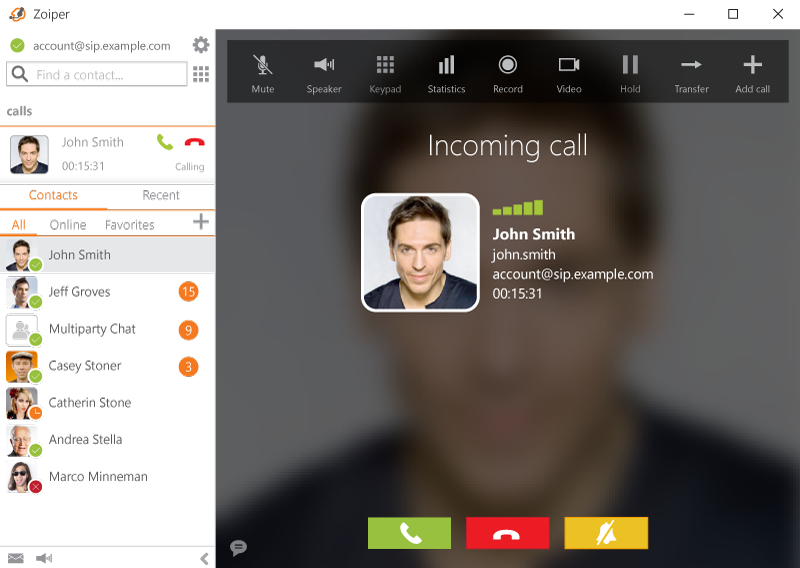
Zoiper is a SIP/IAX softphone — which means it uses internet-based protocols to connect to a VoIP provider.
Zoiper is just the app. Without a VoIP provider, you’re left with a pretty dial pad that can’t connect to the phone network.
Not all VoIP companies are created equal. If you’re pairing with Zoiper, you need a provider that ticks certain boxes:
At Plexatalk, we’ve designed our service to work seamlessly with Zoiper while staying affordable and flexible.
Choose from:
Unlike global VoIP brands, we offer local support. If you get stuck with codecs, registrations, or settings, we’ll guide you through.
Plexatalk gives you:
Here’s where the combo shines:
When shopping for “Zoiper providers,” avoid:
Yes, Zoiper has a free version that works fine with Plexatalk. Premium unlocks extra codecs and features.
Yes — Zoiper is just an app. You need a provider like Plexatalk for numbers, SIP accounts, and minutes.
Yes. We provide 01, 02, 0330, and 0800 numbers that work perfectly with Zoiper.
You can register the same SIP account on multiple devices. Great if you want calls ringing on mobile and laptop.
Yes — for many businesses it’s all you need. You can always add a VoIP desk phone later if desired.
You can add more SIP accounts, numbers, or features as you grow. Plexatalk scales with you.
Yes, but always use strong SIP passwords. Plexatalk also offers secure transport (TLS/SRTP) for encrypted calls.
Zoiper is a brilliant softphone — but it’s only as powerful as the VoIP provider behind it.
With Plexatalk you get:
Get your Zoiper-ready SIP account today.
As an electrician, your business runs on trust. Customers need to know that when they call, you’ll answer — whether it’s a landlord with tenants in the dark, a shop whose lights have failed, or a family needing an emergency repair.
But here’s something often overlooked: your phone number is one of the first signals of professionalism that a customer sees.
And thanks to VoIP technology, you don’t even need a physical line anymore. A virtual landline can route calls straight to your mobile while presenting your business with the professional image of a landline.
This blog explores why the choice between landline and mobile is more than just convenience — it’s about credibility, continuity, and the long-term success of your electrical business.
There’s no denying mobiles are convenient — most electricians couldn’t function without one. But when it comes to being the public face of your business, relying on just a mobile number creates issues that directly affect your reputation and growth.
Homeowners and commercial clients are cautious. With scams on the rise, many are wary of calling businesses that only advertise a mobile. A landline number conveys that you’re an established, professional service — not someone who might disappear tomorrow.
Imagine two electrician websites:
Customers almost always choose the electrician with a landline. Why? Because it looks safer and more credible. The difference is psychological, but powerful: a landline suggests you’ve invested in your business, while a mobile looks temporary or casual.
If you’re in the middle of wiring a fuse board or working at height, it’s easy to miss a mobile call. And in this trade, if you don’t pick up, the customer usually rings the next electrician they find on Google.
Mobiles work fine for sole traders — until you grow. Once you hire apprentices, office support, or extra electricians, a mobile-only setup becomes messy. A professional landline system scales with you.
Having a landline number is about more than technology — it’s about perception, trust, and continuity.
On your website, van livery, business cards, flyers, and Google profile, a landline simply looks more professional than a mobile.
Landlords, letting agents, and businesses want to feel they’re dealing with a credible, established provider. A landline number helps position you as a contractor they can trust with repeat work.
Traditional copper-wire landlines are being phased out in the UK (BT plans to switch off the PSTN by 2025). Businesses still tied to physical lines will have to migrate.
A virtual landline (VoIP) is future-proof — your number stays with you forever, even if you:
Continuity matters: once customers have your number, you never want to risk losing it.
Historically, getting a landline meant a BT engineer visit, wiring, and being tied to a physical location. Today, with VoIP (Voice over Internet Protocol), you can have a virtual landline that works wherever you do.
Customers see a landline. You get the flexibility of mobile.
A virtual landline isn’t just a smarter-looking number — it comes with business-grade features that solve real problems electricians face:
Not all numbers are created equal. Choosing the right type can help you win more jobs:
Each can be set up virtually via Plexatalk — routed to your mobile, your office, or both.
Picture this:
That one missed call could have been a contract worth thousands.
With a virtual landline, you can:
At Plexatalk, we make it straightforward:
Already exploring phone systems for electricians? Take a look at our dedicated electricians page
In a trade where customers want reassurance, your phone number is more than digits — it’s a signal of credibility.
Don’t let your number hold back your business. Power up your professional image today with a virtual landline from Plexatalk or landlinecloud.co.uk
Not legally, but from a customer perspective it makes a huge difference. A landline number signals professionalism and stability, which helps you win trust faster than advertising a mobile alone.
Yes — that’s exactly how most electricians use them. You get the credibility of a landline number on your website and van, but calls ring straight through to your mobile so you never miss work while on the go.
Unlike traditional copper landlines, a virtual landline (VoIP) isn’t tied to an address. You keep the same number whether you move office, change mobile provider, or expand into a new area.
A local number (like 0161 for Manchester or 020 for London) reassures homeowners and local businesses you’re nearby.
A 0330 number is non-geographic, making you look like a national provider — great if you want to appeal beyond your area.
An 0800 freephone tells customers you’re serious about service and covering the cost of the call.
Not at all. VoIP numbers are usually cheaper than traditional landlines and give you access to features like voicemail, call routing, and IVRs without extra cost.
Yes — in fact, the best setup is a virtual landline plus mobile. Customers call the professional landline number, and you answer on your mobile (or a desk phone if you’ve got office staff). It’s the best of both worlds.
No — to them, it looks exactly like a normal landline. Whether you choose a local code, 0330, or 0800, your business presents the same professional image.
With Plexatalk you can add IVR menus, custom voicemail, call routing, hunt groups, out-of-hours handling, and even call tracking for marketing campaigns. All things a standard mobile can’t do.
The plumbing industry runs on three things: trust, speed, and professionalism. When a customer has a burst pipe or a faulty boiler, they don’t have time to hesitate — they’ll call the number that looks most reliable and responsive.
Traditionally, many plumbers advertise their personal mobile number. It’s convenient, but is it really the best way to present your business? A mobile number can sometimes give off the impression of a one-person outfit that may or may not pick up the phone during working hours. For customers seeking reassurance, that’s a risk.
This is where the virtual landline comes in. Designed for businesses, it blends the credibility of a landline with the flexibility of a mobile. The result? A professional image, smoother call handling, and a setup that works around your business — not the other way around.
For many plumbers, the mobile phone is the obvious choice. It’s in your pocket, it’s easy to use, and you don’t need any extra setup. But while mobiles are convenient, they’re not always the best fit for a growing trade business.
In a competitive trade like plumbing, first impressions really matter — and your phone number is often the very first thing a customer sees. A landline instantly communicates stability and professionalism, helping you stand out from competitors who rely solely on mobiles.
A landline suggests you’re an established business with a proper base of operations. Customers feel reassured that you’re not just “here today, gone tomorrow.”
If you’re targeting work in a specific area, a geographic landline number (e.g., 020 for London, 0161 for Manchester) makes you look like the go-to plumber in that community. People instinctively trust local businesses.
Want to position yourself as more than a local sole trader? Non-geographic numbers (like 0333) project a nationwide presence, giving you the appearance of a larger, more professional outfit.
Competitive Edge
Given the choice, customers are far more likely to call a plumber advertising a landline number than one showing only a mobile. It’s a small detail that gives you a big advantage.
A virtual landline gives you all the professional advantages of a landline number, but with none of the restrictions of being tied to a desk. Instead, it’s powered by VoIP (Voice over Internet Protocol) — the same reliable technology behind modern business phone systems. The result? Simple, flexible, and cost-effective communication built for trade businesses.
Your virtual landline can be forwarded straight to your mobile. That means customers dial what looks like a professional landline, but you can answer on the go — whether you’re driving between jobs or fixing a boiler.
If you expand and bring on staff, you can set up proper desk phones or office handsets linked to the same number. Calls can be shared, routed, or transferred, just like a traditional office system.
Unlike a personal mobile, a virtual landline grows with you. Adding new numbers, new staff, or new call-handling features is quick and easy — no need to juggle multiple mobiles or worry about missed calls.
In short, you get the credibility of a landline, the convenience of a mobile, and the scalability of a full phone system — all in one.
The days of traditional copper landlines are numbered. In fact, the UK is in the process of phasing them out completely, with a nationwide switch-off scheduled by 2025. That means new copper lines aren’t being installed, and existing ones will soon stop working.
A virtual number (VoIP number) gives you the same credibility as a landline, but without being tied to old, outdated infrastructure. Instead, calls are delivered over the internet — more reliable, more flexible, and ready for the future.
By making the move now, you avoid being caught out when copper lines go dark. You’ll also benefit straight away from modern features that a traditional landline simply can’t offer, like call routing, voicemail to email, and mobile forwarding.
A virtual landline isn’t just a smarter number — it comes packed with business-grade features that make everyday communication more professional and more efficient. For plumbers, that can be the difference between winning a job or losing it to a competitor.
No more “Hi, it’s Dave” messages. Instead, set up a branded voicemail that reassures callers they’ve reached your plumbing business, not a personal mobile.
Give customers clear options from the start: “Press 1 for emergencies, 2 for quotes.” It keeps urgent calls prioritised while still capturing new business.
Busy on a job? Calls can automatically redirect to a teammate, an office assistant, or even a call-answering service — so customers never hit a dead end.
Need to share the load? Set multiple phones to ring at once, so whoever is free can answer first. It’s teamwork made simple.
Protect your evenings and weekends without looking unprofessional. After-hours calls can go straight to voicemail, a call service, or a dedicated “non-emergency” line.
Together, these features give your plumbing business the polish of a larger operation, while keeping the flexibility you need on the go.
Switching to a virtual landline couldn’t be easier. With Plexatalk, you can choose the setup that works best for you:
Head to landlinecloud.co.uk – our platform for Virtual Landlines.
Want a fully managed approach? Our team will:
Either way, you’ll be giving your plumbing business the credibility of a landline, the flexibility of a mobile, and the tools of a full business phone system — all at a fraction of the cost of traditional setups.
Ready to stop losing calls and start winning more jobs? Get your Plexatalk virtual landline today or call today on 0330 057 6699 to get started.
A virtual landline is a business phone number that looks like a standard landline but runs over the internet (VoIP). Customers see a professional number, while you answer calls on your mobile, desk phone, or computer.
Not at all. You can start by simply forwarding calls to your mobile. If you want, you can add desk phones or softphones later — but it’s not required.
Yes. If you already advertise a landline, Plexatalk can port your existing number across so you don’t lose it.
You’ll have business-grade voicemail with custom greetings, and you can also set up call routing or hunt groups so someone else can answer.
Yes. By 2025, the UK is retiring traditional copper phone lines. A virtual landline future-proofs your business so you’re not caught out.
With Plexatalk, you can be live within minutes via self-serve, or our team can set everything up for you.
By January 2027, the UK’s traditional landline network—the Public Switched Telephone Network (PSTN)—will be switched off permanently. This marks the end of copper phone lines that have carried the nation’s calls for decades. For millions of households and businesses still relying on these old connections, the clock is ticking: you’ll need to move to a digital alternative before the cutoff.
If you haven’t already switched, expect to start receiving letters or emails from your broadband provider about “Digital Voice” services or VoIP (Voice over Internet Protocol).
But there’s no need to panic. The changeover doesn’t have to be complicated, and with the right preparation it can actually make your phone service more reliable, more flexible, and in some cases even cheaper.
In this guide, we’ll walk you through:
Whether you’re a homeowner wanting a simple setup or a business looking for advanced features, this guide will help you make a smooth, stress-free transition into the UK’s all-digital future.
The UK’s Public Switched Telephone Network (PSTN)—the copper-wire system that has powered landlines for decades—is being permanently retired. From now on, all calls will be delivered over digital, internet-based networks (IP/VoIP) instead.
The nationwide switch-off will take place in January 2027. While the original deadline was set for December 2025, the timeline has been extended to give households and businesses more time to adapt. Importantly, many areas have already entered “stop-sell” status, meaning no new traditional landline services can be ordered—and in some cases, existing ones cannot be modified.
The copper landline network is:
By moving everyone to VoIP (Voice over Internet Protocol), the UK will gain a simpler, more resilient communications infrastructure—while unlocking new features such as multi-device calling, better integration with broadband, and improved reliability.
Anyone still using a traditional landline connection will be impacted. This includes:
In short: if your phone plugs into the wall rather than your router, you’ll need to switch.
VoIP (Voice over Internet Protocol) is the technology that replaces traditional landlines. Instead of running over copper wires, your phone calls are transmitted through your broadband internet connection. If you’ve ever used services like Zoom, WhatsApp, or Skype, you’ve already experienced VoIP in action—only now, it’s becoming the standard for all UK landlines.
The UK landline switch-off is coming — but moving to digital doesn’t need to be complicated. At Plexatalk, we make the transition smooth, reliable, and stress-free. Here’s how the process works:
VoIP runs over your internet connection, so you’ll need a stable service.
We provide flexible VoIP packages for homes and businesses. With Plexatalk, you’ll benefit from:
Call us on 0330 057 66 99 or email support@plexatalk.co.uk
We know how important it can be to hold on to a familiar phone number — whether it’s a number your family has used for decades or a business contact line your customers already know. The good news is: you don’t have to lose it when you switch to VoIP.
UK regulator Ofcom requires all providers to support number portability, which means you can transfer (“port”) your old landline number onto your new VoIP service with Plexatalk.
To avoid delays, follow these simple steps:
At Plexatalk, we manage the process for you from start to finish, so keeping your number is simple and stress-free.
Ready to switch? Call us on 0330 057 66 99 or email support@plexatalk.co.uk
Switching to VoIP doesn’t always mean buying lots of new kit — in many cases, you can keep your existing phone. Here’s what you might need, depending on your setup:
At Plexatalk, we can supply:
We don’t provide routers or UPS units, but we’ll happily advise you on the best options for your setup.
To discuss the right equipment for your home or business, call 0330 057 66 99 or email support@plexatalk.co.uk
For most households and businesses, yes — VoIP is more cost-effective than a traditional landline.
By moving to VoIP, many households and organisations actually save money by dropping line rental while gaining more flexibility and features.
One of the biggest questions people ask about VoIP is: “What happens in a power cut?”
With the old copper network, landlines worked independently of mains electricity. VoIP is different — it relies on your broadband router and an internet connection, both of which need power to function.
There are reliable solutions to keep you connected:
At Plexatalk, we:
With the right setup, VoIP can be just as reliable as your old landline — and much more flexible.
📞 For tailored advice, call 0330 057 66 99 or email support@plexatalk.co.uk
As the UK prepares for the landline switch-off, there are plenty of VoIP providers out there — but not all are created equal. Many households will be automatically moved to big-brand services like BT Digital Voice or Vodafone’s VoIP add-ons, while businesses may be pushed toward complex corporate platforms.
At Plexatalk, we do things differently. We combine the reliability of enterprise-grade VoIP with the personal support and fair pricing that the big players can’t match.
Switching to VoIP is usually straightforward — but like any technology, things don’t always go perfectly the first time. Here are some of the most common issues and how to solve them.
💡 Need help? At Plexatalk, our support team is here to get you back up and running quickly.
📞 Call 0330 057 66 99 or email support@plexatalk.co.uk
The process is simple:
Check you have a stable broadband connection.
Choose a VoIP provider (like Plexatalk).
Decide whether to keep your current handset (with an adapter) or upgrade to a VoIP phone.
Request number porting so you keep your landline number.
Plug in your equipment, test, and then cancel your old landline.
👉 Plexatalk handles the whole process for you — just call 0330 057 66 99.
Usually 7–14 days, depending on number porting. With Plexatalk, setup can be as quick as the same day if you’re taking a new number.
Not really. A single call needs as little as 0.5 Mbps, but for a busy household or business we recommend 10 Mbps+ for smooth performance.
Yes. With a simple ATA adapter (we can supply for £50), most existing handsets work with VoIP. Plexatalk supplies both adapters and dedicated VoIP phones.
Yes. Traditional line rental costs £15–20 per month, while VoIP often starts at £5–10 per month, with unlimited UK calls included. Businesses benefit even more with advanced features at lower costs.
VoIP depends on your router and power. Ofcom requires providers to offer battery backup (often free for vulnerable users). You can also use your mobile phone as an emergency backup.
Some older devices aren’t compatible. Always check with your device provider. Plexatalk can advise on upgrades for telecare, alarm, and security systems.
Yes — just request number porting during setup. Plexatalk handles this from start to finish so you don’t lose your existing number.
Yes. With a stable broadband connection, VoIP is as reliable as (and often clearer than) the old landline. Many businesses rely on it every day for critical communications.
When provided by a trusted UK provider like Plexatalk, yes. We use encrypted connections and advise customers on keeping routers and systems up to date for maximum security.
You’ll need:
A broadband router
Either an ATA adapter (to use your old phone) or a VoIP handset
Optional: battery backup for power cuts
Plexatalk supplies adapters and VoIP phones to make setup simple.
Ready to switch your landline to VoIP?
Call 0330 057 66 99 or email support@plexatalk.co.uk
The landline switch-off affects everyone — but it’s especially important to prepare if you or a family member is elderly, vulnerable, or rely on telecare/medical devices.
Ofcom requires all providers to:
📞 Concerned about a vulnerable relative? Call 0330 057 66 99 or email support@plexatalk.co.uk
By January 2027, the UK’s PSTN landline network will be gone for good. From that point forward, every household and business will rely on digital voice services (VoIP) or mobile phones for calling.
The end of copper landlines isn’t just about replacing old technology — it’s about opening the door to new possibilities:
The traditional landline as we knew it — powered by copper wires — will no longer exist. Instead, landline calling will be fully digital, offering clearer quality, lower costs, and far more flexibility.
At Plexatalk, we don’t just help you get through the 2027 switch-off — we prepare you for the future:
📞 Ready to future-proof your phone service? Call 0330 057 66 99 or email support@plexatalk.co.uk
The landline switch-off is inevitable — but leaving it to the last minute could cause unnecessary stress. By starting the process now, you’ll avoid disruption and make sure your home or business is ready well before January 2027.
With Plexatalk, moving from landline to VoIP is straightforward:
The sooner you switch, the smoother the transition will be.
📞 Call 0330 057 66 99 or 📧 email support@plexatalk.co.uk
At Plexatalk, we’re here to make your switch from landline to VoIP simple and stress-free. But if you’d like to read more about the UK landline switch-off from official sources, here are some useful links:
Wondering how to Keep Your Landline When Switching to Cuckoo Full Fibre? Switching to Cuckoo Full Fibre is one of the smartest moves you can make if you want fast, reliable, future-proof broadband. Cuckoo keeps things simple: one fast package, one fair price, no mid-contract price hikes, and the reassurance that you’re getting speeds designed for the modern internet.
With fibre-to-the-premises (FTTP) now rolling out across the UK, many households and businesses are leaving behind the old copper lines that held back their broadband for years. With speeds of up to 900 Mbps and none of the signal drop-outs caused by distance from the cabinet, Cuckoo’s network is designed for streaming, video calls, gaming, cloud storage, and smart home devices — all working at once without slowdowns.
But there’s a question that often gets overlooked:
What happens to your landline when you switch to Cuckoo?
The answer might surprise you.
Unlike traditional broadband services that bundled internet and phone lines together, Cuckoo Full Fibre doesn’t include a landline at all.
That means:
Cuckoo’s philosophy is clear: focus on broadband, drop the extras. That keeps things simple and cuts out unnecessary line rental charges.
But what if you’ve had the same phone number for 10, 20, or even 30 years? What if it’s tied to your business, your security alarm, or the only way elderly relatives reach you?
If you cancel your old package without making a plan, you’ll lose your number permanently.
A lot of people assume landlines are “dying out.” It’s true fewer people pick up the home phone to call family now — mobiles and messaging apps dominate — but there are still plenty of reasons a fixed phone number remains useful.
So even in the fibre age, landlines still play a role — especially when backed by VoIP.
The UK’s Public Switched Telephone Network (PSTN) — the copper-based system that powered every landline call for decades — will be switched off in January 2027.
That means:
In short: every landline in the UK is moving to the internet. Switching to Cuckoo Full Fibre puts you ahead of the curve, but it also means you’ll need to plan how to keep your number now.
VoIP (Voice over Internet Protocol) is the technology that lets you make and receive calls over broadband instead of copper wires.
Think of it like this: instead of your voice travelling through old telephone cables, it’s converted into digital signals and carried across your internet connection. To the caller, nothing changes — they still dial your familiar number.
With Plexatalk VoIP, you can:
And because Cuckoo Full Fibre is fast, stable, and low-latency, it provides the perfect backbone for crystal-clear VoIP calls without dropouts.
Choosing Plexatalk with Cuckoo Full Fibre gives you:
The key is to act before you cancel your old broadband + phone service.
Here’s how it works step-by-step:
If you don’t want to buy new handsets, that’s fine. With an Analogue Telephone Adapter (ATA), you can plug your old phone into your Cuckoo router and use it as normal.
Benefits:
For businesses or home offices, a dedicated VoIP desk phone can unlock extra features:
Perfect for:
Not everyone wants a physical phone. With VoIP apps like Zoiper:
This is especially popular for freelancers, remote workers, and anyone who travels often.
Case 1: Family in Cornwall
Moved to Cuckoo for faster fibre but needed their old BT landline for a telecare system. We ported their number, supplied an ATA, and confirmed compatibility with the alarm provider.
Case 2: Small Marketing Agency in Manchester
Cuckoo fibre gave them stable broadband for remote work. We set up three VoIP desk phones with hunt groups and voicemail-to-email so no client call is ever missed.
Case 3: Rural Couple in Shropshire
Poor mobile signal made their landline essential. We ported their number, added Zoiper on their mobiles, and now they can take calls anywhere on the property via Wi-Fi.
No. Cuckoo is broadband-only.
Yes, but not with Cuckoo. You’ll need a 3rd party VoIP provider like Plexatalk to handle calls.
Yes, with an ATA adapter and hosted VoIP account.
Yes — VoIP apps make it possible to answer calls on your mobile, tablet, or laptop.
Yes. Fibre-to-the-premises is one of the best networks for VoIP.
Your Plexatalk VoIP number isn’t tied to Cuckoo. It follows you to any provider.
One of the best things about VoIP is that it’s independent of your broadband provider. Unlike the old copper landlines that were tied directly to BT exchanges, your Plexatalk number is portable — it stays with you no matter how often you change internet providers.
That means if you move away from Cuckoo in the future, your landline will continue to work seamlessly. For example:
This flexibility gives you confidence to shop around for the best broadband deals without worrying about losing your long-held landline number.
Your VoIP line is yours for life — no matter who provides your internet connection.
Moving to Cuckoo Full Fibre gives you incredible internet speeds and a future-proof connection. With Plexatalk VoIP, you can keep your trusted landline number at the same time — no line rental, no hassle, and features that copper lines could never provide.
📞 Call us today on 0330 057 6699
📧 Email support@plexatalk.co.uk
Explore our Residential VoIP Packages or Business VoIP Solutions and see how easy it is to make the move.

It’s estimated that Pakistan comes into the top 10 destinations where international calls are made from the UK. Despite the relatively low price per minute in comparison to some other countries, a lot of carriers in the UK charge a lot to make calls to Pakistan.
Most UK mobile and landline providers charge excessive rates for international calls. Instead of paying up to £4.21 per minute, switch to Plexatalk—our VoIP service that includes minutes to Pakistan in your plan, saving you money on both personal and business calls.
The rates to Pakistan are so cheap, we include them in our inclusive minutes. You can check out our domestic pricing here and business pricing here.
This one can be a bit tricky as many providers offer deals that come and go, so this information will be up-to-date at the time we pubish it but it may be that bundles or plans come up. We’re going to go into the main UK mobile providers:
With these rates, a 10-minute call could cost up to £42 on EE—ridiculous! If you frequently call Pakistan from a mobile, it’s worth looking at alternative options.
The prices above don’t take into account bundles and plans.
Just like mobile providers, a lot of landline providers have bundles and deals too on international calls. Often they put different countries into different bands.
While these are lower than mobile rates, the costs still add up, and you’re limited to calling from a landline.
The prices above don’t take into account bundles and plans.
VoIP (Voice over Internet Protocol) lets you make calls over the internet rather than traditional phone lines. This means lower costs, better flexibility, and no per-minute rip-offs from big providers.
Unlike traditional mobile and landline services, we include calls to Pakistan in our allowances, so you don’t have to worry about per-minute charges. Whether you’re calling for personal or business reasons, we offer a much better deal than UK networks.
With PlexaTalk, you can:
You can check out our domestic pricing here and business pricing here.
Stop paying per-minute fees to call Pakistan. Join Plexatalk and make unlimited calls at a fraction of the cost.
| Provider | Rate (per minute) | Bundled Plans Available? |
|---|---|---|
| PlexaTalk (VoIP) | Included in plan | Yes (Unlimited Calls to Pakistan) |
| O2 | £2.24 | Yes (International Favourites) |
| Vodafone | £2.00 | Yes (International Call Bundles) |
| Three (3) | £2.50 | Yes (International Saver) |
| EE | £4.21 | Yes (International Add-ons) |
| BT (Landline) | 35.7p (Day) | Yes (BT International Plan) |
| TalkTalk (Landline) | 33p | Yes (International Extra) |
| Sky (Landline) | 29.90p (Day) | Yes (Sky Talk International) |
The first direct telephone service between the United Kingdom and Pakistan was inaugurated in June 1949, connecting London and Karachi. At that time, a three-minute call cost £3.
Prior to this, international telephone communication was limited and often required intermediary connections. The first official transatlantic telephone call occurred on January 7, 1927, between New York and London. You can check out our price comparison on calls to the US from UK here.
As for the specific date of the first telephone call between the UK and Pakistan, detailed records are scarce. However, it’s known that the direct service established in 1949 marked a significant milestone in UK-Pakistan telecommunications.
It’s worth noting that telephone services in British India, which included present-day Pakistan, were introduced as early as 1881. Major cities, including Karachi, had access to this technology.
After Pakistan’s independence in 1947, the country inherited approximately 14,000 landlines, indicating an existing, albeit limited, telecommunication infrastructure.
In summary, while the exact date of the first call between the UK and Pakistan isn’t well-documented, the establishment of direct telephone service in June 1949 was a pivotal moment in enhancing communication between the two nations.
The cost of calling Pakistan from a UK mobile depends on the network provider. As of now, O2 charges £2.24 per minute, Vodafone charges £2.00 per minute, Three (3) charges £2.50 per minute, and EE has the highest rate at £4.21 per minute. These rates can vary depending on international call bundles or special offers from providers.
Calling Pakistan from a UK landline is generally cheaper than calling from a mobile. BT’s standard rate is 35.7p per minute during the day and 31.3p per minute in the evenings and on weekends. TalkTalk charges 33p per minute, while Sky offers a slightly lower rate of 29.90p per minute during the day and 26.20p per minute in the evenings and on weekends. Some providers offer international calling plans that can reduce these costs.
The cheapest way to call Pakistan from the UK is through VoIP (Voice over Internet Protocol) services such as Plexatalk, which includes minutes to Pakistan in its plans. Other alternatives include using calling cards, purchasing international call bundles from mobile providers, or making calls via messaging apps like WhatsApp, Skype, or Viber, which use internet data instead of standard calling rates.
Yes, calling Pakistan using WhatsApp, Skype, or Viber is generally cheaper because these apps use internet data instead of mobile network call minutes. However, both the caller and recipient need to have the app installed and an internet connection. While these services are free over Wi-Fi, mobile data charges may apply if Wi-Fi is unavailable.
The only way to call Pakistan for free is by using internet-based calling apps like WhatsApp, Skype, or Viber. These services allow voice and video calls at no charge, but both parties must be connected to the internet. Some VoIP providers may offer free trial minutes for international calls, but completely free calls from traditional mobile or landline providers are not available.
Some UK mobile providers offer international call bundles that reduce the per-minute rate to Pakistan. O2 offers international calling add-ons through its International Favourites plan. EE provides international add-ons for discounted calls. Three (3) has an International Saver plan that lowers the cost of calling certain countries, including Pakistan. It is recommended to check with your network provider for current deals and bundle options.
VoIP (Voice over Internet Protocol) allows users to make phone calls over the internet instead of traditional phone lines, significantly lowering costs. VoIP services such as PlexaTalk provide international calling plans that include minutes to Pakistan at a fraction of the cost charged by UK mobile and landline providers. VoIP also offers better flexibility, as users can make calls through a desk phone, mobile app, or computer.
To set up a VoIP service for calling Pakistan, sign up with a provider like Plexatalk. The next step is to download a VoIP app like Zoiper or Linphone or use a VoIP desk phone. After setting up the internet connection, calls to Pakistan can be made at much lower rates compared to traditional mobile or landline services.
The first direct telephone call between the United Kingdom and Pakistan was made in June 1949 when a direct telephone service was established between London and Karachi. Before this, calls between the two countries required intermediary connections, making communication slow and expensive. In 1949, a three-minute call to Pakistan cost £3, which was considered a high amount at the time.
UK calling rates to Pakistan can be compared on mobile provider websites, VoIP service providers like PlexaTalk, and international calling card providers. Mobile networks such as O2, EE, Vodafone, and Three regularly update their international call rates, and VoIP services typically offer significantly lower prices with inclusive minutes. Checking multiple sources ensures you get the best deal for international calls.
Information above was taken from the providers websites at the time of writing but of course prices can change at any point.
No matter if it’s for work or personal, we all like to stay in touch with friends, family, clients and colleagues overseas. Sadly this can be an expensive endevour, although some providers offer much better rates than others, it might leave you wondering how much to call USA from UK with your provider?
In this post we’re going to be looking into the different costs you’ll pay with various providers and hopefully by the end of it, you will be able to save money on calls to the United States from the United Kingdom.

Making a call to the US from the UK is straightforward, but you’ll need to ensure you’re dialing correctly to avoid any unnecessary charges or misdialed numbers.
The United States, like Canada and most Caribbean countries, follows the North American Numbering Plan (NANP). This means US phone numbers follow the ten-digit format (XXX)-XXX-XXXX, with the first three digits being the area code.
Unlike most countries, the NANP allows its participating countries to share the same dialing code instead of having distinct country codes. All NANP countries, including the US, use +1, so when dialing from the UK, a US number will have the international format +1 (XXX)-XXX-XXXX. The + symbol represents 00 when calling from a UK landline or mobile.
The first ever transatlantic phone call between the UK and the USA took place on January 7, 1927. This historic moment used a radio signal to transmit the call between London and New York. Initially, it was an operator-assisted call, costing £15 for three minutes—a staggering amount at the time.
With advancements in telecommunication, direct-dial services became available in 1957, revolutionizing international communication. Today, calls to the US are easily accessible through mobile networks, landlines, and VoIP services, often at significantly lower costs than in the past.
You can read more about the first transatlantic call here.
Not the cheapest route but if you’re set on using a mobile number to make calls to North America – US, you’ll want to know which of these providers are going to offer you the best rates.
O2 charges £1.68/minute for calls to the USA without their international bolt-on. With the bolt-on it’s 5p/min to call the U.S.
The bolt-on costs £3/month.
Vodafone charges £3/min to call the US.
They also offer plans with inclusive minutes.
Three (3) like Vodafone also charges £3/month. Also like vodafone they do deals with inclusive minutes. According to their website:
“For £7 a month get 100 minutes a month to call standard landline and mobile numbers. This recurrs monthly and includes 55 destinations.”
“For £12 a month get unlimited minutes a month to call standard landline and mobile numbers. This recurrs monthly and includes 55 destinations.”
It appears these are for personal use and there is a fair usage policy too.
EE charges the most out of the big 4 – £4.21/min to call the USA. They also have bundles/plans:
£14.05 is the price for the international pass and gives you 500 minutes/month at 3p before going back up to £4.21
To sumarise, the cheapest you’ll pay without any extra bolt-ons or passes is £1.68/minute with O2.
It’s important to note that some of the providers above may also have plans that we didn’t notice when we checked the prices for calling the USA.
We didn’t cover MVNO’s in the mobile section – these could be cheaper. Like MNVO’s, it’s impossible for us to cover all landline providers so we’ll stick to the big ones.
If you want to make calls to the USA from BT, you’ll be looking at – £1.16/minute.
BT also do plans for calling abroad for less.
19p connection + £0.183/minute or £0.126/minute for evenings and weekend. Definitely much better than a lot of providers we’ve gone over so far.
TalkTalk charge £0.33/minute or discounted £0.03/minute.
You can also get a plan which gives you 500 minutes inlcuded to call USA.
It’s important to note that some of the providers above may also have plans that we didn’t notice when we checked the prices for calling the USA.
USA Calls: Included in the package.
Plan: £10/month.
Includes: 500 minutes/month and a dedicated number.
One great thing about VoIP is you can make calls of a VoIP/landline type phone as well as your mobile thorugh apps like Zoiper. This makes calling the USA convenient as you’ll have the option to call at home or when you’re away from home.
If you’re frequently calling the US, choosing the right provider or add-on can significantly reduce costs. Standard mobile rates are high, but options like O2’s Bolt-On or Three’s international plans offer substantial savings. Landline providers like Sky and TalkTalk also offer competitive rates. For businesses or frequent callers, VoIP services like Plexatalk provide a much more cost-effective alternative with included minutes.
Additionally, understanding how to dial the US correctly and knowing a bit of history about transatlantic communication can add some useful context when making international calls today.
Prices vary from £1.68 per minute to £4.21 per minute for calling the USA off the main UK mobile providers – without any extra plans or bundles.
To call the USA from UK on a landline, you’ll pay 18p to £1.16 per minute. There may also be a connection charge.
Going off of the prices advertised, yes. It’s cheaper to make calls to the US with some VoIP providers than it would be with a UK mobile or UK landline.
To call a US number from the UK, dial: 00 + 1 + (XXX) XXX-XXXX (where 1 is the US country code, and XXX-XXX-XXXX is the US phone number).
Yes, UK landlines such as BT (£1.16/minute), Sky (from 12.6p/min), and TalkTalk (from 3p/min with a plan) can offer better rates than mobile providers. However, VoIP services remain the most cost-effective option.
Yes, VoIP services like Plexatalk (£10/month for 500 minutes, or 2p per minute) provide the most affordable way to call the USA without relying on mobile or landline providers. If you make regular calls to the US, VoIP services are the best choice for saving money.
When deciding on the best dect VoIP phones for your business, it’s important to take into consideration all the strengths and weaknesses of different models, features and how they can fit into your business. At Plexatalk we’ve compiled the ultimate Yealink DECT Phone Comparison. In this comparison we compare all Yealink DECT phones which are relevant in 2025.
We’ll go into the standard phones as well as the rugged ones. We’ll compare features, strengths, weaknesses… and if you scroll right to the bottom (above the FAQ’s) you’ll find a handy little comparison table.
The W71H is similar in many ways to the W73H, this particular model is typically the cheapest out of the Yealink portable phones across many retailers.
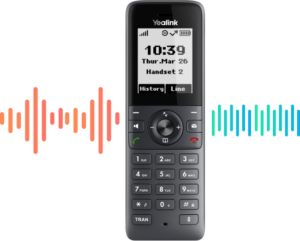
Price: £50 – £60
Unlike the other models we’ll be getting into, this one features a black and white screen. The chassis, buttons, etc are identical to the W73H. It features up to 30 hours of talk time / 340 hours of standby time (both under ideal conditions), 3-way conference and a Full-duplex speakerphone.
Just like the rest of the models it features HD voice and FNR. The battery in this model is a 1010 mAh, Lithium-ion.
There is no 3.5MM headset on this model but it is Hearing Aid Compatibility (HAC) compliant.
Cost-conscious users or small businesses seeking basic cordless communication without the need for advanced features.
Despite having the same size battery as the W71H the standby time on this goes slightly further. It features a better colour display as well as some extras we don’t get on the W71H.
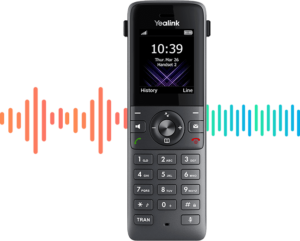
Price: £65 – £75
The talk time on the W73H is 35 Hours and Standby Time is 400 (ideal conditions). This model features a 3.5mm headjack, Hearing Aid Compatibility (HAC) compliant, Up to 2 simultaneous calls per handset, 3-way conference and a Full-duplex speakerphone.
Professionals requiring reliable performance with extended battery life and a color display for daily business communications.
The W74H is a similar phone to the W73H but comes with bluetooth.
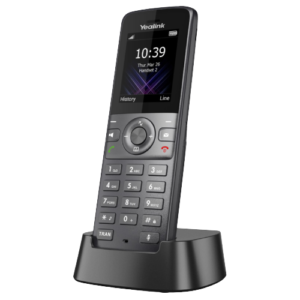
Professionals requiring reliable performance with bluetooth and a colour display for daily business communications.
W56H has a different design altogether to the W73H and W71H. It’s a bigger handset at 175mm x 53mm x 20.3mm. At 30 hours talk time and 400 hours standby time, its battery life is matched to the W73H.
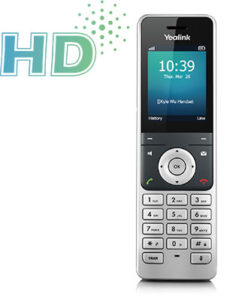
Price: £70 – £90
Users desiring a larger screen and robust battery life, suitable for moderate to heavy call volumes in various business settings.
The W78H is feature full but doesn’t get the same amount of talk time as the W56H, W73H or W71H. With its sleek design and bluetooth connectivity, that might not be an issue as you’ll still get 21 hours of talk time / 166 hours of standby time.
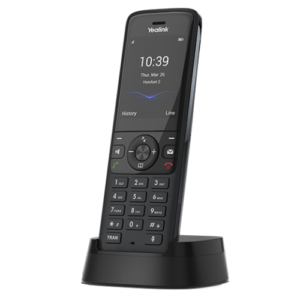
Price: £80 – £90
Users seeking advanced features like Bluetooth connectivity and a sleek design, ideal for dynamic work environments requiring seamless communication.
The W59R is a rugged handset that is certified to IP67 standards. This means there is no ingress of dust (6 in IP67) and it handles being in water between 15cm to 1m deep for 30 minutes! (7 in IP67)
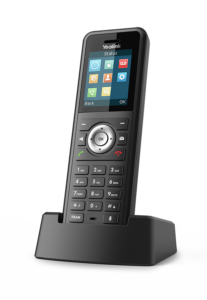
Price: £110 – £130
Industries such as construction, manufacturing, or outdoor settings where a durable, waterproof, and dustproof handset is essential.
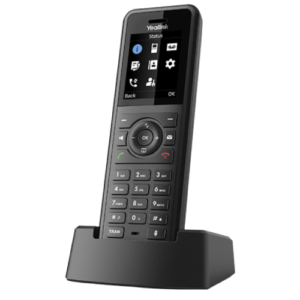
Price: £90 – £110
The 57R does not offer the same protection against dust and water as the W59R but it holds its own with it’s strengths. This handset can handle a limited ingress of dust without interfering with equipment (5 in IP54) and has protection from splashes of water (4 in IP54)
This particular handset with it’s rugged design does give a much better battery life over all the other models mentioned here so far so its lower IP rating shouldn’t completely write it off depending on your circumstances.
Environments where a durable handset with extra-long battery life is needed, offering protection against dust and splashes, suitable for various industrial applications.
| Feature | W71H | W73H | W56H | W78H | W74H | W59R | W57R |
|---|---|---|---|---|---|---|---|
| Best For | Price | Pro | Size | Extras | Extras | Rugged | Rugged |
| Talk (Hrs) | 30 | 35 | 30 | 21 | 24 | 28 | 40 |
| Stby (Hrs) | 340 | 400 | 400 | 166 | 320 | 360 | 575 |
| IP | — | — | — | — | — | IP67 | IP54 |
| Screen | 1.8” | 1.8” | 2.4” | 2.4” | 1.8” | 1.8” | 1.8” |
| Colour | B&W | Yes | Yes | Yes | Yes | Yes | Yes |
| 3.5MM | No | Yes | Yes | Yes | Yes | Yes | Yes |
| BT | No | No | No | 5.1 | Yes | 4.2 | No |
| Durable | Std | Std | Std | Std | Std | Best | Better |
At Plexatalk we cater to home users and businesses of all sizes. From 1 user to 1000’s we’ve got the resources to provide quality calls at affordable prices. If you’d like to get a quote today for your phone system (with or without phones) – please get in touch today.
DECT (Digital Enhanced Cordless Telecommunications) is a wireless technology for cordless phones, while VoIP (Voice over IP) allows calls to be made over the internet. Yealink DECT phones combine both technologies, using DECT for connectivity between handsets and VoIP for external calls.
Yes, but compatibility depends on the model. The W71H, W73H, and W56H work with Yealink W70B, W75B, W80B, and W90B base stations, while multi-cell systems like W80 and W90 allow for better roaming.
The W59R is the best rugged option with IP67 certification (fully waterproof and dustproof), while the W57R offers IP54 protection (splash and dust-resistant).
Only the W78H and W59R support Bluetooth for wireless headsets. Other models rely on a 3.5mm headset jack for wired connections.
It depends on the base model. The W70B supports up to 10 handsets, while the W80B and W90B multi-cell systems support larger deployments.
The W57R has the longest battery life with 40 hours of talk time and 575 hours standby.
No, the W71H does not have a 3.5mm socket like other Yealink DECT phones.
All information in the above post has been collected from our suppliers as well as official Yealink documentation. We’ve done our best to avoid any errors but nothing is guaranteed. If you’re unsure or spot any errors in the information above, please feel free to get in touch.
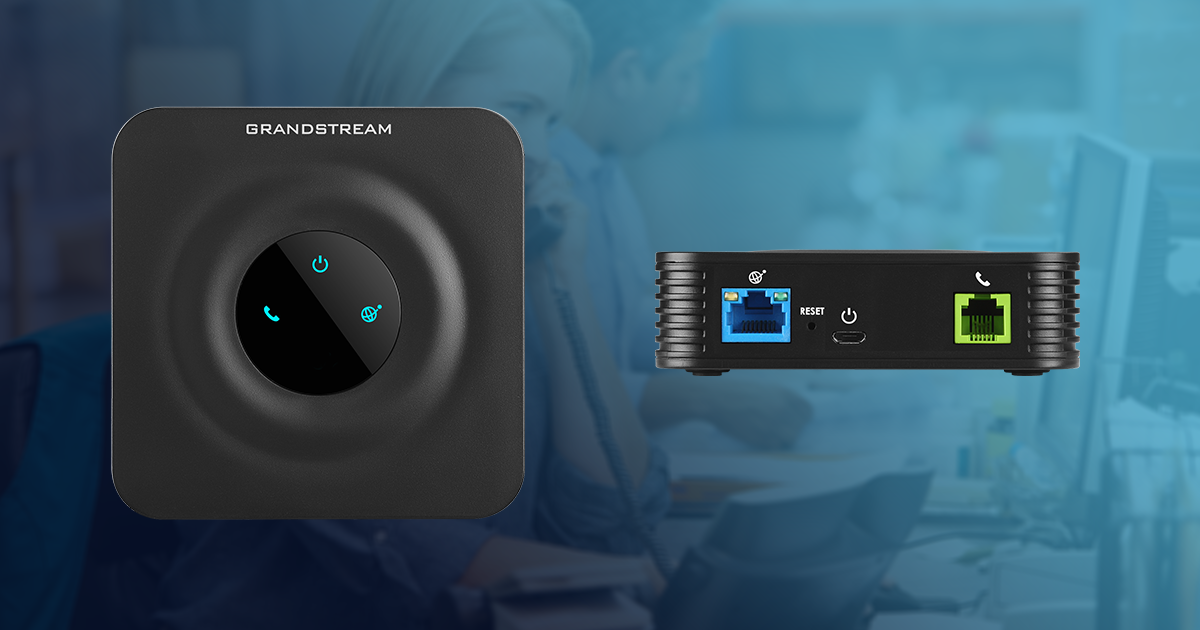
As more homes and small businesses transition to internet-based telephony, the debate between VoIP adapters and VoIP phones has gained traction. Both offer distinct advantages and disadvantages, making the choice highly dependent on your needs, budget, and existing hardware. In this article, we’ll break down the key differences, costs, pros, and cons of each option to help you make an informed decision.
A VoIP adapter, often referred to as an FXO adapter, is a device that allows traditional analogue telephones—such as old BT or alternative DECT phones—to connect to a VoIP service. This means that if you already have a functional telephone system, you can retain your current handsets while enjoying the benefits of VoIP calling.
A VoIP phone is a purpose-built device designed for making and receiving calls over the internet. These phones often come with advanced functionalities such as call forwarding, call transfer, multi-handset systems, voicemail, and auto-provisioning.
For those considering VoIP phones, Yealink DECT VoIP phones are a great option. They offer useful features that can enhance business operations, including:
Other manufacturers such as Grandstream, Gigaset, and Cisco offer similar features, ensuring a range of options depending on budget and requirements.
If you already own a good BT or alternative DECT phone, a VoIP adapter is a cost-effective solution that allows you to take advantage of VoIP services without a major upfront investment. However, if you want additional features and better call quality, a DECT VoIP phone system may be worth considering.
A VoIP phone system is the better option for scalability, call management, and enhanced features. If your business requires call transfers, directory lookups, and auto-provisioning, a VoIP phone is a future-proof investment.
A VoIP adapter can be a good compromise if you need to transition to VoIP without replacing your entire phone system immediately.
Choosing between a VoIP adapter and a VoIP phone depends on your needs and budget. If you’re looking for a low-cost way to migrate to VoIP while keeping your existing phones, an FXO adapter is a good choice. However, if you want a modern, feature-rich solution with better scalability, a DECT VoIP phone system is the way forward.
Ultimately, small businesses and home users should assess their communication needs carefully to decide whether to repurpose their existing phones with an adapter or invest in a VoIP phone system for better long-term value.
Not sure whether to choose a VoIP phone or VoIP adapter? Get in touch with us today at Plexatalk on 0330 057 6699 or email support@plexatalk.co.uk for assistance in finding the right setup for your home or business.
A VoIP adapter allows you to use traditional analogue phones with a VoIP service, while a VoIP phone is a purpose-built device designed specifically for making and receiving calls over the internet with advanced features.
A VoIP adapter is generally more cost-effective if you already own analogue phones, as it allows you to keep using them with VoIP services. VoIP phones, however, provide better features and scalability, making them a better long-term investment.
Yes, you can use your existing analogue phone with a VoIP service by connecting it through a VoIP adapter (FXO adapter).
Yes. VoIP phones are designed for internet-based telephony and typically provide better call quality with features like HD audio and noise reduction.
No, most VoIP adapters are plug-and-play, making them easy to set up with minimal configuration.
VoIP adapters rely on analogue phones, which may lack modern VoIP features like call transfer, directory lookups, and auto-provisioning.
As BT moves to phase out PSTN connections in the UK, many businesses and residential customers are wondering how they can continue using their existing phones without needing to invest in entirely new systems. The key to this transition lies in understanding FXS and FXO adapters. But what is the difference between FXS and FXO adapters and what do they even do?
An FXO (Foreign Exchange Office) adapter is a device that connects a traditional analogue telephone line (PSTN) to a VoIP network. It acts as a bridge between the public switched telephone network (PSTN) and a VoIP system, allowing businesses and individuals to use existing telephone lines with VoIP services. FXO adapters are also known as FXO gateways or VoIP FXO interfaces.
An FXS (Foreign Exchange Station) adapter is a device that connects an analogue telephone or fax machine to a VoIP network. It provides a dial tone, power, and signalling to analogue devices, allowing them to function over an IP-based system.
The concept of FXO adapters dates back to the early 2000s when VoIP technology became commercially viable. Businesses and residential users sought ways to integrate traditional telephony with emerging IP-based communications. FXO adapters became crucial in hybrid PBX systems, enabling companies to maintain PSTN connectivity while transitioning to VoIP.
The development of FXO technology can be attributed to advancements in digital telephony, spearheaded by telecom companies such as Cisco and Grandstream. Early VoIP pioneers, including VocalTec, played a role in developing gateways that incorporated FXO ports to enable VoIP-PSTN integration.
Initially, FXO adapters were standalone devices designed to interface with VoIP gateways. Over time, manufacturers integrated FXO ports into IP PBXs and multi-line VoIP gateways to provide more flexible solutions.
Pros:
Cons:
Like FXO adapters, FXS adapters emerged in the early 2000s as businesses and consumers sought to retain analogue telephony devices while adopting VoIP. Initially, VoIP providers offered Analogue Telephone Adapters (ATAs) with FXS ports to enable existing telephones to function over an IP network.
The development of FXS technology was largely driven by companies such as Linksys (later acquired by Cisco) and Grandstream, which introduced some of the first commercial VoIP ATAs. As VoIP technology evolved, many DECT phone manufacturers, such as Gigaset, incorporated onboard FXS capabilities within their base stations. These devices supported both SIP-based VoIP accounts and traditional RJ11 connections, eliminating the need for separate adapters in some cases.
Pros:
Cons:
Several major manufacturers produce FXO adapters, catering to businesses and service providers that need to integrate traditional phone lines with VoIP systems. Some of the most notable manufacturers include:
Manufacturers of FXS adapters cater to businesses and consumers looking to connect analogue phones and fax machines to VoIP networks. Some key manufacturers include:
FXO and FXS adapters have played a critical role in bridging traditional telephony with modern VoIP systems. While FXO adapters connect analogue phone lines to VoIP, FXS adapters allow analogue devices to function on IP-based networks. Over time, manufacturers have incorporated these technologies into VoIP gateways, routers, and even DECT base stations, offering greater flexibility for businesses and consumers alike. With major players like Grandstream, Cisco, and Yeastar leading the market, FXO and FXS adapters remain vital components in telecommunications infrastructure.
Understanding the differences between FXO and FXS adapters, along with their benefits and limitations, is crucial for businesses and individuals looking to make informed decisions about their VoIP deployments. Whether integrating legacy telephony equipment or ensuring PSTN failover, these adapters continue to be essential tools in the ever-evolving world of digital communications.
At Plexatalk, we provide preconfigured VoIP adapters that allow you to connect your existing hardware directly to our VoIP system. This means you can continue using your current telephone while taking advantage of all the benefits of VoIP, including number portability. Whether you’re a business or a residential customer, we make the transition simple.
For customers who need assistance with setup, we offer on-site installation in various areas across Hampshire. Our team can visit your location to set up and configure your VoIP adapter, ensuring a smooth transition. We cover Hampshire and surrounding areas, inlcuding New Forest, Southampton, Bournemouth, Portsmouth, Hedge End, Blackfield, Marchood, Holbury and many other areas across hampshire.
Don’t get left behind as the UK moves away from PSTN. Whether you need a VoIP adapter, FXS adapter, or VoIP setup for your home or business, PlexaTalk is here to help. Contact us today to find the right solution for your needs.
FXS (Foreign Exchange Station) adapters connect analogue telephones and fax machines to VoIP networks, providing dial tone and power. FXO (Foreign Exchange Office) adapters, on the other hand, connect traditional PSTN lines to VoIP systems, enabling analogue phone lines to be used with VoIP services.
If you want to use your existing analogue phone or fax machine with a VoIP service, an FXS adapter is necessary. If you need to connect a traditional phone line to a VoIP system, an FXO adapter is required.
Yes. Many VoIP setups include both adapters—FXS to connect phones to the VoIP system and FXO to integrate traditional PSTN lines for failover or hybrid communication setups.
Without an adapter, traditional analogue devices will not work with VoIP. You would need to replace them with IP phones or VoIP-compatible hardware.
Yes, multi-line FXO gateways are available, allowing businesses to connect multiple PSTN lines to their VoIP system.
We offer preconfigured VoIP adapters for businesses and residential users, ensuring an easy transition to VoIP with minimal setup required.