
EE 5G Broadband gives you fast home internet without needing a traditional phone line or engineer-installed fibre connection. Instead of using the old copper network, EE’s 5G router connects wirelessly to the mobile network, making it a popular option for homes looking for quicker setup and more flexible broadband.
But one question many people ask before switching is:
“Can you keep your landline when switching to EE 5G Broadband?”
In most cases, yes — you usually can.
While EE 5G Broadband itself doesn’t include a traditional analogue landline, you can keep your existing home phone number by using VoIP (Voice over Internet Protocol). VoIP lets you make and receive calls over your broadband connection instead of the old telephone network.
EE does offer digital voice services in some broadband setups, particularly with Full Fibre packages, but many customers prefer using an independent VoIP provider instead. A standalone service such as Plexatalk can often be cheaper, more flexible, and easier to keep separate from your broadband provider long term.
That means if you later change broadband providers again, your landline number can usually stay exactly where it is.
You can also normally continue using your existing home phones with a simple adapter, avoiding the need to replace all your handsets.
If you’re looking for broader guidance on EE phone services and number porting, read our main guide: “Keep Your Landline When Switching to EE”.
In this guide, we’ll explain how landlines work with EE 5G Broadband, how VoIP replaces traditional phone lines, and how to keep your existing number without paying unnecessary line rental fees.
No — EE 5G Broadband does not include a traditional landline service.
Unlike older broadband connections that used a copper telephone line entering your property, EE 5G Broadband connects to the internet wirelessly using the EE mobile network. Your broadband is delivered through a 5G router rather than a phone socket, so there is no standard analogue phone line or PSTN (Public Switched Telephone Network) service included.
This is where some of the confusion comes from.
EE does offer a home phone service called Digital Home Phone, but this is primarily designed for EE’s fixed broadband and Full Fibre customers. Digital Home Phone uses VoIP technology to carry calls over a broadband connection and is typically connected through an EE Smart Hub router rather than a traditional wall socket.
EE 5G Broadband works differently.
With EE 5G Broadband, you’re effectively buying a wireless internet connection powered by the mobile network. The service focuses on providing fast internet access without requiring a landline, engineer visit, or fixed-line installation.
That doesn’t mean you have to give up your home phone number.
Many households moving to EE 5G Broadband choose to keep their existing landline by transferring it to a standalone VoIP provider. This allows them to continue using the same number while keeping their phone service separate from their broadband provider. In many cases, it can also be a more flexible and cost-effective solution than tying your phone service directly to a broadband package.
For customers who want the best of both worlds, EE 5G Broadband combined with an independent VoIP service can provide fast wireless internet alongside a fully functional home phone number.
Source note: This section is based on EE’s published information on Mobile Broadband, Fibre Broadband without a landline, and Digital Home Phone services, which confirms that EE’s 5G Home Broadband is a mobile broadband product rather than a traditional landline service.
Yes — in most cases, you can keep your existing landline number when switching to EE 5G Broadband.
This process is called number porting. It allows your current phone number to be transferred from your old provider onto a digital phone service, usually a VoIP provider or digital voice platform.
Landline numbers from major UK providers including BT, Sky, Virgin Media, TalkTalk, Vodafone and Plusnet can normally be ported without problems, provided the transfer is handled correctly.
One of the biggest mistakes people make is cancelling their old phone line too early.
If your current broadband or phone service is fully cancelled before the number transfer completes, your landline number could potentially be lost and become unavailable to recover. That’s why it’s important to keep the service active until the port has successfully finished.
Some customers moving to EE may choose to use EE’s own Digital Home Phone or Digital Voice services where available. Availability can depend on the specific EE broadband package and hardware setup, so it’s worth checking directly with EE what phone options are supported with your service.
Others prefer using an independent VoIP provider such as Plexatalk, particularly if they want to compare pricing, keep their number separate from their broadband provider, or continue using the same phone setup even if they switch internet providers again later.
In many cases, standalone VoIP services can also provide additional flexibility such as mobile apps, call forwarding, and wider hardware compatibility.
As long as the process is handled in the correct order, keeping your existing landline number is normally straightforward.
VoIP — short for Voice over Internet Protocol — allows you to make and receive phone calls using your internet connection instead of a traditional copper telephone line.
Rather than relying on the old PSTN network, your calls are converted into digital data and carried over your broadband connection. With EE 5G Broadband, that means your phone service runs through your 5G router using the mobile network connection already powering your internet.
In practice, using VoIP often feels exactly like using a normal home phone — just with far more flexibility behind the scenes.
VoIP works well with EE 5G Broadband because the service is entirely internet-based. As long as your 5G connection is stable, your phone number can work almost anywhere.
There are several ways to use VoIP with an EE 5G setup:
For many households, the easiest option is simply connecting their current DECT cordless phones through a small adapter, allowing them to continue using familiar handsets around the home.
Independent VoIP services such as Plexatalk have also been widely tested with modern EE-compatible routers and 5G broadband hardware. Because VoIP is provider-independent, the phone service itself isn’t tied directly to EE.
That creates a more future-proof setup.
If you later change broadband providers, move house, switch to full fibre, or even use a backup internet connection, your phone number can usually remain exactly the same. Your VoIP service simply reconnects through the new internet connection.
This is one reason many people now prefer standalone VoIP over traditional bundled landline services. Instead of your number being attached to a specific broadband contract, it becomes portable, flexible, and usable across multiple devices and locations.
For households that still value their landline number, VoIP provides a modern alternative that works naturally alongside EE 5G Broadband.
For many households, EE’s own digital phone services will work perfectly well alongside their broadband package. If you prefer having broadband and phone services bundled together under one provider, EE’s setup can be a convenient option.
But it’s not the only way to keep a home phone number.
An increasing number of people now choose independent VoIP providers instead — not because EE’s service is “bad”, but because standalone VoIP can offer more flexibility and, in many cases, lower ongoing monthly costs.
The biggest difference is that independent VoIP separates your phone number from your broadband provider.
With traditional bundled services, your home phone is often closely tied to your broadband account and router setup. Independent VoIP works differently. Your number exists independently over the internet, meaning you can usually change broadband providers later without needing to move your phone number again.
For households using EE 5G Broadband, that flexibility can be particularly useful.
If you later switch to full fibre, move house, use a backup broadband connection, or change providers entirely, your VoIP service can normally continue working with minimal disruption. In most cases, you simply reconnect your adapter, app, or VoIP handset to the new internet connection.
Many standalone VoIP providers also support a wider range of hardware and features, including:
For some people, this creates a much more portable and future-proof phone setup than the traditional “landline attached to broadband” model.
Cost can also play a role.
EE phone services are generally sold as part of a broadband bundle, while independent VoIP providers often offer simpler standalone monthly pricing. Depending on the features and call usage you need, this can sometimes work out cheaper over time.
Here’s a general comparison between the two approaches:
| Feature | EE Phone Option | Independent VoIP |
|---|---|---|
| Keep existing number | Yes | Yes |
| Works independently of EE broadband | No | Yes |
| Use mobile or desktop apps | Limited | Yes |
| Easier to switch broadband later | More limited | Usually easier |
| Use existing handsets | Sometimes | Usually |
| Router flexibility | Mainly EE hardware | Wider compatibility |
| Call forwarding features | Limited | Usually included |
| Typical monthly costs | Higher bundled pricing | Often lower |
For many users, the choice simply comes down to flexibility.
If you want everything under one provider, EE’s own phone options may suit you perfectly. But if you’d rather keep your landline independent, portable, and usable across different devices and broadband providers, standalone VoIP services such as Plexatalk can offer a more adaptable long-term solution without requiring major changes to how you use your home phone day to day.
| Feature | EE Digital Home Phone | Plexatalk |
|---|---|---|
| Entry-level plan | £5.73/month (Pay Per Call) | £4/month including 100 mins |
| Unlimited UK calls | ~£20.66/month | £12.50/month |
| Keep existing number | Usually yes | Free porting included |
| Existing phone support | May require compatible setup | Optional adapter available |
| Router flexibility | Primarily EE hardware | Works with most routers |
| Change broadband provider later | Phone tied to EE | Number stays independent |
| Mobile/app flexibility | Limited EE ecosystem | Wider VoIP app/device support |
| Included features | Varies by package | Voicemail, caller ID & forwarding included |
| International calling | Extra plan required | Select destinations included |
Pricing correct at time of writing.
In many cases, yes — you can usually continue using the home phones you already have with VoIP and EE 5G Broadband.
One of the biggest concerns people have when moving away from a traditional landline is whether they’ll need to replace all their existing handsets. Thankfully, most households can keep using their current setup with very little change.
Modern DECT cordless phone systems typically work well with VoIP services when connected through an ATA (Analogue Telephone Adapter). The adapter plugs into your EE 5G router and allows standard home phones to work over your internet connection instead of the old copper phone line.
That means your phones can continue working much as they always have:
Many corded phones can also work depending on the model and adapter being used.
For customers who want the simplest possible setup, Plexatalk offers a pre-configured plug-and-play Grandstream ATA adapter with two phone ports for £50. This allows many existing home phone systems to connect directly to VoIP without complicated configuration.
In most cases, setup simply involves connecting the adapter to your router and plugging your existing phone base station into it.
For households moving to EE 5G Broadband, this makes the transition to digital phone services feel far less disruptive. You keep the same number, continue using familiar handsets, and gain the flexibility of modern internet-based calling without having to completely replace your home phone system.
If you want to move to EE 5G Broadband without losing your existing landline number, the process is usually straightforward as long as everything is done in the right order.
The most important thing is not cancelling your old phone service too early.
Here’s how the process typically works:
Start by ordering your EE 5G Broadband service. When arranging the installation or delivery date, it’s a good idea to leave enough time for your landline number transfer to complete.
For customers using Plexatalk, number porting can sometimes take between 1–2 weeks depending on the provider and whether the number has been ported previously.
Do not cancel your current broadband or phone service manually before the transfer completes.
Your existing landline number needs to remain live during the porting process. Cancelling too early can sometimes result in the number being lost permanently.
Decide how you want to use your phone service after switching.
For example, you may want to:
Once you’ve signed up with your VoIP provider, submit your landline transfer request as early as possible.
With Plexatalk, customers are encouraged to provide their EE activation or switch date so the broadband installation and phone number transfer can be aligned as closely as possible.
It’s important to understand that port dates cannot usually be guaranteed immediately. The final transfer date normally needs to be confirmed by the losing provider and the original range holder for the number.
When your VoIP service becomes active, connect your phones, adapter, or mobile apps to your EE 5G router and internet connection.
Once the port completes, test inbound and outbound calls to ensure everything is working correctly.
In most cases, once the number transfer completes successfully, the old phone service linked to that number will automatically close with your previous provider.
Handled correctly, the switch is usually smooth and allows you to keep your long-standing home phone number while moving to EE 5G Broadband.
Yes — you can keep your existing landline number when switching to EE 5G Broadband. The number is usually transferred to EE’s digital voice or a VoIP or digital phone service using a process called number porting. The key thing is keeping your current line active until the transfer completes.
No. EE 5G Broadband is a wireless broadband service that uses the EE mobile network rather than a traditional copper telephone line. Your broadband is delivered through a 5G router, so there’s no standard PSTN landline included with the service.
Usually, yes. Most DECT cordless phones can continue working with VoIP services by using a simple ATA (Analogue Telephone Adapter). This allows your existing home phone system to connect through your broadband router instead of the old wall phone socket.
In most cases, you can keep your current number by moving it to a VoIP service, allowing you to continue using your home phone over your internet connection instead of the old copper network.
For many households, independent VoIP services such as Plexatalk offer a more flexible alternative to traditional bundled phone packages. Your number stays separate from your broadband provider, making it easier to switch internet services later without needing to move your landline again.
You can also usually continue using your existing cordless phones, while benefiting from modern features such as mobile apps, call forwarding and voicemail services.
For customers looking for a more future-proof setup with lower ongoing monthly costs and greater flexibility, standalone VoIP can be a practical long-term solution alongside EE 5G Broadband.
To learn more, browse our VoIP packages or read our main guide: Keep Your Landline When Switching to EE.
You can also browse and signup to our VoIP packages for home here.

With a lot of people signing up for VoIP, one of the most frequent questions we get asked is – Do You Need Fibre for VoIP?
VoIP (Voice over Internet Protocol) can work extremely well on many standard broadband connections, including FTTC (fibre-to-the-cabinet), standard home broadband, mobile broadband, and even some rural wireless connections. For most households, the key factor isn’t having the fastest broadband package available — it’s having a stable and reliable internet connection.
As the UK moves away from traditional copper landlines as part of the nationwide digital phone switch-off, more people are asking whether their current broadband is “good enough” for VoIP. The good news is that modern VoIP technology uses very little bandwidth. A typical voice call often requires less internet capacity than streaming music or browsing social media.
What matters most is connection consistency. A stable broadband connection with low dropouts will usually deliver far better call quality than an ultra-fast connection that suffers from interruptions or congestion.
That’s why modern home VoIP services like Plexatalk are designed to work across a wide range of broadband providers and connection types — helping customers keep reliable home phone service without needing to upgrade to expensive full fibre packages first.
VoIP stands for Voice over Internet Protocol. In simple terms, it’s a way of making phone calls over your internet connection instead of using traditional copper phone lines.
Rather than relying on the old analogue landline network, VoIP converts your voice into digital data and sends it securely over the internet. This is why VoIP is often referred to as a digital landline — it performs the same role as a traditional home phone service, but uses modern internet technology instead.
When you make a VoIP call, your voice is broken into tiny packets of data and transmitted almost instantly to the person you’re speaking with. Because this process is very efficient, phone calls actually use surprisingly little bandwidth.
In fact, a standard VoIP call usually uses less than 100 kbps (kilobits per second). To put that into perspective:
This means VoIP uses only a small fraction of the internet capacity most households already have available.
Because of this, VoIP does not automatically require ultrafast or full fibre broadband. Even basic broadband connections can often support excellent call quality, especially for households that mainly use the internet for everyday browsing, emails, and streaming.
Modern broadband routers are also designed to handle VoIP traffic easily. Many can prioritise voice calls automatically to help maintain clear audio quality, even while other devices are connected to the internet.
That’s why millions of homes across the UK are switching to digital landline services without needing major broadband upgrades. With the right setup and a stable connection, VoIP can work reliably on a wide range of broadband services.
Yes — VoIP can absolutely work without full fibre broadband.
While fibre broadband can improve overall internet performance, it is not a requirement for most home VoIP or digital landline services. In many cases, existing broadband connections are already more than capable of handling high-quality phone calls.
VoIP can work reliably on a wide range of internet connections, including:
This is because VoIP uses very little bandwidth compared to other online activities. A typical phone call only requires a small amount of internet capacity, meaning even older broadband connections can often support multiple calls at once without problems.
What matters far more than headline download speed is the quality and stability of the connection itself.
For example, a stable FTTC connection delivering 30–40 Mbps will usually provide excellent VoIP performance for a household. In contrast, a faster connection suffering from congestion, Wi-Fi issues, or frequent dropouts may actually produce worse call quality.
Upload speeds also play an important role, as VoIP sends your voice data in real time. Fortunately, even many basic broadband packages now provide more than enough upload bandwidth for reliable digital landline calls.
Modern routers are also much better at handling internet traffic than older equipment. Many can prioritise voice traffic automatically, helping maintain clear calls even when other devices are streaming, gaming, or downloading in the background.
For most UK households, the reality is simple: you probably do not need to upgrade to full fibre just to use VoIP.
Fibre broadband can certainly be beneficial — especially for larger households or heavy internet users — but for standard home phone usage, it is usually helpful rather than essential.
That’s why many customers are successfully moving to digital landline services like Plexatalk while keeping their existing broadband connection exactly as it is.
One of the biggest surprises for many people switching to VoIP is just how little internet speed phone calls actually require.
A typical high-quality VoIP or digital landline call usually uses around 0.1 Mbps (100 kbps) of bandwidth. That’s only a tiny fraction of what most modern broadband connections provide.
To put that into perspective, streaming a single HD Netflix programme can use 30–50 times more bandwidth than a VoIP phone call.
For most households, even standard broadband packages are easily capable of supporting everyday phone usage. The real difference comes when multiple people are using the internet heavily at the same time.
For example:
The key thing to understand is the difference between “can VoIP work?” and “what provides the best possible experience?”
In many cases, VoIP will work perfectly well without fibre broadband. However, faster and more stable connections can help if your household has lots of simultaneous internet activity.
| Usage Type | Recommended Connection |
|---|---|
| Single home phone | Standard broadband |
| Elderly relative/basic usage | ADSL or standard broadband |
| Multiple simultaneous calls | FTTC or better |
| Home working & video calls | FTTC or fibre |
| Heavy streaming/gaming household | Fibre preferred |
For the vast majority of homes, reliable broadband matters far more than chasing the highest possible speed package.
Although VoIP does not require full fibre broadband, there are situations where fibre can improve the overall experience.
The biggest advantage of fibre broadband is not simply faster phone calls — it’s better overall internet performance across the household.
For example, fibre can be particularly helpful in homes where:
In these situations, fibre broadband provides more capacity for the entire household, helping reduce congestion and maintain smooth performance during busy periods.
However, it’s important to remember that VoIP itself remains a very lightweight service. A phone call uses only a small amount of bandwidth compared to activities like 4K streaming, large downloads, or video conferencing.
That means many homes can still enjoy excellent digital landline call quality on standard broadband or FTTC connections without needing to upgrade immediately.
Think of fibre as something that improves the overall internet environment rather than something VoIP specifically depends on.
For households with lighter internet usage, existing broadband may already be more than sufficient. But for busy modern homes with lots of connected devices and heavy online activity, fibre can help deliver the smoothest and most consistent experience across everything — including VoIP calls.
Yes — in most cases, you can keep your existing landline number when switching to VoIP or a digital landline service.
This process is known as number porting. It allows your current phone number to be transferred from your old landline provider to your new VoIP provider, helping you keep the same number friends, family, and contacts already know.
For many households, this is one of the biggest concerns when moving away from traditional copper phone lines as part of the UK’s PSTN switch-off. Fortunately, modern VoIP services are specifically designed to make the transition as straightforward as possible.
You can often continue using your existing home phone handset too. By using a simple VoIP adapter, many traditional cordless phones and landline handsets can work exactly as they did before — just over your broadband connection instead of the old analogue network.
That means you still get the familiar “home phone” experience, while benefiting from modern digital calling features and future-proof technology.
Services like Plexatalk can help customers transfer their existing number, keep using their current phones, and move smoothly to digital calling without needing to completely change how they use their home phone service.
Switching from a traditional landline to VoIP can sound like a big change, so it’s completely normal for people to have questions or concerns before making the move.
The good news is that for most households, the experience is far simpler and smoother than they expect.
In most cases, no. Modern VoIP call quality is typically extremely clear — often clearer than older analogue landlines. As long as your broadband connection is stable, most users notice little to no difference when switching to a digital landline service.
Because VoIP uses modern audio technology, call quality can actually improve compared to ageing copper phone lines.
Unlike traditional landlines, VoIP depends on your internet connection, so calls will not work if broadband is completely unavailable.
However, there are several ways to stay connected. Many VoIP providers offer features such as:
For many households, forwarding calls to a mobile during an outage provides more than enough reassurance.
Usually not. Most modern VoIP systems are designed to be plug-and-play.
Many providers send preconfigured equipment that simply connects to your broadband router. In many cases, setup takes only a few minutes.
Not necessarily.
If you want to keep using your current home phone handset, a simple VoIP adapter (often called an ATA adapter) can allow your existing cordless or landline phones to continue working normally.
Of course, dedicated VoIP phones are also available, but many home users continue using the phones they already have without any issues.
For most people, switching to VoIP is far less disruptive than they initially expect — especially when supported by a provider experienced in helping customers move from traditional landlines to digital calling.
More households across the UK are now switching to VoIP and digital landline services as traditional copper phone lines are gradually being retired.
This nationwide change, often referred to as the PSTN switch-off, means older analogue landline networks are being phased out in favour of modern internet-based communication systems. As providers move customers away from copper lines, many homeowners are discovering that VoIP offers far more flexibility and value than traditional phone services ever did.
One of the biggest reasons people switch is cost. VoIP services are often significantly cheaper than traditional landlines, especially when combined with modern broadband packages. Many providers also include useful calling features that previously cost extra.
Modern digital landline services can offer features such as:
At the same time, VoIP still keeps the convenience many people want from a traditional home phone. You can usually keep your existing number, continue using familiar handsets, and make calls just as you always have — simply using your broadband connection instead of ageing phone lines.
For many households, services like Plexatalk provide a practical way to modernise home phone services without unnecessary complexity. Customers can move to digital calling, keep the reliability and familiarity of a home landline, and benefit from modern features designed around how people communicate today.
Despite what many people assume, you do not need full fibre broadband to start using VoIP or a digital landline service.
For most UK households, existing broadband connections are already more than capable of supporting high-quality phone calls. Whether you currently use ADSL, FTTC broadband, mobile broadband, or even some wireless and satellite connections, VoIP can often work perfectly well without major upgrades.
The most important factor is not having the fastest broadband package available — it’s having a stable and reliable internet connection.
Of course, fibre broadband can improve overall internet performance, especially in busy households with lots of streaming, gaming, and connected devices. But VoIP itself uses very little bandwidth, which means many homes can comfortably switch to digital calling without needing full fibre specifically.
As the UK continues moving away from traditional copper landlines through the PSTN switch-off, more people are discovering that switching to VoIP is often far simpler than expected. With the right provider and setup, you can usually keep your existing number, continue using familiar phones, and enjoy modern calling features with minimal disruption.
If you want to keep the simplicity of a home phone while preparing for the UK landline switch-off, Plexatalk’s VoIP for Home plans provide an easy way to move to digital calling without changing how you use your phone day to day.
Yes. In many cases, standard broadband is more than capable of supporting VoIP or digital landline services.
A typical VoIP call uses very little bandwidth compared to streaming TV, video calls, or gaming. As long as your internet connection is stable, even older broadband connections can often deliver excellent call quality.
Many UK households already have suitable broadband for VoIP without needing to upgrade to full fibre.
Yes, VoIP can work perfectly well over WiFi.
Most modern home VoIP setups connect through your broadband router wirelessly or via Ethernet cable. Many people use cordless phones, VoIP adapters, or mobile apps over WiFi every day without issues.
However, for the most reliable call quality, especially in larger homes, positioning your router well or using wired connections where possible can help improve stability.
Yes — fibre broadband is helpful, but it is not essential for reliable VoIP calling.
What matters most is having a stable internet connection with minimal dropouts or congestion. Many people successfully use VoIP on FTTC, ADSL, mobile broadband, and 4G or 5G connections.
In fact, some households notice better call quality after moving away from ageing copper landlines to modern digital calling.
Absolutely.
Many elderly users continue using VoIP exactly like a traditional home phone service. With the right setup, they can often keep their existing phone number and continue using familiar cordless or landline handsets.
For many families, the transition is barely noticeable day-to-day. Calls are still made and received in the normal way, just using broadband instead of the old phone network.
Features such as call forwarding, nuisance call blocking, and voicemail can also provide additional convenience and reassurance.
Usually, yes.
Many VoIP providers (including us) offer simple ATA adapters that allow traditional home phones and cordless handsets to work with digital landline services.
This means you often do not need to buy specialist VoIP phones or completely replace your existing setup.
For most users, installation is straightforward and designed to be plug-and-play.
Unlike traditional analogue landlines, VoIP services depend on both internet and power to operate.
If your router loses power, your VoIP service will usually stop working temporarily. However, there are several ways to stay connected during outages, including:
Call forwarding to a mobile phone
VoIP mobile apps over mobile data
Battery backup units (UPS)
4G or 5G backup broadband
Many households already rely heavily on mobile phones during power cuts, so having call forwarding enabled is often a simple and effective solution.
Accessing your Plexatalk voicemail is quick and simple. Whether you’re a residential customer or a business using a multi-user VoIP phone system, you can retrieve your voicemail messages in just a few steps.
To access your Plexatalk voicemail, simply:
You will then be prompted to enter your voicemail PIN if required. Once logged in, you can listen to new and saved messages, delete messages, and manage your voicemail settings.
If you’re a business customer using a multi-user VoIP system, voicemail is typically configured on a per-user or per-extension basis.
This is particularly important in shared office environments or where multiple users have access to the same phone system.
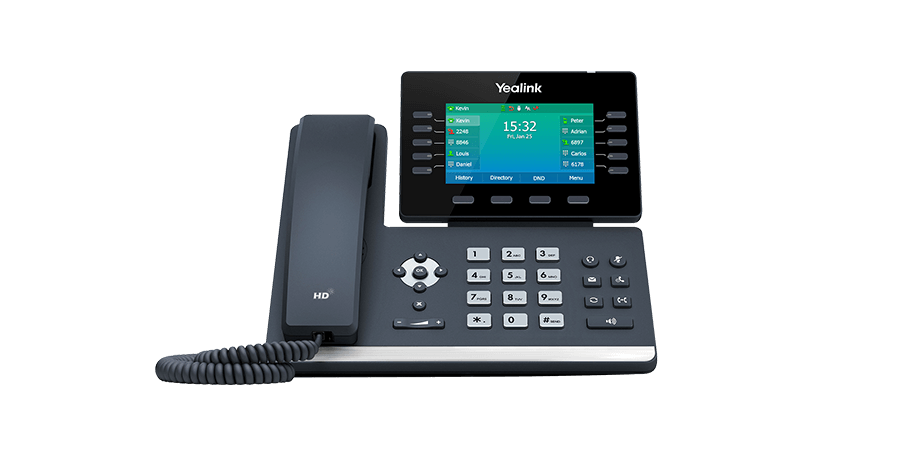
Many VoIP desk phones, including a range of Yealink models, can be configured to provide one-touch access to voicemail.
Depending on your handset, you may have:
When configured, pressing the voicemail button automatically dials your voicemail service, removing the need to manually dial *97 or 1571.
This feature is typically configured through your phone’s provisioning settings or by your IT administrator. If you’re unsure whether your handset supports one-touch voicemail access, the Plexatalk support team will be happy to help.
If you’re having trouble accessing your voicemail, need your voicemail PIN reset, or would like assistance configuring your VoIP handset for one-touch voicemail access, please contact the Plexatalk support team.
If you’ve received a Grandstream HT802 adapter from Plexatalk — or from another provider — this guide on How to Connect a Grandstream HT802 Adapter will help you get it connected and ready to make calls.
Don’t worry if you’re not technical — the steps are simple, and this guide is written for you!
Before you start, make sure you have:
If you’ve ordered your device from Plexatalk, it’s already preconfigured so you just need to plug it in.
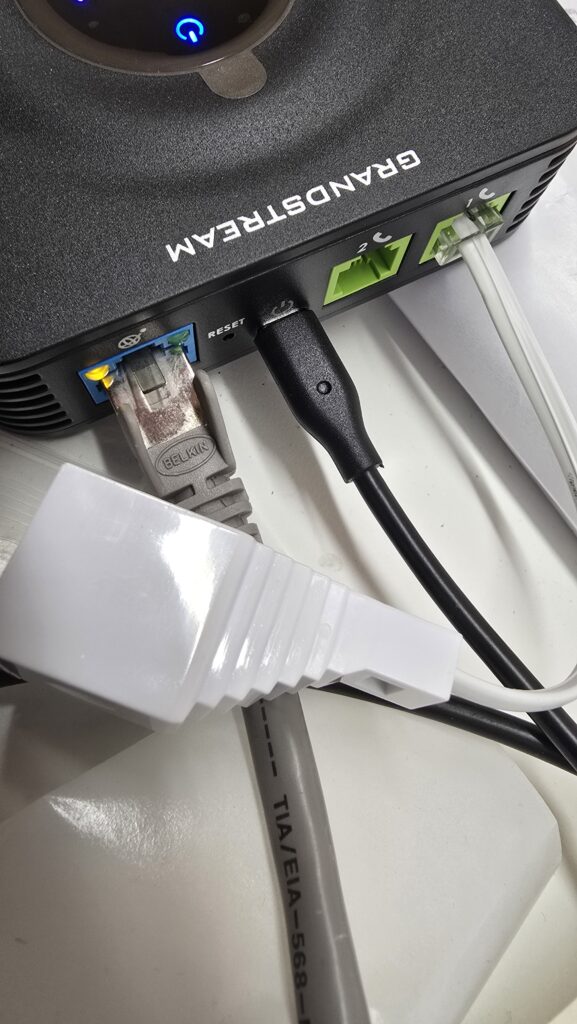
Find the Ethernet port on your broadband router — one of the sockets labelled LAN.
Plug one end of the Ethernet cable into that port.
Then plug the other end into the “Internet” port on the back of your Grandstream HT802 (it’s the left-hand network socket in blue).
Find the power connector in the box (black), connect this to a wall outlet and then connect the small micro-USB connector into the back of the HT802 adapter.
If your phone has an RJ11 connector, this is not required. However if you’re connecting a traditional landline phone – like what you’ve had connected to your BT socket in your home/business. You’ll want to connect the supplied (if purchased through us) white BT – RJ11 adapter. HT802 models have 2 ports, if supplied by us, this can be plugged into port 1 or 2.
HT801 models only have one green port.
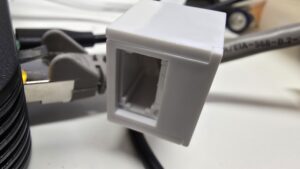
You should now be able to plug your phone into the white BT-RJ11 Adapter that’s plugged into the HT802 VoIP adapter. This should be the same cable that goes into your BT socket or back of your router (if you’re switching from Digital Voice)
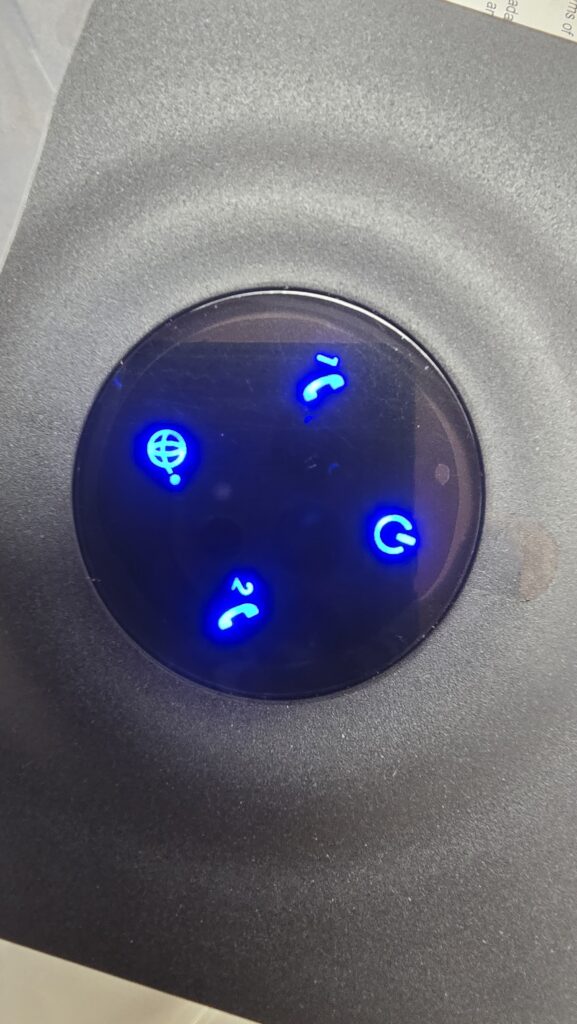
On the HT802 Adapter. There are 4 lights, one for each phone port, power and LAN port. If the adapter is supplied by us, all should be illuminated.
The phone should now be able to dial out. If you can make calls out but calls are not coming in – this may be because the number hasn’t fully ported yet.
If you can’t call out and all the lights are lit up on the adapter, it may be an issue with the phone or connection from the phone to the adapter.
Your Grandstream HT802 is now connected and ready to use.
You can make and receive calls just like a normal phone — but over your broadband line.
If you bought your device from Plexatalk and you’re still having issues, just get in touch — we’re happy to help.
If no lights come on at all, check that the power cable is plugged in securely at both ends — into the HT802 and the mains socket. Also, make sure the wall socket is switched on.
If you see fewer than four lights (3 on HT801), it usually means the adapter isn’t fully connected to your network. Check that the Ethernet cable is plugged into the Internet port on the HT802 and into a LAN port on your broadband router. Once it’s properly connected, the lights should all come on and stay steady after 30–60 seconds.
Make sure your telephone is plugged into the white BT-style adapter, and that this adapter is connected to the Phone 1 (FXS1) port on the HT802.
If it’s in the wrong port, or not fully inserted, you won’t get a dial tone.
If your device came preconfigured (from Plexatalk or another provider), you don’t need to change anything — just plug it in. If you bought it elsewhere and it isn’t preconfigured, contact your provider to check that it has your account details set up correctly.
Usually around 30 to 60 seconds. The lights may flash for a short while, but once they all stay on steadily, your HT802 is connected and ready to use.
If you’re looking to get an 0330 number in the UK, you’re not alone. Businesses of all sizes are turning to 0330 numbers because they project a professional image, are cost-effective to run, and make it easy for customers to get in touch without worrying about premium call charges. Unlike 0845 or 0870 numbers, which can be expensive from mobiles, 0330 numbers are treated like standard landline calls – making them far more customer-friendly.
The demand for 0330 numbers for business has grown rapidly in recent years. One big driver is the upcoming Ofcom switch-off of traditional copper landlines, which is pushing companies towards VoIP-based solutions. At the same time, more businesses want a national, non-geographic presence that isn’t tied to a local area code. Combine this with mobile-friendly call rates, and it’s clear why 0330 numbers are becoming the go-to choice for forward-looking organisations.
This article will walk you through the key differences between providers so you can decide whether to buy an 0330 number in the UK and who to choose. We’ll compare three of the leading options on the market: Plexatalk, Virtual Landline, and Call Ready. By the end, you’ll have a clear idea of which provider offers the best value when it comes to features, pricing, and support. Spoiler: Plexatalk’s cheap 0330 number UK package, with bundled extensions, 500 outbound minutes, and number rental for just £10/month, makes it one of the most competitive choices out there.
For any company looking to grow, building trust and making it easy for customers to connect is key. Choosing to get an 0330 number in the UK does exactly that, offering nationwide reach without being tied to a local area code. Whether you’re a startup aiming for a professional image or an established business expanding across regions, an 0330 number provides instant credibility.
One of the biggest advantages is cost transparency. 0330 numbers for business are charged at the same rates as standard 01 or 02 landline calls, which means no hidden costs for your customers. Even better, most mobile and landline packages now include 0330 calls as part of bundled minutes—so customers can call you without worrying about unexpected charges. If you’ve ever asked, are 0330 numbers free from mobiles? the answer is that they’re not “free,” but they’re usually included in existing plans, making them one of the most customer-friendly options available.
Flexibility is another major benefit. With a 0330 virtual landline or 0330 VoIP number, you’re not tied to a physical office. This makes it easy to move premises, expand to new locations, or run a remote team—all without ever having to change your published business number. That consistency helps you maintain your brand identity while adapting to changing business needs.
For companies that want to buy an 0330 number in the UK, Plexatalk makes it simple. Our cheap 0330 number UK package includes a professional number, an extension, 500 outbound minutes, and number rental for just £10/month—making us one of the best 0330 number providers in the UK for growing businesses.
When it comes to choosing the best 0330 number provider in the UK, Plexatalk stands out as a trusted, affordable option built with small and medium-sized businesses in mind. Whether you’re a startup looking to establish a national presence, or a local business that needs a professional yet flexible service, Plexatalk makes it easy to buy an 0330 number in the UK without overspending.
What makes Plexatalk different is its combination of affordability, transparency, and reliability. As an Ombudsman-regulated provider, Plexatalk guarantees clear pricing and fair practices, no hidden fees or confusing terms. Every number comes with full 0330 VoIP number integration, so you can connect calls through a desk phone, softphone app, or even your mobile device. It’s designed to work whether you’re at home, in the office, or running a remote team, giving you all the flexibility of a 0330 virtual landline without the traditional costs.
Key benefits include:
And for businesses that want even more value, Plexatalk’s flagship £10/month plan bundles in your 0330 number rental, 500 outbound minutes, and a professional extension—making it one of the most cost-effective ways to get an 0330 number in the UK today.
When you get an 0330 number in the UK with Plexatalk, you’re not just buying a phone number—you’re getting access to a complete business communications platform. Our service is built to scale with your needs, making it ideal for startups, growing SMEs, and established companies that want more than a “basic line.”
Here are just some of the features included with your 0330 virtual landline or 0330 VoIP number:
By choosing Plexatalk, you’re getting far more than a cheap 0330 number UK deal—you’re investing in a flexible, professional solution that can grow with your business.
Not all providers offering 0330 numbers for business are created equal. Many companies advertise cheap rates but lock you into lengthy contracts, making it difficult to scale or switch when your business needs change. Others operate as faceless virtual number resellers, offering little in the way of customer support or transparency once you’ve signed up.
At Plexatalk, we take a different approach. Our plans are designed to be straightforward, flexible, and fair. You won’t be tied into long-term commitments, just clear monthly pricing that you can scale up or down as your business evolves. And because we’re Ombudsman-regulated, you can trust that our 0330 VoIP number services are run to the highest standards of accountability.
We also pride ourselves on being approachable and customer-focused. Instead of dealing with an anonymous online platform, you’ll have access to real people who can help you set up, configure features like call forwarding or call recording, and get the most out of your 0330 virtual landline.
So, if you’re looking to buy an 0330 number in the UK, Plexatalk isn’t just another provider—it’s a partner you can rely on. For just £10/month, you’ll get a professional 0330 number, an extension, 500 outbound minutes, and ongoing support without the restrictions or hidden fees you might encounter elsewhere.
Looking to get yourself setup with an 0330 number for your business? Get in touch with us today.
No, 0330 numbers aren’t free to call from mobiles—but the good news is they’re charged at the same rate as standard 01 or 02 landline calls. Even better, most mobile contracts now include 0330 numbers in their bundled minutes, meaning many customers can call you without any extra charges.
The key difference is cost to the caller. 0800 numbers are free to dial from UK mobiles and landlines, while 0330 numbers are charged at standard landline rates. For businesses, 0330 vs 0800 numbers comes down to whether you want to cover all call costs for your customers (0800) or prefer a low-cost, professional solution that still feels customer-friendly (0330).
Yes. An 0330 virtual landline isn’t tied to a physical location, so you can move offices—or even work fully remotely—without changing your published business number.
Absolutely. In fact, many businesses now choose an 0330 VoIP number because it integrates seamlessly with modern cloud phone systems. Plexatalk’s service works with both home and business VoIP setups.
With Plexatalk, you can buy an 0330 number in the UK from just £4/month. Our most popular package is only £10/month, which includes your number rental, 500 outbound minutes, and an extension—making us one of the best 0330 number providers in the UK for value.
For many small and medium-sized enterprises (SMEs), sticking with Daisy Communications has become the default choice simply out of habit. Daisy has been a long-standing provider in the UK business telecoms space, offering services ranging from broadband to hosted phone systems. Yet, in recent years, more and more businesses are beginning to question whether loyalty is costing them more than it’s worth. Rising monthly bills, long contract lock-ins, and the growing number of Daisy complaints have prompted decision-makers to look elsewhere for better value and flexibility.
When researching Daisy reviews, a consistent theme emerges: while some businesses have been satisfied with the basics, others highlight frustrations around pricing transparency, customer support wait times, and the complexity of getting issues resolved quickly. For SMEs that depend on reliable, responsive telecoms to keep operations running smoothly, these challenges can feel like more than just minor inconveniences.
That’s why many businesses are exploring Daisy alternatives. The good news is that switching providers doesn’t need to be difficult and choosing the right partner can bring immediate benefits in terms of cost savings, service quality, and scalability. Plexatalk has positioned itself as one of the leading Daisy alternatives, offering modern solutions tailored to SMEs who want telecoms that work for them, not against them.
In this guide, we’ll take a closer look at Daisy reviews and Daisy complaints, unpack why so many SMEs are now evaluating Daisy alternatives, and provide a clear, step-by-step overview of how to switch from Daisy to Plexatalk smoothly. By the end, you’ll have the information you need to decide whether making the move is right for your business.
Daisy Communications is a familiar name in the UK business telecoms space, offering bundles across business broadband, VoIP, mobile, and IT services. Its appeal lies in being a one-stop shop: many SMEs are drawn to Daisy’s bundled services and the perceived simplicity of managing multiple lines through a single provider.
Alongside praise, recurring Daisy complaints appear in customer feedback and forums:
Overall, Daisy Communications offers breadth and scale that attract many SMEs, but the volume of Daisy reviews and Daisy complaints show why a growing number of businesses are beginning to weigh up Daisy alternatives that focus more on flexibility, clarity, and responsive support.Daisy at a Glance
Daisy Communications is a familiar name in the UK business telecoms space, offering bundles across business broadband, VoIP, mobile, and IT services. Its appeal lies in being a one-stop shop: many SMEs are drawn to Daisy’s bundled services and the perceived simplicity of managing multiple lines through a single provider.
What the reviews and complaints say
Alongside praise, recurring Daisy complaints appear in customer feedback and forums:
Overall, Daisy Communications offers breadth and scale that attract many SMEs, but the volume of Daisy reviews and Daisy complaints show why a growing number of businesses are beginning to weigh up Daisy alternatives that focus more on flexibility, clarity, and responsive support.
As more SMEs evaluate their telecoms needs, many are discovering that the traditional model offered by Daisy Communications no longer fits the way they want to operate. While Daisy remains a recognisable provider, customer feedback highlights recurring pain points that push businesses to consider Daisy alternatives.
One of the biggest drivers is pricing clarity. SMEs often operate on tight budgets, and when billing feels unpredictable — whether through mid-contract price increases or unclear invoices — it undermines confidence. Businesses increasingly want straightforward, transparent pricing that allows them to plan ahead without unwelcome surprises.
Flexibility is another common reason companies look for an alternative to Daisy Communications. Long-term contracts may lock businesses in for years, limiting their ability to adapt if their circumstances change. Modern SMEs often prefer shorter commitments and the ability to scale services up or down as their workforce grows or their technology needs evolve.
Then there’s the shift toward cloud-first features. Today’s businesses rely heavily on remote work, video conferencing, and integrated communication platforms. Daisy does offer VoIP and broadband bundles, but some SMEs report that their solutions feel dated or less adaptable compared to newer providers. A Daisy alternative that’s designed with the cloud in mind can deliver more agile, future-proofed functionality.
Finally, personalised customer support is a deciding factor. Large providers like Daisy can sometimes feel impersonal, with long response times and limited continuity between support calls. Many SMEs value providers who offer dedicated account management, faster resolution, and a sense of partnership rather than just service delivery.
When combined, these factors explain why Daisy alternatives are gaining traction. SMEs want more than just connectivity; they want telecoms that are transparent, flexible, modern, and supported by people who understand their business. An alternative to Daisy Communications that prioritises these qualities is increasingly seen not just as a switch, but as a smarter long-term strategy.
For SMEs that want telecoms designed around their needs rather than restrictive contracts, Plexatalk has quickly emerged as a strong Daisy alternative. Where many businesses report frustrations in Daisy complaints — from long lock-ins to complex billing — Plexatalk was built to be transparent, flexible, and easy to manage.
One of the biggest advantages is clear, upfront pricing. With Plexatalk, there are no hidden fees or sudden mid-contract increases. SMEs know exactly what they’re paying for, which makes financial planning simpler and helps avoid the billing frustrations frequently mentioned in Daisy reviews.
Flexibility is another cornerstone. Switching from Daisy to Plexatalk means businesses aren’t tied into long contracts. Instead, they get adaptable terms that let them scale services up or down as their business changes. Whether it’s adding lines for a growing team or reducing overheads during quieter periods, Plexatalk provides the freedom that many SMEs say they’ve been missing.
On the features side, Plexatalk is built cloud-first. Its advanced VoIP platform includes tools that modern businesses rely on every day, such as mobile apps for remote work, call recording for compliance, and integrations with popular business software. This means SMEs don’t just get a phone system — they get a communications hub designed for flexibility and growth.
Finally, Plexatalk’s personalised customer support is what sets it apart. While Daisy complaints often mention long response times or impersonal service, Plexatalk prides itself on offering friendly, accessible support that feels like an extension of your team. SMEs can count on fast resolutions and clear communication, rather than getting lost in a large provider’s ticketing system.
For SMEs weighing their options, switching from Daisy to Plexatalk isn’t just about leaving behind frustrations — it’s about moving toward a telecoms partner that values clarity, flexibility, and service as much as you do.
How to Switch from Daisy to Plexatalk (Step-by-Step)
Making the move from Daisy to Plexatalk doesn’t have to be disruptive or complicated. With the right approach, SMEs can ensure a smooth transition, keeping their business lines active and their teams connected throughout. Here’s a simple step-by-step guide to switching from Daisy to Plexatalk.
Start by reviewing the details of your current agreement. Pay close attention to notice periods, early termination fees, and whether your contract is subject to auto-renewal. Understanding these terms helps you plan your switch in a way that avoids unnecessary costs.
One of the biggest concerns for SMEs is losing established phone numbers. Plexatalk makes it easy to port your existing numbers from Daisy, so your customers can keep reaching you without any interruption. The process is handled behind the scenes, ensuring business continuity.
To minimise downtime, it’s best to run Plexatalk in parallel with your Daisy service during the migration period. This allows you to test call flows, voicemail, and integrations before fully moving over, giving your team confidence in the new system.
Once Plexatalk is configured, you can roll it out across your team. Staff can use mobile and desktop apps right away, while optional hardware like headsets or desk phones can be set up as needed. Training sessions are straightforward, and Plexatalk’s intuitive interface means most employees can adapt quickly.
When you’re confident that Plexatalk is running smoothly and your numbers are fully ported, you can formally cancel your Daisy service. By this point, your SME will be operating entirely on Plexatalk, benefiting from transparent pricing, modern VoIP features, and reliable support.
Switching from Daisy to Plexatalk is a chance to move from restrictive contracts and service frustrations to a telecoms solution built around SME flexibility and growth.
For many SMEs, the decision to move away from Daisy Communications isn’t just about avoiding frustrations — it’s about unlocking real value. Switching to Plexatalk can deliver both measurable savings and qualitative benefits that improve day-to-day operations.
Cost comparisons often tell the clearest story. Daisy’s bundles can appear competitive at first glance, but reviews frequently mention hidden costs, mid-contract price rises, or expensive add-ons. By contrast, Plexatalk uses transparent, upfront pricing. Businesses know exactly what they’ll pay each month, with no surprises buried in the fine print. This clarity often translates into immediate savings, especially for SMEs juggling multiple lines or looking to scale.
But savings aren’t just about pounds and pence. Plexatalk includes a wide range of advanced features at no extra cost — from mobile apps and voicemail-to-email, to call recording and CRM integrations. With Daisy, these types of tools often come as add-ons or require higher-tier packages. For SMEs, having enterprise-grade functionality built in as standard means better productivity without stretching budgets.
Reduced lock-in risk is another major benefit. Daisy’s long-term contracts can tie businesses down for years, with steep penalties for early exits. Plexatalk offers shorter, more flexible agreements, giving SMEs the freedom to adapt if their business needs change. That flexibility provides peace of mind and reduces the financial risk of committing to a service that no longer fits.
Finally, there’s the customer experience. Many Daisy complaints centre around long support queues or impersonal service. Plexatalk takes the opposite approach, providing accessible, friendly support designed for SMEs who need quick answers and consistent communication.
In short, switching to Plexatalk isn’t just about lowering costs — it’s about gaining better features, improved flexibility, and a support team that feels like part of your business. For SMEs looking for a smarter Daisy alternative, the benefits are both financial and operational.
Daisy Communications has been a well-known name in the UK telecoms market for years, and for some businesses, it may still be a workable choice. But as customer expectations evolve and SMEs demand more flexibility, transparency, and modern features, it’s clear why so many are now considering their options. Rising costs, lengthy contracts, and recurring Daisy complaints have encouraged businesses to explore alternatives that align better with their long-term goals.
Plexatalk has emerged as a compelling Daisy alternative. Designed specifically for SMEs, it combines clear, predictable pricing with cloud-first VoIP features that are ready for the way modern teams work. Mobile apps, call recording, and software integrations come standard — without the hidden fees or complicated add-ons that frustrate many Daisy customers. Just as importantly, Plexatalk’s friendly, accessible support ensures you get real answers quickly, rather than feeling lost in a ticketing system.
For SMEs, switching from Daisy to Plexatalk means more than just changing providers. It’s about moving away from restrictive contracts and service uncertainty, and toward a telecoms partner that values your time, budget, and growth. With greater flexibility, a lower risk of lock-in, and a customer experience built around SMEs, Plexatalk helps businesses regain control over their communications.
If your business is questioning whether Daisy still fits your needs, now may be the right time to explore something better.
See how much your business could save by switching from Daisy to Plexatalk today.
We can also help with switching from other providers, such as 4Com.
The best Daisy alternative for many SMEs is Plexatalk. Unlike long Daisy contracts, Plexatalk offers flexible terms, transparent pricing, and advanced VoIP features such as mobile apps, call recording, and integrations — all designed for growing businesses.
Businesses look for Daisy alternatives due to recurring complaints about long contract lock-ins, unclear billing, and customer support delays. Many SMEs want a provider that offers clearer pricing, shorter contracts, and modern, cloud-first communications tools.
Daisy reviews are mixed. Some customers praise the convenience of bundled services, while others raise complaints about billing transparency, mid-contract price increases, and difficulty getting fast support. This mix is why SMEs often explore alternatives to Daisy Communications.
The most common Daisy complaints include lengthy contract commitments, unexpected charges, lack of billing clarity, and slow customer service response times. These issues can affect business continuity, prompting SMEs to consider switching to a more flexible provider.
No. Switching from Daisy to Plexatalk is straightforward. You can port your existing numbers to Plexatalk, run both systems in parallel during migration, and transition your team gradually. Once everything is stable, you simply cancel your Daisy service.
Yes, many SMEs save money when switching to Plexatalk. Transparent pricing with no hidden fees helps avoid the billing frustrations mentioned in Daisy reviews, while added features such as call recording and mobile apps come at no extra cost.
The information provided in this article is based on publicly available sources, customer reviews, and industry analysis at the time of writing. References to “Daisy reviews” and “Daisy complaints” are summaries of feedback published by third parties and do not represent the views of Plexatalk or DMV Telecom Ltd. We do not claim that every Daisy customer has the same experience, and individual results may vary.
This guide is intended for general informational purposes only and should not be taken as professional, financial, or legal advice. Businesses considering switching providers should review their own contracts carefully and carry out independent research before making any decision.
Daisy Communications is a separate company and is not affiliated with Plexatalk or DMV Telecom Ltd. All trademarks, brand names, and company names are the property of their respective owners.

If you feel like your broadband and phone bill is swallowing a big chunk of your monthly budget, you’re not alone. In this guide today, we’ll go into how to reduce your broadband bill in the UK.
Across the UK, millions of households are locked into “big brand” bundles from BT, Sky, and Virgin that combine broadband, home phone, and often TV. On the surface, these bundles are marketed as convenient, but in reality they can cost anywhere between £80 and £120 per month – and in some cases, even more.
That adds up to well over £1,000 a year for services that many families barely use. Think about it: how many of the hundreds of TV channels included in your bundle do you actually watch? How often do you use the landline, when most calls are made via mobiles or apps like WhatsApp? Yet, because these services are tied together, people end up paying for features they don’t really need.
At a time when the cost of living is rising – with food, energy, and housing costs all climbing – broadband and phone bills are an easy area to overlook. They’re often tucked away on a direct debit, quietly going up every year thanks to above-inflation price rises. Many providers automatically move customers onto “out of contract” rates that can be 30–50% higher than introductory offers. It’s what Martin Lewis and others call the “loyalty penalty”: staying put ends up costing you more.
But here’s the good news: you don’t have to keep paying over the odds. The broadband market is changing fast. In recent years, dozens of alternative networks (or “altnets”) have entered the scene, rolling out full fibre at far lower monthly prices. It’s no longer unusual to find broadband-only deals for around £25–£35 per month – often faster and more reliable than the big providers.
The home phone market is shifting too. By 2027, traditional copper landlines will be switched off in the UK, with all calls moving to digital systems (VoIP). That means paying line rental to BT or Sky just to keep your home phone is no longer necessary – you can switch your number to an internet-based service for just a few pounds a month.
In other words, those expensive bundles aren’t just costly, they’re outdated. By unbundling – choosing your broadband and phone separately – it’s possible to save hundreds of pounds a year while also future-proofing your home for the digital switchover.
This guide will show you exactly how.
To understand why broadband and home phone bills are so high, it helps to look back. For decades, BT controlled the UK’s copper phone network. If you wanted a landline, you had to pay line rental – a monthly fee just for having access to the physical line running into your home. When broadband arrived, it piggybacked on the same copper lines. That meant most people had no choice but to keep paying line rental on top of their internet bill, even if they rarely used the landline for calls.
Fast forward to today and things have changed. Fibre is replacing copper, and mobile has replaced most landline usage. But the habit of “line rental + extras” has stuck, and many of the largest providers still use this model to inflate costs.
Providers like BT, Sky, and Virgin built their businesses on bundling. The idea is simple: instead of selling you broadband on its own, they package it with TV subscriptions, sports channels, mobile SIMs, and a “free” landline. It looks good in adverts – lots of services, one monthly bill – but the reality is that bundles are designed to lock customers in and push up average revenue.
Take Sky as an example. Their “Big Bundle” includes broadband, a landline, and a TV package with hundreds of channels. The entry price may be marketed at £40–£50 per month, but once you add faster speeds, sports, or premium channels, it’s easy for the monthly cost to creep above £80–£100.
BT follows a similar pattern. They promote “broadband + phone” packages with the line rental included, even though fewer people use the landline. On top of that, they upsell TV through BT Sport or NOW TV add-ons. Virgin Media, meanwhile, are famous for their “Big Bundle” and “Mega Bundle” deals that combine broadband, phone, TV, and sometimes a mobile SIM. The combined cost regularly tops £100 per month.
A common sales tactic is the “free landline” or “free TV” offer. But nothing is really free – it’s baked into the bundle price. The so-called free landline means you’re still paying for line rental (just repackaged), and the TV element often carries hidden fees for premium channels or equipment.
Even worse, many providers build in annual price rises linked to inflation plus a few percentage points. That means your £90 bundle this year could be closer to £100 next year, regardless of whether your service has improved. And if you go out of contract, the monthly fee can jump by 30% or more without warning.
This model works brilliantly for the providers. It makes it difficult for households to compare like-for-like broadband prices, because the bundle is stuffed with extras. It also ties people into long contracts – often 18 or 24 months – making it harder to leave.
The bottom line is that most UK households are paying for services they don’t fully use. Research consistently shows that many people watch fewer than 10 TV channels regularly, yet bundles provide hundreds. Landline minutes go unused because most calls are made via mobiles or messaging apps. And line rental is a hangover from a copper network that’s being switched off by 2027.
In short: if your broadband and phone bill feels high, it’s not your imagination. The system is built that way. But with new providers and technologies now available, there are better – and cheaper – alternatives.
The UK is in the middle of the biggest shake-up to its phone and broadband services in decades. For years, the model was simple: broadband was delivered over copper telephone lines, and those copper lines came with a landline attached. That system is now being dismantled. Over the next two years, every household will face changes that affect how we pay for – and use – broadband and home phone services.
The first sign of change is something called the “stop-sell.” Openreach, which operates most of the UK’s network, has stopped allowing providers to sell or upgrade old copper-based services in areas where full fibre is available.
In practice, that means if fibre has reached your street, you won’t be able to sign up for a traditional broadband + landline package. Instead, you’ll be offered fibre-only internet, and if you want to keep a home phone, it will be provided digitally over your broadband connection (VoIP). The message is clear: copper is being phased out, and fibre is the future.
The stop-sell is just a stepping stone towards the bigger milestone: January 2027, when Openreach will permanently retire the UK’s copper landline network. From that date, traditional landlines will no longer exist. Every home phone service will run over broadband instead.
BT calls this change “Digital Voice,” and other providers are branding it differently, but the principle is the same. Phones will plug into your router, not the wall socket. Line rental – once a fixture of every household bill – will become a thing of the past.
For households still paying line rental just to keep their number, this is a turning point. The service you’re paying for today won’t exist after January 2027. Moving to VoIP sooner rather than later means you can port your existing number, keep your home phone if you want it, and cut your bill – instead of waiting for your current provider to set the terms.
While copper is winding down, alternative networks (or “altnets”) are on the rise. These smaller, independent broadband providers are building their own fibre networks, especially in towns and suburbs overlooked by the big players.
Names like toob, Trooli, Giganet, Community Fibre, Hyperoptic, and Cuckoo are increasingly common. Unlike BT, Sky, or Virgin, they don’t have the legacy costs of copper networks, nor do they depend on bundling TV or phone services. They keep it simple: fast, reliable, affordable fibre.
Their streamlined model means lower prices. It’s not unusual to see gigabit-capable broadband for £25–£35 per month, with straightforward terms and fewer hidden extras. Many altnets also compete by offering perks such as free installation or guaranteed fixed prices for the length of the contract.
Taken together, these changes mark the end of expensive, bundle-heavy bills. Copper landlines are being switched off in January 2027, line rental will vanish, and broadband will be sold as broadband – not padded out with extras. If you want a home phone, you’ll be able to keep it through VoIP, but you won’t be forced into a pricey package to do so.
For families still paying £80–£120 per month to the big providers, now is the time to rethink. By pairing a low-cost fibre service from an altnet with a VoIP plan for your home phone, the monthly bill can often be cut in half – saving hundreds of pounds a year while staying ahead of the 2027 switch-off.
For years, the big providers have told us that broadband has to come wrapped up with a landline, a TV package, and a long contract. But that’s no longer true. A new generation of providers – often called alternative networks or altnets – are proving that broadband doesn’t need to be complicated or costly.
Altnets such as Trooli, toob, Giganet, Hyperoptic, Community Fibre, and Cuckoo have been rolling out their own full fibre networks across the UK. Unlike BT, Sky, or Virgin, they don’t try to lock customers into bundles with TV or “free” extras. Instead, they sell broadband on its own – fast, reliable, and straightforward.
For many households, that’s exactly what’s needed. Streaming services like Netflix, Disney+, and iPlayer have already replaced expensive TV bundles. Most people rely on mobiles for calls, and with the 2027 switch-off on the horizon, traditional landlines are disappearing anyway. So why pay for services you don’t use, when you can get the essentials for far less?
One of the biggest attractions of altnets is the price. While BT, Sky, and Virgin bundles regularly cost £80–£120 per month, broadband-only packages from altnets typically come in at £25–£35 per month. That’s for full fibre connections offering ultrafast speeds, often up to 1Gbps.
To put that into perspective:
Even after adding a VoIP service for your home phone – around £4 per month with providers like Plexatalk – you’re still looking at less than half the cost of a traditional bundle.
It’s not unusual for households to save £700–£1,000 per year by switching.
Price is important, but what about reliability? After all, no one wants to save money if it means endless buffering or dropped connections.
The reality is that altnets often outperform the big providers. Because they’re building brand-new fibre networks, they’re not weighed down by ageing copper infrastructure. Fibre-to-the-premises (FTTP) connections are far more stable than older fibre-to-the-cabinet (FTTC) or ADSL services, and they deliver consistent speeds even at peak times.
BT and Sky, by contrast, still serve millions of customers via copper-based lines that are more prone to slowdowns, faults, and interference. Virgin’s cable network is fast, but it can suffer from congestion in busy areas, and customer service ratings have historically been mixed.
Altnets, on the other hand, know that reliability and customer support are their main selling points. Many of them score highly for customer satisfaction, offer UK-based support, and keep contracts shorter and simpler than the big names.
With bundles becoming more expensive and copper landlines on the way out, the smart move is to strip things back: broadband-only from an altnet, plus VoIP for your home phone if you still need one. It’s faster, cheaper, and more future-proof than the old model – and it’s available right now in more and more parts of the UK.
For many households, the landline is more than just a number. It’s the way family and friends have stayed in touch for decades. But the technology behind it – copper telephone lines – is being retired. That change is already underway and will be complete in January 2027, when the UK’s entire copper phone network is switched off.
The copper network has served the UK well since the late 1800s, but it was never designed for the way we use communications today. Broadband speeds are limited by copper’s capacity, faults are common, and maintaining the infrastructure is costly.
Fibre is faster, more reliable, and far cheaper to maintain in the long run. That’s why Openreach and the UK’s major providers are replacing copper with full fibre networks. Once fibre is in place, there’s no technical reason to keep the old copper running – and so it’s being phased out for good.
So what happens to the landline? It isn’t disappearing altogether – it’s just moving to a different technology. Instead of running over copper wires, calls will be delivered over the internet using VoIP (Voice over Internet Protocol).
BT calls this “Digital Voice,” while other providers use their own branding. But in every case, it’s the same principle: your home phone service will connect via your broadband rather than the traditional wall socket.
That means when copper is switched off in 2027, the only way to keep your landline will be through VoIP.
The good news is that VoIP isn’t complicated. Instead of sending your voice as an electrical signal down copper wires, VoIP turns it into a digital signal and sends it over your broadband connection.
Here’s what that looks like in practice:
For most people, the only noticeable change will be where the phone plugs in. Everything else feels exactly the same.
While the copper switch-off won’t happen until January 2027, it makes sense to move early. Providers are already restricting new copper services, and households sticking with traditional bundles risk paying for a product that’s on its way out.
By moving to VoIP now, you not only stay ahead of the change but also save money. Providers like Plexatalk offer home phone services from as little as £4 per month. Combined with a low-cost broadband-only deal from an altnet, that can cut typical household bills by hundreds of pounds each year.
Instead of waiting for BT or Sky to roll you onto their “digital voice” package – often at inflated prices – you can take control, choose a provider that suits you, and lock in big savings.
| Setup | Broadband | Home Phone | TV/Extras | Monthly Total | Annual Total | Saving vs Altnet + Plexatalk |
|---|---|---|---|---|---|---|
| BT/Sky Bundle (Typical) | Included | Included (line rental) | Basic TV pack | £95 | £1,140 | £1,140 − £408 = £732/yr |
| BT/Sky Bundle (Sports/Movies) | Included | Included (line rental) | Premium sports/movies | £120 | £1,440 | £1,440 − £408 = £1,032/yr ✅ |
| Virgin Media Bundle | Included (cable) | Included | TV pack | £85 | £1,020 | £1,020 − £408 = £612/yr |
| Altnet + Plexatalk (VoIP) | Altnet full fibre (example) | Plexatalk VoIP | None (use streaming) | £34 (≈ £30 + £4) | £408 | — |
Figures are illustrative and based on common market pricing: BT/Sky typical bundle ~£95/m, premium sports/movies bundle ~£120/m, Virgin bundle ~£85/m, altnet broadband ~£25–£35/m plus Plexatalk VoIP from ~£4/m. Actual prices vary by provider, contract length, speed tier, and postcode. Excludes setup/installation fees and mid-contract price rises. Example saving shown: £1,032/year (BT/Sky premium bundle vs Altnet + Plexatalk).
Follow this simple sequence to drop the bundle, keep your number, and cut your bill.
Quick tip: Note the headline price, contract length, mid-contract price rise policy, and setup fees. Screenshot the offer you’re choosing.
Handy guide: How to keep your landline when switching to FTTP (Plexatalk)
Safety note: VoIP needs power and internet. If you rely on your landline for alarms/telecare or want calling during power cuts, ask about battery backup/fallback options.
Negotiation script (if still in contract):
“I’ve switched to full fibre broadband-only and moved my phone to VoIP. Please cancel TV/phone services and confirm any early termination fees. If you can match £30–£35 for broadband-only with no CPI-plus rise, I’ll consider staying.”
That’s it. broadband for ~£25–£35/m + Plexatalk at ~£4/m, no bloated bundle, and your same familiar home number.
Even though VoIP is the future of home phone services, it’s normal to have a few worries before making the switch. Here are some of the most common questions people ask.
No. You can keep your existing number by porting it to a VoIP provider. This process is managed for you — once complete, your old provider will release the number and it will continue working through your new VoIP service. As long as you don’t cancel your current line before the port, your number is safe.
Not necessarily. Most people can keep using their existing home phones. They simply plug into your internet router (if it has a phone port) or into a small adapter provided by your VoIP company. You can also download a VoIP app, so your home number rings on your mobile — handy if you’re away from the house.
VoIP relies on your broadband connection, so if your internet is offline, your landline won’t work either. The good news is that full fibre broadband is far more reliable than the old copper network, with fewer faults and interruptions. If having a backup is important (for example, for medical equipment or emergencies), you can: Use your mobile phone as a fallback or ask about battery backup options if you need the phone to work during a power cut.
Yes. VoIP has been used by businesses for years and is now the standard for home services too. The call quality is typically as good as, or better than, traditional landlines, with the added benefit of clearer audio on fibre connections. Most people notice no difference at all — except for the lower bill.
Sometimes the easiest way to see the benefits is through a real example.
John and Sarah, Hampshire
John and Sarah live in a three-bedroom semi in Hampshire. For years, they had been paying £95 per month to BT for a bundle that included:
That worked out to £1,140 per year. When their contract came up for renewal, they realised most of what they were paying for wasn’t essential. They rarely watched the TV channels, made only the odd landline call, and their broadband speeds often dropped in the evenings.
After doing some research, they discovered toob, an altnet that had recently rolled out full fibre in their area. The package was straightforward: gigabit-capable broadband for £30 per month.
They also wanted to keep their home phone number, so they signed up with Plexatalk for £4 per month. Their number was ported across seamlessly, and their existing phone plugged into their new router with a simple adapter.
Here’s the before-and-after:
That’s an annual saving of £732 — without losing their landline number, and with faster, more reliable broadband.
John summed it up:
“We were shocked at how much we were wasting on services we didn’t even use. Now we’re saving over £700 a year and still have everything we need.”
The UK is moving towards a completely digital communications system. By January 2027, the copper landline network will be switched off for good, and every home phone service will run over broadband instead. Whether it’s branded as BT Digital Voice, Sky Internet Calls, or something else, the technology behind it is the same: VoIP.
That means the days of paying line rental just to keep a number are numbered. Every household will eventually move to digital voice, whether they choose it now or wait until their provider forces the change.
Switching to VoIP today is more than just a way to save money — it’s a way to future-proof your home. By unbundling, you can pair low-cost full fibre broadband from an altnet with a simple VoIP service like Plexatalk, keeping your number and your home phone for just a few pounds per month.
The result:
The old bundle model of £80–£120 per month is being phased out. The future is broadband-only + VoIP: faster, cheaper, and more flexible.
If you’re ready to cut your bill and get ahead of the change, now’s the time to make the switch.
Here’s a clean, persuasive Conclusion + CTA you can drop in at the end of the article:
The message is simple: the old model of paying £80–£120 a month for a bundle of broadband, TV, and a landline you rarely use is on its way out. By January 2027, the copper landline network will be switched off and everyone will be using VoIP for home phone services anyway.
Why wait until then — or until your provider announces the next price rise? By switching now, you can:
With Plexatalk, moving your landline to VoIP is simple, affordable, and future-proof — from just £4 per month.
👉 Don’t wait until 2027 or your next BT price rise — check your altnet options today and move your landline to VoIP with Plexatalk.
For people in the UK, calling Ireland isn’t just about staying in touch abroad — it’s often part of daily life. Over 600,000 Irish-born residents live in Britain, and many more people have family across the Irish Sea. Add to that the strong business ties — Ireland is one of the UK’s top five trading partners — and you can see why calls to Ireland are among the most common international calls made from the UK.
Despite that closeness, the cost of calling Ireland can catch people out. It’s not unusual for someone to check their mobile bill and see £20–£30 extra for “just a couple of calls.” Businesses fare even worse: recruitment agencies interviewing candidates in Dublin, exporters selling into Cork, or accountancy firms working with Irish clients all find international call charges eating away at their margins.
No wonder one of the most searched phrases is “how much to call Ireland from the UK” or “cheapest way to call Ireland from UK.” as well as queries relating to calls to USA from UK. People don’t just want to know the dial code, they want to avoid bill shock.
In this guide, we’ll cover:
By the end, you’ll know exactly how much a call to Ireland should cost in 2025 — and how to keep those costs under control.

Before we talk about cost, let’s make sure you know how to dial properly. Ireland’s country code is +353.
A Dublin number listed as 01 234 5678 becomes:
Irish mobiles start with 08x (e.g., 087, 086, 085).
Dialling correctly ensures your call connects — but the real issue is what you’ll pay once it does.
Calling Ireland directly from a UK mobile can be expensive if you don’t have an international add-on. Out-of-allowance rates vary, but here’s what the big networks publish:
Example: A weekly 20-minute call from EE without a bolt-on costs about £8/month. On O2 standard, it’s £17/month. With Plexatalk VoIP? £10 flat, with 500 minutes included.
Landline calls to Ireland are often cheaper per minute than mobiles — but there are caveats. Most providers add a call-setup fee, and rates change by time of day or “international band.”
Worked example: A 60-minute monthly call to Cork:
So landline add-ons can bring prices down, but they tie you to that provider — and remember, with the 2027 switch-off, these “landline” services are VoIP already.
VoIP (Voice over Internet Protocol) is by far the most cost-effective option. Instead of routing calls over copper wires or mobile networks, VoIP uses your internet connection (home broadband or mobile data).
For households and businesses that call Ireland regularly, VoIP isn’t just cheaper — it’s the smarter, long-term choice.
We’ve designed packages that specifically help customers who want to call Ireland without wasting money on expensive bundles.
Use cases:
With Plexatalk, you’re not paying per minute — you’re paying for predictable, future-proof communication.
Out-of-bundle rates start around 22p/min (O2) or 40p/min (EE); Vodafone and Three rely on international add-ons.
Yes, Plexatalk Home VoIP starts at £4/month with 100 minutes included.
Yes — Plexatalk will port it to VoIP.
No. It works with any stable internet connection, including mobile data.
VoIP calls connect seamlessly to Irish landlines.
Yes — our Business plans let multiple users share minutes.
Yes — with a good internet connection, VoIP is as clear (or clearer) than mobile.
Ireland may be the UK’s closest neighbour, but calling across the Irish Sea can still be expensive if you rely on mobiles or landlines. Out-of-bundle mobile calls start at around 22p/min, landlines often add connection fees, and bundles lock you into one provider.
The cheapest, most reliable way is VoIP. With Plexatalk you get:
👉 Want to cut your Ireland calling costs? See our Home VoIP Pricing and Business VoIP Pricing today — and start calling Ireland for less.
If you’re a Utility Warehouse (UW) customer, you might be wondering what happens to your landline as the UK moves closer to the analogue switch-off in January 2027. For years, UW has bundled traditional copper-based phone services alongside broadband, making it simple to keep a landline for calls. But with the nationwide rollout of FTTP (Full Fibre), things are changing quickly, and that could affect how you stay connected.
Here’s the situation: if your UW broadband is still delivered over copper, you can continue to have a standard landline service for now. But once your property is upgraded to FTTP / Full Fibre, that option disappears. Full Fibre does not support traditional analogue landlines, and UW doesn’t currently provide a digital alternative. In other words, when the switch to FTTP happens, the old-style landline you’re used to will no longer work.
This isn’t just a UW issue, it’s part of a UK-wide shift. Openreach is phasing out the old copper phone network entirely, and by January 2027, every home and business will need to move to an all-digital solution. For UW customers, that means finding a way to keep a landline number, even after copper is gone… fear not if you want to keep your landline, there is a way to keep your landline when switching to UW FTTP
The good news? VoIP (Voice over Internet Protocol) is a straightforward, affordable way to do just that. Instead of relying on copper wires, VoIP uses your broadband connection to deliver crystal-clear calls. With providers like Plexatalk offering VoIP from just £4/month, you can keep your landline number, future-proof your setup, and carry on making and receiving calls — even after UW migrates you to FTTP.
If you’ve heard the term FTTP (Full Fibre) being used by UW or Openreach, you might be wondering what it really means for your broadband — and more importantly, your landline. FTTP stands for Fibre to the Premises, where your home or business is connected directly with fibre-optic cables instead of the older copper network. This is the backbone of the UK’s Full Fibre rollout, designed to deliver much faster, more reliable internet.
The catch? Fibre and copper work very differently. Copper phone lines were designed to carry analogue voice signals, which is why they could support a “plug-in” landline for decades. Fibre cables, on the other hand, are built purely for digital data. They’re excellent at carrying high-speed broadband, but they can’t carry analogue voice in the same way. That’s why when you upgrade to Full Fibre, the socket that once delivered both broadband and a landline will only provide internet access.
Utility Warehouse (UW) currently follows this same model. If you’re still on a copper broadband connection, you can keep a standard UW landline. But once you move to FTTP / Full Fibre, UW does not offer a replacement phone service. The landline option simply disappears from your package.
This is where things can catch customers out. Many people upgrade to fibre for faster speeds without realising their old phone line will stop working. Unless you’ve already prepared an alternative, you could lose your home phone number overnight.
The solution is VoIP (Voice over Internet Protocol). Instead of relying on copper, VoIP runs over your fibre broadband. It lets you keep your landline number, enjoy clearer call quality, and stay connected even as the copper network is phased out. For UW customers moving to FTTP, switching to a VoIP service like Plexatalk is the only way to ensure your landline continues to work.
So, if traditional UW landlines don’t work on FTTP (Full Fibre), what’s the alternative? The answer is VoIP — short for Voice over Internet Protocol. Put simply, VoIP is a technology that allows you to make and receive phone calls over your broadband connection instead of the old copper phone network.
At a practical level, VoIP feels very similar to having a landline. You can keep your existing number, plug in a standard phone via an adapter, and dial as you always have. The difference lies under the hood. Instead of carrying analogue voice signals, VoIP converts your call into digital data and transmits it securely over the internet.
Compared with traditional landlines, VoIP comes with clear advantages:
Another big plus is flexibility. VoIP isn’t tied to a single type of broadband. Whether you’re on FTTP / Full Fibre, 5G home internet, or even satellite broadband such as Starlink, VoIP works seamlessly. This means you can keep your landline service no matter how your internet connection evolves.
For UW customers, this is especially important. While UW doesn’t currently offer a VoIP replacement for its landlines, you’re free to choose an independent provider. By moving your landline to VoIP now, you can protect your number, cut costs, and ensure you’re ready for the all-digital future — long before the 2027 deadline.
Here’s a draft for your final section, following your outline and weaving in the benefits of Plexatalk VoIP while contrasting with UW’s limitations (250–350 words):
When it comes to keeping a landline while switching to FTTP (Full Fibre), Utility Warehouse (UW) doesn’t currently provide a solution. That’s where Plexatalk VoIP for Home comes in — offering all the features you’d expect from a modern landline, at a fraction of the cost.
First and foremost, you don’t need to give up your number. With free porting included, Plexatalk lets you bring your existing landline number across at no extra cost, so friends, family, and important services can always reach you.
Our VoIP plans start from just £4/month, making them one of the most affordable ways to keep your home phone active. But low price doesn’t mean bare bones — Plexatalk VoIP comes with a suite of features that traditional UW landlines simply don’t offer:
Setup is simple too. You can use your existing broadband provider (no need to switch), and with a small adapter or a VoIP-ready phone, you’ll be up and running in minutes.
Worried about reliability during power cuts? Plexatalk has you covered. Calls can automatically forward to your mobile, you can use our smartphone app, or add a UPS (uninterruptible power supply) to keep your VoIP equipment powered. That way, you’re not left disconnected when you need your phone most.
With UW’s Full Fibre service leaving you without a landline, Plexatalk VoIP is the clear choice to bridge the gap — giving you affordability, reliability, and future-proof technology all in one.
If you’re moving your broadband to Utility Warehouse (UW) Full Fibre (FTTP), you don’t need to give up your home phone. With Plexatalk, you can keep your existing number, enjoy all the benefits of VoIP, and still get the faster speeds of fibre. Here’s how simple it is:
Start by picking the right package for your household. Plexatalk offers VoIP for Home plans from just £4/month, with all the features you’d expect — voicemail-to-email, call forwarding, nuisance call blocking, and more. Because our service works independently of your broadband, you can switch to UW for fibre while keeping your landline active with us.
No need to tell friends and family a new number. We’ll send you a quick Letter of Authorisation (LOA) to sign, which allows us to port your current landline number from UW (or your previous provider) to Plexatalk. Porting is free and usually happens seamlessly, with little to no downtime.
Once your number is live on Plexatalk, all that’s left is setup. Simply connect an adapter to your existing handset or use a VoIP-compatible phone. Within minutes, you’ll be making and receiving calls as normal — only now, your service runs on modern, reliable VoIP technology.
That’s it. No complicated installations, no need to change your broadband provider, and no risk of losing your home phone when UW switches you to FTTP. By combining UW broadband with Plexatalk VoIP, you get the best of both worlds: fast fibre internet and a future-proof landline solution.
Yes. With Plexatalk, you don’t need to give up your home phone number. We’ll handle the number porting process for you, free of charge. That means your existing UW landline number moves across to Plexatalk VoIP, so your friends, family, and important services can continue reaching you exactly as before.
No. Plexatalk VoIP works with any broadband provider. While many customers switch to Utility Warehouse (UW) for their FTTP / Full Fibre internet, your phone service doesn’t need to stay with them. By separating the two, you can enjoy UW’s fibre broadband speeds and still keep your landline active through Plexatalk.
In most cases, it’s actually better. Because VoIP is fully digital, it avoids the interference and line noise common on copper-based UW landlines. You’ll get clear, reliable audio whether you’re calling locally or internationally — and as broadband speeds improve with Full Fibre, VoIP call quality only gets stronger.
Unlike traditional copper landlines, VoIP depends on your internet connection, so a power cut could interrupt service. But Plexatalk gives you options to stay connected. You can enable automatic call forwarding to a mobile, use a VoIP smartphone app, or connect your equipment to a small UPS (uninterruptible power supply) to keep things running. That way, you’re never left without a way to make or receive calls.
The UK’s analogue switch-off in January 2027 isn’t far away. By then, every copper landline will be retired, and only digital alternatives will remain. For Utility Warehouse (UW) customers already moving to FTTP / Full Fibre, the impact is immediate — as soon as you upgrade, the traditional landline option disappears.
Waiting until the last minute can mean disruption. You could lose your number unexpectedly, be left without a working home phone, and have to rush into a solution at short notice. Instead, it makes sense to take control now and move your landline to VoIP on your own terms.
VoIP is the modern, future-proof replacement for the copper network, and Plexatalk makes the switch simple. From free number porting to affordable plans starting at £4/month, our VoIP service gives you everything you need to stay connected. Features like voicemail-to-email, call forwarding, and mobile apps go beyond what UW landlines ever offered, while keeping the familiar experience of a home phone.
If you’re switching to UW Full Fibre, don’t let your landline disappear with the copper switch-off. By pairing UW broadband with Plexatalk VoIP, you get the best of both worlds, fast fibre internet and a reliable, affordable phone service that will carry you through 2027 and beyond. – Read more about the Switch-Off on Ofcoms Website.
Get started with Plexatalk’s Home VoIP Today.
If you’re a NOW Broadband customer, you may have heard the news that support for the NOW Hub Two router ends in July 2025. While services aren’t being cut off overnight, this change means no more updates, no replacements if the Hub fails, and an increasing push towards moving on. For many, it feels like the beginning of the end for the traditional broadband-plus-landline setup that NOW once offered. Fear not… we’ve got a way to keep your landline when switching from Now TV – no matter who the provider is.
This comes at a time when the UK’s entire copper landline network is being switched off by January 2027. Every home and business will need to move to digital, internet-based phone services. That’s why so many people are starting to ask the same question:
“What happens to my landline number if I switch provider or go full fibre?”
For households and small businesses alike, a landline number isn’t just a utility — it’s part of their identity. It’s how friends, family, and customers reach them. Losing it can feel like losing touch.
The good news is, you don’t have to. With VoIP (Voice over Internet Protocol) from Plexatalk, you can keep your landline number even if you leave NOW Broadband. Whether you switch to full-fibre providers like Cuckoo or Trooli, or bigger names like BT and Sky, your number comes with you.
Plexatalk makes your landline portable, flexible, and ready for the future — so you stay connected no matter how the broadband market changes.
For many households, a landline number is more than just digits on a bill — it’s a point of continuity. Friends and family already know it, and after years (sometimes decades) of use, it becomes second nature. Nobody wants the hassle of calling or messaging dozens of contacts to share a new number.
There are also practical reasons. Landline numbers are often tied to important services and accounts: banks, GP surgeries, schools, utilities, and government records. Updating each one individually is time-consuming and easy to miss — which could lead to missed calls, delayed communication, or even security issues. Keeping the same number avoids the admin headache altogether.
Then there are the professional considerations. For small businesses, freelancers, and people who work from home, the landline represents stability and credibility. It signals to customers and suppliers that you’re established and reachable. Changing it can cause confusion, damage trust, or even mean lost business opportunities.
That’s why the upcoming switch-off of the UK’s copper network is such a concern. People worry that moving to full-fibre broadband or leaving providers like NOW Broadband will mean giving up their trusted number.
The reality? With VoIP from Plexatalk, you don’t have to lose it. Your number comes with you, ready to use wherever you take your broadband. It’s the same landline — just smarter, more flexible, and built for the digital future.
If you decide to cancel your NOW Broadband package, your phone line will usually be disconnected as soon as the service ends. For many customers, this comes as a shock — once the account is closed, the landline number tied to it can disappear for good.
That’s why it’s so important to act before you leave NOW TV. If you want to keep your number, you need to request a process called number porting. This transfers your existing landline from your old provider to a new service, such as a VoIP platform like Plexatalk. Without number porting in place, there’s a real risk your long-standing number will simply be lost once the cancellation goes through.
It’s a detail many people overlook, especially if they’re switching to a broadband-only package with another provider. But for households, families, and small businesses who rely on their landline number, it’s critical. Losing it can mean missed calls from friends and relatives, disruption to important services like banks and doctors, and confusion for customers trying to reach you.
By porting your landline number to VoIP with Plexatalk, you take control before the disconnection happens. The process is smooth, and once complete, your number is no longer tied to NOW Broadband (or any single provider). Instead, it’s yours to keep — flexible, portable, and ready for the future.
So what exactly is number porting? Put simply, it’s the process of moving your existing landline number — for example, the one you currently use with NOW Broadband — over to a new service provider. In this case, that means bringing your number across to Plexatalk’s VoIP platform, so you can keep using it long after you’ve left NOW.
The good news is, Plexatalk makes this transition simple. We handle the process directly with your current provider, taking the stress off your shoulders. All you need to do is follow a few straightforward steps:
There’s no interruption to your service and no need to update contacts or accounts. The same trusted number works exactly as before — just with the added flexibility and future-proofing of VoIP. With Plexatalk, number porting is a smooth, stress-free way to stay connected as you move beyond NOW Broadband.
Switching your landline number to Plexatalk VoIP isn’t just about avoiding disruption when you leave NOW Broadband — it’s about unlocking a smarter, more flexible way to stay connected.
Keep your number – First and foremost, your existing landline number stays exactly the same. There’s no need to update friends, family, banks, or businesses. From the outside, nothing changes — but behind the scenes, your number is powered by VoIP instead of copper wires.
Lower costs – Traditional landline services are often bundled into expensive packages, even if you rarely use them. With Plexatalk, you only pay for what you need. Calls are typically cheaper, and you can say goodbye to unnecessary line rental charges.
More flexible – Once your number is on VoIP, you’re no longer tied to a wall socket. You can answer calls on your mobile, laptop, or a VoIP handset from anywhere with an internet connection. Whether you’re working from home, on the move, or even abroad, your landline comes with you.
Future-proof – By January 2027, BT Openreach will switch off the UK’s copper landline network. Every home and business will need to migrate to digital voice services. Moving to Plexatalk now means you’re already prepared — with a reliable, modern setup that won’t be disrupted by the nationwide switch-off.
With Plexatalk, you’re not just keeping your number — you’re making it work harder for you, today and tomorrow.
Making the move from a NOW Broadband landline to Plexatalk VoIP is easier than most people expect. You don’t need complex equipment or technical know-how — just a few basics to get up and running.
1. A stable broadband connection
Since your calls will run over the internet, a reliable broadband service is essential. Whether you’re switching to full fibre with providers like Cuckoo, Trooli, BT, or Sky, or sticking with an existing setup, as long as the connection is steady, VoIP will work seamlessly.
2. A device for making and receiving calls
VoIP is flexible. You can choose a dedicated VoIP handset, use an adaptor with your existing landline phone, or simply download our Plexatalk app on your smartphone, tablet, or laptop. That means you can keep the traditional “home phone” feel, or go completely digital — whatever suits your lifestyle.
3. Your NOW TV account details
To port your number across, we’ll just need a few details: your existing landline number, the name and address on your NOW Broadband account, and confirmation that you’re the account holder. With this information, we can start the number porting process and ensure your landline moves smoothly to Plexatalk without any downtime.
That’s it. With these three simple steps, you’ll be ready to keep your trusted landline number and enjoy all the benefits of a future-proof VoIP service.
The number porting process is smooth and carefully managed. There may be a very short window — usually just a couple of hours — where your line is being switched over. Once complete, your number will be fully active on Plexatalk, ready to use over your internet connection.
Yes. As long as your number is still active with NOW Broadband (or any other provider), we can port it. It doesn’t matter if you’ve had it for a few months or several decades — your landline can move with you into the digital era.
This is one of the biggest pitfalls. If you cancel your service before arranging number porting, your provider may disconnect your line and once that happens, your number could be lost permanently. That’s why it’s vital to set up your porting request with Plexatalk before closing your NOW account. We can try if you already have although there are no guarantees.
Making the move from NOW Broadband to Plexatalk VoIP is quick, easy, and designed to keep you connected without disruption. If you’re ready to secure your landline number before the copper network switch-off in January 2027, here’s how to get started:
1. Check your eligibility
Most UK landline numbers can be ported to VoIP with no problem. If you’re unsure, our team can confirm in minutes whether your number is ready to move across.
2. Sign up online or contact Plexatalk support
You can complete your registration on our website in just a few steps, or if you’d rather speak to someone directly, our support team is here to guide you. We’ll explain what information we need, answer any questions, and handle the process with your current provider.
3. Keep your number and start saving
Once your porting request is complete, your trusted landline number will be live on Plexatalk. From there, you can use it on your mobile, laptop, VoIP handset, or even your existing home phone with an adaptor. You’ll enjoy lower costs, greater flexibility, and peace of mind that your number is future-proof.
Don’t wait until the 2027 deadline forces the switch. Take control today with Plexatalk, and keep your landline working for you well into the digital future.