
Do broadband providers still offer landlines?
Despite the rapid growth of full fibre broadband and the widespread use of mobile phones, many UK households still rely on a home phone number. Whether it’s to stay in touch with family, run a home business, or simply because it’s the number everyone has known for years, keeping a landline remains important for millions of people.
The good news is that landlines aren’t disappearing—they’re evolving. The UK’s traditional copper telephone network, known as the Public Switched Telephone Network (PSTN), is being retired and replaced with digital phone services that use your broadband connection. This nationwide switchover is due to be completed by 31 January 2027, meaning traditional analogue landlines will no longer be available. Instead, providers now offer services such as Digital Voice or VoIP (Voice over Internet Protocol), allowing you to make and receive calls over the internet while keeping your existing phone number.
However, not every broadband provider still includes a home phone service. Some continue to offer digital landlines alongside their broadband packages, while others have moved to broadband-only services, meaning customers need to find an alternative if they want to keep a home phone number.
In this guide, we’ll look at which broadband providers still offer landline services, which providers have dropped them, and why separating your phone number from your broadband could give you greater flexibility, access to better broadband deals, and make switching providers far simpler in the future.
What does “landline” actually mean now?
For many people, the word “landline” still brings to mind a phone plugged into the wall using the traditional telephone socket. While the phone number may stay the same, the technology behind it has changed significantly.
Historically, landline calls were carried over the UK’s copper telephone network, known as the Public Switched Telephone Network (PSTN). This dedicated network powered your home phone independently of your broadband connection and had been in use for decades. However, as the PSTN is being retired, providers are moving customers to Digital Voice services.
Digital Voice works using Voice over Internet Protocol (VoIP), which means your calls are transmitted over your broadband connection instead of the old copper phone network. From a user’s perspective, very little changes. You can still make and receive calls using your existing home phone number, and in many cases you can continue using your current handset with a compatible adapter or a provider-supplied hub.
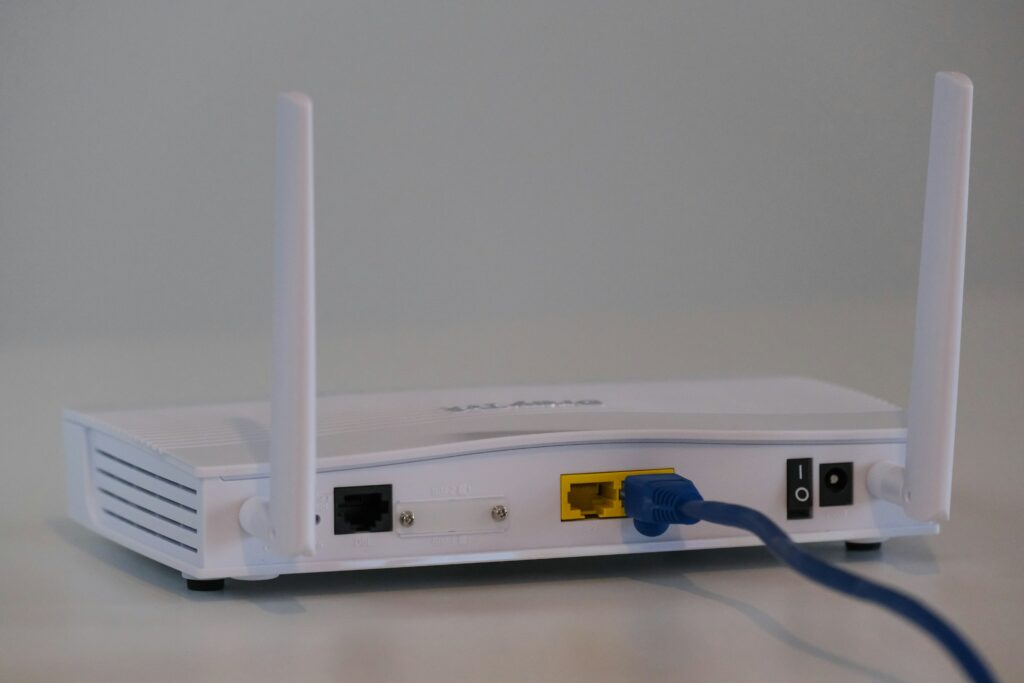
One noticeable difference is how your phone connects. Rather than plugging into the traditional telephone wall socket, your phone is usually connected directly to your broadband router or a dedicated adapter supplied by your broadband provider. The router handles your internet connection and your phone service at the same time.
For most households, the transition is straightforward, and call quality is often just as good—if not better—than a traditional landline. The biggest change is happening behind the scenes, as the UK’s ageing telephone network is replaced with a modern, internet-based service designed to support the country’s future communications infrastructure.
Broadband providers that still offer a home phone service
If you still want a home phone, you’re not out of options. While traditional analogue landlines are being phased out, several major UK broadband providers continue to offer a digital home phone service alongside their broadband packages. In most cases, you’ll be able to keep your existing number and continue using your home phone, although the service now runs over your broadband connection rather than the old copper telephone network.
Here’s a look at some of the main providers that still offer digital home phone services.
| Provider | Home phone available? | Digital Voice | Keep your number? |
|---|---|---|---|
| BT | Yes | Yes | Yes |
| EE | Yes | Yes | Yes |
| Sky | Yes | Yes | Yes |
| TalkTalk | Yes | Yes | Yes |
| Vodafone | Yes | Yes | Yes |
| Zen Internet | Selected packages | Yes | Yes |
Package availability changes regularly, so it’s always worth checking the latest offers before signing up.
BT
BT continues to offer one of the UK’s best-known home phone services through Digital Voice. Available with many of its broadband packages, Digital Voice replaces the traditional landline while allowing customers to keep their existing home phone number. Existing handsets can usually still be used, either by plugging them into the Smart Hub or by using a Digital Voice adapter where required.
BT also offers optional calling plans for customers who regularly make UK or international calls, making it a good choice for households that still rely on their home phone. As the UK’s PSTN switch-off continues, all new phone services are now delivered digitally.
EE
Following its integration with BT’s consumer broadband services, EE also offers Digital Voice with many broadband packages. The technology is largely the same as BT’s, with calls made over your broadband connection rather than the old phone network.
Customers can usually transfer their existing landline number when joining EE, and a range of call plans are available depending on how often the phone is used. EE has become BT Group’s primary consumer broadband brand, particularly for new customers looking for full fibre broadband combined with a home phone service.
Sky
Sky continues to provide a home phone service with many of its broadband packages through Sky Talk. Like other providers, the service has moved away from the traditional landline network and now operates digitally over your broadband connection.
Customers can generally keep their existing phone number when switching to Sky, and optional call packages are available for anyone who makes regular landline or international calls. Sky remains one of the largest providers offering broadband and home phone bundles in the UK.
TalkTalk
TalkTalk continues to offer Digital Voice alongside many of its full fibre broadband packages. Existing customers are gradually being migrated from analogue landlines to digital phone services as part of the nationwide switchover.
As with other providers, calls are made over your broadband connection, and most customers can retain their existing landline number. If you’re moving to TalkTalk from another provider, the company will usually handle the number transfer as part of the switching process.
Vodafone
Vodafone also offers Digital Voice with selected fibre broadband packages. Instead of using the old copper phone network, calls are delivered over Vodafone’s broadband service using VoIP technology.
Customers can usually port their existing home phone number when they switch, making the transition relatively straightforward. Vodafone’s digital phone service is designed to provide the same familiar experience as a traditional landline while taking advantage of modern broadband infrastructure.
Zen Internet
Zen Internet offers Digital Voice alongside selected residential broadband packages, with particularly strong options for customers who want a standalone digital phone service or business-grade reliability. Like the other providers listed here, Zen’s service allows you to keep your existing landline number while making calls over your broadband connection.
Zen has been one of the earlier providers to embrace digital voice and offers a range of call plans and features that appeal to both home users and small businesses.
What about Plusnet?
Until recently, Plusnet offered traditional home phone services alongside its broadband packages. However, Plusnet is not introducing its own Digital Voice service. Instead, existing customers who want to keep a home phone are being migrated to EE or encouraged to move to another digital voice provider as the PSTN network is switched off. New Plusnet broadband customers should therefore expect a broadband-only service.
The downside of keeping your phone tied to your broadband
While getting your home phone and broadband from the same provider can seem convenient, it can also make switching broadband providers more complicated than it needs to be.
One of the biggest frustrations is that your phone number becomes tied to your broadband account. Every time you decide to switch providers, you need to make sure your number is transferred correctly. Although number porting usually works well, delays and administrative errors can happen, particularly if services are cancelled in the wrong order or if there’s a mismatch in account details. In the worst cases, customers risk losing a phone number they’ve had for years.
Keeping your landline linked to your broadband can also reduce your flexibility. When comparing broadband deals, you may find that the cheapest or fastest package doesn’t include a home phone service at all. This can leave you choosing between paying more for a bundled package or giving up your landline altogether.
Another consideration is cost. Many broadband providers now treat home phone services as an optional extra, with monthly charges for Digital Voice and additional fees for inclusive call plans. These costs can add up over the length of a contract and are often higher than using an independent VoIP provider, which may offer the same ability to keep your number for a fraction of the price.
Because your phone service is tied to your broadband contract, switching providers also becomes something you have to plan carefully. Rather than simply choosing the best broadband deal available, you need to consider number transfers, installation dates and whether your new provider supports digital voice.
For people who value their home phone number, this can make changing broadband feel more stressful than it should be. Separating your phone number from your broadband removes much of this complexity, allowing you to choose the broadband provider that offers the best price, speed or service—without worrying about moving your number every time you switch.
A smarter alternative: Separate your phone number from your broadband
If your home phone number is important to you, there’s another option that many people don’t realise exists. Instead of keeping your number tied to your broadband provider, you can port it to Plexatalk and keep it independently of your internet service.
Think of it as taking ownership of your number. Rather than moving it every time you switch broadband providers, your number stays with Plexatalk while you simply change your broadband whenever you find a better deal.
This approach offers much greater flexibility. Because your phone number is no longer linked to your internet provider, you’re free to choose broadband based on what matters most—whether that’s price, speed, customer service or availability. You won’t need to worry about whether your new provider offers a home phone service or whether they’ll be able to transfer your number correctly.
Plexatalk plans start from just £4 per month, making it an affordable alternative to many provider-branded digital phone services. Once your number has been ported, you can continue receiving calls on the same familiar number without having to repeat the porting process every time your broadband contract ends.
There are several key benefits to separating your phone number from your broadband:
- Keep your existing landline number for as long as you want.
- Plans from just £4 per month, often costing less than broadband providers’ phone add-ons.
- Switch broadband providers whenever you like without affecting your phone number.
- Take advantage of cheaper broadband-only deals, which are becoming increasingly common.
- Avoid repeated number porting every time you change provider.
- Use your number wherever you have an internet connection, whether that’s at home, in another property or even while travelling.
- Future-proof your phone service for the UK’s move to fully digital communications.
- Ideal if you move home regularly, as your number isn’t tied to a physical telephone line or address.
As more broadband providers move towards broadband-only packages, separating your phone service makes increasing sense. Instead of letting your broadband provider control your number, Plexatalk gives you the freedom to choose the broadband that’s right for you, while your phone number remains exactly where it belongs.
It’s a simple change that can save time, reduce the hassle of switching providers and potentially lower your monthly costs. Best of all, once your number is with Plexatalk, you only need to port it once. After that, changing broadband becomes much simpler, because your phone number stays with you—not with your ISP.
Is this the better way to switch broadband?
If you’re planning to switch broadband, the biggest question is whether you want your phone number to move with you every time—or stay put.
With the traditional approach, your broadband and home phone are bundled together. While this can seem convenient, it means your landline number is tied to your broadband provider. Every time you switch to a better deal, your number usually needs to be transferred as well. Although the One Touch Switch process has made changing broadband easier, moving a phone number can still involve extra administration, careful timing and the potential for delays. It can also limit your choice, as not every provider offers a home phone service on all of its packages.
By contrast, separating your number from your broadband gives you much more freedom. By porting your number to Plexatalk, your landline stays in one place while your broadband becomes completely independent. You can switch internet providers whenever your contract ends, take advantage of broadband-only deals, and choose the package that offers the best combination of price, speed and service—without worrying about your phone number.
For anyone who plans to switch broadband more than once, wants to keep a long-standing home number, or simply wants greater flexibility, separating your phone service from your broadband is often the smarter long-term solution. It means your number belongs to you, not your broadband provider, making every future switch simpler, quicker and potentially more cost-effective.
Broadband Providers That Still Do Landlines – Frequently Asked Questions
Can I keep my existing landline number?
Yes. In most cases, you can keep your existing landline number whether you’re moving to a digital phone service with your broadband provider or porting it to an independent VoIP provider such as Plexatalk. As long as the number is eligible for transfer and the porting process is completed correctly, you shouldn’t need to change the number you’ve had for years.
Will landlines disappear completely?
No. It’s the technology that’s changing, not the concept of a landline. The UK’s old copper telephone network is being switched off by January 2027, but home phone services will continue using digital technology (VoIP or Digital Voice). You’ll still be able to make and receive calls using your existing number.
Can I use my existing handset?
Usually, yes. Most digital phone services allow you to continue using your current cordless or corded telephone. Instead of plugging it into the traditional wall socket, you’ll typically connect it to your broadband router or a compatible telephone adapter supplied by your provider.
What happens during a power cut?
Unlike traditional analogue landlines, digital phone services rely on both your broadband connection and electrical power. If there’s a power cut, your phone service may stop working unless you have a battery backup or an alternative way to make calls, such as a mobile phone. Some providers offer additional support for vulnerable customers who rely on a home phone.
Can I move house and keep my number?
In many cases, yes. If your number is held with an independent VoIP provider such as Plexatalk, moving home is much simpler because your phone number isn’t tied to a physical telephone line. As long as you have a broadband connection, you can continue using the same number from your new address.
Why would I separate my phone number from my broadband?
Separating your phone number from your broadband gives you greater flexibility and control. You only need to port your number once, after which you can switch broadband providers whenever you like without having to move your number again. It also gives you access to a wider choice of broadband-only deals, can reduce your monthly costs, and makes future switches much simpler. For anyone who wants to keep their landline without being tied to a single broadband provider, it’s an increasingly popular and future-proof solution.
Keep your number, not the hassle
If having a home phone number is important to you, there’s no need to give it up. Several UK broadband providers still offer home phone services, but these are now almost always delivered as Digital Voice or VoIP over your broadband connection rather than through the old analogue telephone network.
However, as more providers move towards broadband-only packages and the UK continues its transition away from traditional landlines, it’s worth thinking about whether your phone number really needs to stay tied to your broadband provider.
If you regularly switch broadband to take advantage of better prices, faster speeds or improved customer service, keeping your number attached to your ISP can create unnecessary complications. Every switch may involve another number transfer, additional administration and the risk of delays.
By porting your number to Plexatalk from just £4 per month, you only need to move it once. After that, your phone number stays with you while you’re free to choose the broadband provider that offers the best deal, without worrying about transferring your number every time your contract ends.
It’s a simple, future-proof way to keep the number you know and trust, while enjoying the freedom to shop around for the best broadband whenever you choose.